site.btaMedia Review: May 12
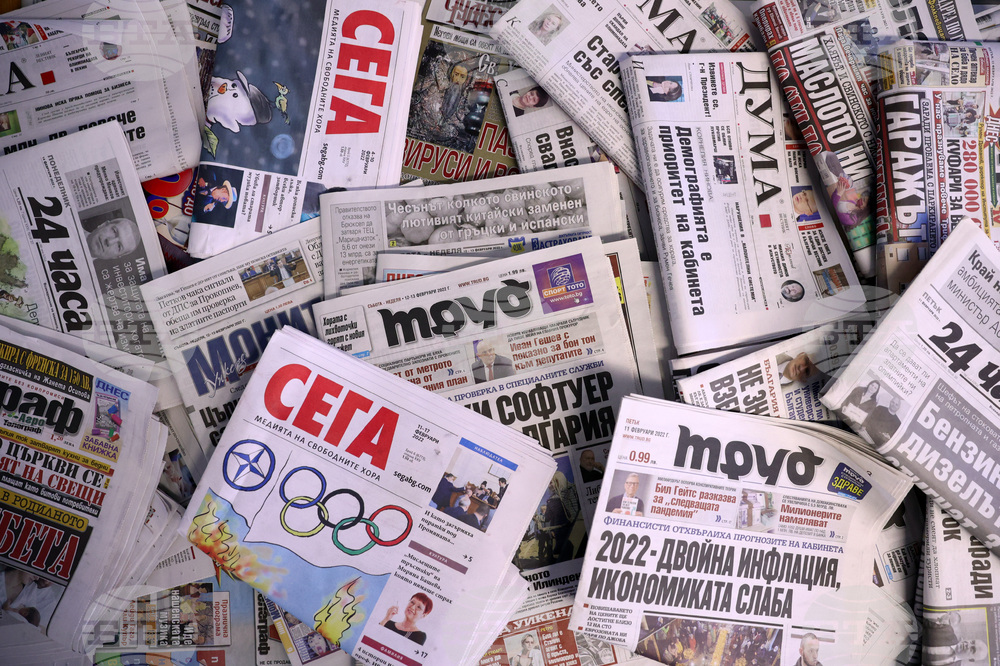
Comments on the measures proposed by the Radev Cabinet aimed at curbing prices dominated the media on Tuesday.
On Bulgarian National Television’s (BNT) morning show, sociologists Genoveva Petrova of Alpha Research and Evelina Slavkova of Trend discussed the new package of measures aimed at curbing prices. Slavkova said she was not particularly optimistic about such legislative measures leading to lower prices, because this does not depend solely on the state. “Of course, I welcome the fact that the institutions responsible for this issue are beginning to work more effectively - at least that was the message conveyed. More fines should be imposed and there should be greater oversight. In that sense, I believe this is generally the proper course of action,” she added. According to Petrova, rising consumer prices are an area where the new government’s first efforts truly need to be concentrated, given the high public sensitivity to such issues and their direct daily impact on people’s finances. “The other question is to what extent the proposed measures, and the way they are implemented, will actually achieve results. What I want to say is that the government entered office with a very high level of public trust, which it received during the election campaign. And that is indeed a strong reserve of confidence that allows it, for a certain period of time, to take whatever measures it believes are necessary in order to achieve its objectives.” In her words, this will be one of the main lines along which public attitudes toward the Government will be shaped. “The other line is the style of governance and communication, where, on the one hand, society can react very quickly and directly, while on the other hand we are already seeing manifestations by representatives of the majority that are, to put it mildly, far removed from the understanding of dialogue shared by the media, the public, and political opponents alike. They are far removed from the understanding of normal communication and instead suggest a different, somewhat imperative style of governance, which could become a factor in eroding public trust in the Government,” Petrova added.
Progressive Bulgaria MP Todor Dzhikov commented on the measures on BNT. “Through amendments to the Competition Protection Act, we are creating an electronic food traceability register, where every wholesale trader will be required to declare the specific product, its price, from whom it was purchased, and to whom it was sold. We are using the practices of leading European countries - France, Germany, Spain, and Italy,” he said. Dzhikov stated that the goal is to protect consumers while preserving the free market and competition. “We are not interfering in any way with the principles of free competition and the market. We are trying to protect consumers while at the same time ensuring that the burden is not shifted back onto producers. We are not guided by the idea of introducing a centrally planned state economy; we want to introduce a reasonable markup - a real and necessary one - of up to 20–30%.”
On bTV’s morning show, Progressive Bulgaria MP Yavor Gechev also commented on the legislative changes through which the Cabinet will attempt to curb rising prices. According to him, analyses by the Competition Protection Commission show a “distortion of the competitive environment,” but nothing has followed from this so far. “There has been no effectiveness. At the moment, the analyses are extremely good. If you look at how the legislation is being addressed, you will see that one thing was missing from the analyses - and it is not just the market environment, but the legal deficit that prevents them from doing their job,” Gechev said. “We do not want to target the retail chains. We do not want them to do anything other than follow the rules and be fair toward their own suppliers and ultimately toward consumers,” he added.
***
A BNT report showed that prices for most staple vegetables are declining at commodity exchanges and wholesale markets across the country. At the same time, the opposite trend is being observed for fruit, with the sharpest increases reported for apples and citrus fruits. Iliya Gatev, executive director of the wholesale market near Parvenets, said that “there are measures that are necessary and useful” for tackling rising prices, adding: “The traceability of goods from the border to the end consumer, especially for imported products, is very important. In my opinion, border controls should be strengthened, including for goods coming from EU countries. There should be oversight of the prices at which goods enter Bulgaria in the first place, because that is where, in my opinion, the most serious anomalies exist.” “The measure I do not agree with - or rather do not see the point of - is burdening the process with additional administrative inspections under the Euro Introduction Act, which will only further complicate the situation,” he added.
Nova Television also aired an interview with Gatev. According to him, there is currently sufficient supply of seasonal fruit at the wholesale market near the village of Parvenets, near Plovdiv, which is leading to a decline in prices. The sharpest drop has been recorded in strawberries, which are selling for around EUR 3 per kilogram. Lower prices are also being seen for cucumbers due to the increased supply of Bulgarian produce. According to the market director, the decrease is about EUR 0.15–0.20 per kilogram. Despite this, tomatoes and cucumbers remain significantly more expensive compared to last year. Gatev said the main reasons are the high costs faced by greenhouse producers, as well as rising transportation costs for imported goods. According to him, transport expenses now account for between 30% and 40% of the value of imports.
A Telegraph review of advertising catalogues from shops for this and last year shows that there are a number of food products whose prices have remained unchanged despite the widespread impression that everything has become more expensive. These include yoghurt, sparkling spring water, iceberg lettuce and chicken products. Nevertheless, the daily notes that prices have increased for other products.
POLITICS
24 Chasa features an extensive interview with Continue the Change Floor Leader Nikolay Denkov. He said that the role of his parliamentary group in parliament is to uphold its main priorities, which are linked to Bulgaria’s European development, modernization of the state - above all from the perspective of justice, a competitive economy, and fairness in the broadest sense of the word. This includes both a functioning judiciary and fair incomes. “At Continue the Change, we do not believe that the election of the Supreme Judicial Council and a new prosecutor general should be carried out within some very accelerated timeframe. There should be enough time to understand who the candidates are, and only people who are professionally impeccable and possess integrity should pass this test,” he stressed. Denkov said he does not see how a split with Democratic Bulgaria could create problems: “Whenever it comes to quality candidates, or conversely to people who have issues, we can always vote together, discuss together, and speak together. I do not know why we are focusing so much on these arguments, since they are not true. They would make sense if together we had been the leading political force and could have received the first [government-forming] mandate,” he added. Denkov also commented on the first days of Progressive Bulgaria’s Government: “Obviously there were several false starts - let us assume they are the result of lack of experience. Although, if we look at it, [Progressive Bulgaria MP] Anton Kutev spent many years in parliament and has a great deal of experience. We are also seeing mistakes in appointments. I very much hope these mistakes turn out to be accidental, but unfortunately there is an accumulation that perhaps points to something different. I hope Progressive Bulgaria succeeds, because Bulgaria needs a successful government, but the way they started is wrong.” Denkov highlighted the fact that the new chair of the State Agency for National Security had his security clearance revoked years ago. “And this happened following information from foreign services, without the clearance ever being restored through a completed judicial procedure proving there had been no grounds for the decision.” He stressed that it is important whether the appointment decision was made by Prime Minister Rumen Radev personally: “Whether it was him personally — in which case he will bear political responsibility — or whether someone proposed the appointment to him, this needs to become clear. In fact, who is making personnel decisions at the moment is a key question for both the beginning and the future development of this Cabinet,” he said. The Continue the Change Floor Leader added: “We saw that Progressive Bulgaria’s campaign was extremely well financed. The financing for this campaign visibly exceeded that of all the other parties combined. It may turn out that this financing came with conditions attached, and that these strange appointments are a way of returning the favor.” As “an example where the criteria by which ministers were selected appear unclear,” he pointed to Justice Minister Nikolay Naydenov: “What is concerning in his case is that his entire career appears to have been shaped around Mr. Sotir Tsatsarov [former prosecutor general, whose candidacy for the post was backed by GERB leader Boyko Borissov]. He was obviously a very trusted person of his. From there, the first association people make is: will Tsatsarov be the one carrying out the reform? This raises many question marks, which I hope will be disproven, but that depends on the Minister himself. The second issue is that this person has never expressed a position regarding the development of the judicial system over recent years, which literally appears catastrophic.”
***
The Bulgarian National Radio aired an interview with Vladimir Kisyov - former chief negotiator for Bulgaria’s accession to the European Union and former deputy foreign minister. The first statements on the foreign policy of the Radev Cabinet declare an orientation for future relations within the European Union, but still lack specifics, he said. The new Foreign Minister has experience, Kisyov shared: “She has some experience regarding European policies. God willing, this will be in a positive direction rather than an aggressive one.” The diplomat warned that care must be taken against an “excessively Russophile wind” in the sails of Bulgarian politicians. Regarding the country’s position on Ukraine, he commented: “Support for Ukraine must be expressed very clearly, because an aggressor cannot dictate how talks will be conducted or who will lead delegations. These are things that amount to mockery of the European representatives.”
ECONOMY
On Bulgarian National Television’s morning show, Svetoslav Benchev, Chair of the Bulgarian Petroleum and Gas Association, commented on fuel prices, market dynamics and measures against high prices. “In my opinion, we are already entering a period in which we seriously need to think not so much about prices, but about what supplies will be available. Reserves have been released and continue to be released - this morning I even heard that President Trump had released additional American reserves in order to control the price. But as long as the Strait of Hormuz remains closed, the situation remains very worrying, because these reserves are already beginning to run out,” he said. Benchev explained that the oil which had already passed through the strait had reached its destinations in Asia, Europe or elsewhere, had already been unloaded and was being processed, and from this point onwards the situation becomes serious. “If the strait is not reopened within a month, we are already seeing problems with kerosene in Asia - 50% of flights there are in question. Europe is beginning to experience shortages and this will also be felt in other products. By the end of June or the beginning of July, for us not to face problems in Europe, this issue must be resolved. Whether it will be resolved is difficult to predict.” According to him, the markets are excessively optimistic, and what has recently become noticeable is a serious gap between the futures markets, which concern prices three to four months ahead, and what is actually being purchased today. “There has always been correlation, of course, but now it is very significant. If we are seeing futures at USD 100 per barrel, Norwegian oil was sold last week for USD 155 per barrel, Iraqi oil that managed to get through the blockade was sold for USD 140 per barrel - meaning that actual prices are much higher.”
***
On Nova Television’s morning show, Progressive Bulgaria MP Konstantin Prodanov said that his coalition has developed 15 measures in response to the spike in fuel prices. “They are aimed at supporting vulnerable groups and affected businesses, and they will be more targeted,” he added. According to him, households will receive assistance if they fall below the poverty line or are classified as energy poor. The funds provided will be directed towards transport or energy vouchers. “The amount is yet to be specified, as there are two potential income criteria,” he said. According to the MP, inflation may also be driven by economic factors and by the delayed adoption of the euro. He noted that speculation emerges when inflation already exists and is both high and persistent over time. “We added 20 types of unfair practices, and the Council of Ministers will now have the authority, following consultation with the Competition Protection Commission, to expand the list through a decree rather than legislative amendments,” Prodanov said.
***
24 Chasa cited Eurostat data showing that 39.1% of Bulgarians cannot afford a one-week holiday either domestically or abroad. On average, 27% of Europeans are unable to afford such a vacation. However, the highest shares are recorded among Ukrainians (70%), Romanians (61.4%), and Albanians (60%), followed by Turks, Montenegrins, citizens of North Macedonia, Moldovans, and Greeks, all with shares of around 50%.
WORLD
On Nova Television’s morning show, Arabist Vladimir Chukov commented on tensions surrounding Tehran’s nuclear programme and the blockade of the Strait of Hormuz. According to him, Iran has set five main conditions that must be fulfilled in three stages before the country agrees to enter into real negotiations with the United States. “Iran wants everything first, and only after it receives compensation and guarantees regarding sovereignty over the Strait of Hormuz will Tehran sit down to negotiate the points that have so far been discussed,” Chukov explained. He stressed that only two days earlier Iran had been ready to hand over part of its enriched uranium, but subsequently changed its position. “This is precisely what triggered [US President] Donald Trump’s sharp reaction,” the Arabist noted. According to him, dialogue between Washington and Tehran is currently completely blocked. He predicted that Trump’s upcoming visit to China could prove crucial for the development of the crisis. In his words, the US President will likely rely on Beijing’s support in finding a way out of the tensions. “The Chinese are far more interested in stability in the region because what matters to them is a stable economy and the protection of their economic interests,” Chukov commented.
ENVIRONMENT
Mediapool.bg cited a report by Greenpeace Bulgaria, according to which the discrepancy between the readings of the automatic stations at Bobov Dol Thermal Power Plant (TPP) in Golemo Selo, Galabovo, Dimitrovgrad and Pernik for sulphur dioxide pollution and the data from independent measurements using diffusion tubes carried out between October 2025 and February 2026 is up to 18 times. The independent measurements indicate pollution levels between 9 and 18 times higher than the data local residents see regarding pollution from the coal-fired power plant associated with Hristo Kovachki, the article says. TPP Bobov Dol did not respond to the environmental organization’s inquiry as to what could be causing this drastic discrepancy. “For years, Golemo Selo has suffered from regular sulphur dioxide pollution from TPP Bobov Dol - the only source of this pollutant in the region. Despite the numerous data, including official figures, the regulatory institutions remain toothless observers while the untouchable perpetrator violates the right to clean air of hundreds of Bulgarian citizens in the name of profit. If the public data underestimate pollution in Golemo Selo by up to 95%, the public is being kept unaware of the true health risks caused by TPP Bobov Dol. This polluter should be shut down until it proves it can comply with the law,” commented Desislava Mikova, Campaigns Manager at Greenpeace Bulgaria. The Executive Environment Agency, which is responsible for the official stations in Galabovo, Dimitrovgrad and Pernik, has assured that the stations are calibrated regularly. However, it did not comment on what might be causing the reported discrepancies.
GIRO D’ITALIA
Mediapool.bg published an interview with Sofia municipal councillor from Continue the Change - Democratic Bulgaria and national coordinator for the staging of Giro d’Italia in Bulgaria Dimitar Petrov. By the end of this week, detailed data will be available on how many people came out to watch the Giro across the country, as well as on television and streaming platforms around the world, he said. So far, it is known that at least 4 million people in Europe watched the finish in the Bulgarian capital on television. The Italian team involved in organizing the race consists of nearly 2,000 people, but the Bulgarian organizers are far fewer. “The core team consisted of between 15 and 20 people who carried the organization of the event on their backs,” Petrov said. The municipal councillor’s role in organizing the race is actually much larger. He is the main initiator of the idea of bringing Giro d’Italia to Bulgaria. The idea came to him in 2024 while on a cycling tour in Italy, when he came across one of the stages of the race, rode along the closed roads, saw the energy of the people in Genoa welcoming the riders, and wished for the same to happen in Bulgaria. “That was when I asked myself what was stopping us from doing something similar. We have everything - beautiful scenery, people willing to support the idea, an audience. Then I went to speak with Sofia Mayor Vassil Terziev and he told me: ‘Go for it. If you have such an idea, go and talk to them. You have my support.’ That was extremely important, because as a municipal councillor I cannot do anything without the mayor’s agreement,” Petrov said. Thus, in March 2025, he and former Sofia deputy mayor for European policies, international activities and tourism Nikola Barbutov held a meeting in Milan with the management of sports organization RCS Sport regarding Bulgaria’s bid. On Monday, the Giro’s coordinator in Bulgaria told Bulgarian National Television that Bulgaria would now have the confidence to organize other similar events, and later added to Mediapool that the first ideas had already been floated. One of them is hosting the world’s biggest cycling race - the Tour de France. According to him, it would be wonderful if that happened in a few years’ time, but his greatest wish is for Bulgaria to have a representative in these prestigious cycling competitions. According to the national coordinator, the greatest benefit of the Giro for Bulgaria is that the race showed how united Bulgarians can be: “We showed that we can stand together. That is the main message we sent over the last three or four days, and I hope we can preserve this energy, because only with it can we improve our lives.”
INFRASTRUCTURE
Trud features an interview with Diana Rusinova, founder and Chair of the European Centre for Transport Policies - an organization that surveys dangerous and problematic sections of national and municipal roads. “The lack of monitoring and adequate State policy regarding landslides and mountain roads in general, the systematic neglect of the problem, of resolving it and even of maintenance, if you will, postponing everything to a later time, is leading to what happened in Pamporovo a few days ago. And that road will not exist for at least another two or three years. The alternative route also passes along a road where there has been a landslide for four years and one lane has been closed,” she said. The expert highlighted that very little funding is allocated in the country for proper geology and geodesy, which is a major problem. “These are things everyone tries to save money on, and in the end, look at the result. […] For 40 years, no one carried out a proper certification of the road infrastructure to determine its actual condition. What funds are needed for maintenance, what is critical, what is important, what human lives depend on. And from the outside, it looks as though the money simply disappears,” she noted.
ELECTIONS
On bTV‘s morning show, former caretaker interior minister Emil Dechev said that there are already final convictions for election-related crimes. “I also know of a case in which the sentence is effective rather than suspended - imprisonment. However, I cannot provide exact statistics because I no longer work at the Interior Ministry,” he said. “Those who direct the money flows and are the masterminds behind this large-scale criminal activity never act directly. They use several layers of intermediaries. That is why much more operational work is needed, and it has to begin years before the elections. The use of special surveillance means, informants, and insiders willing to speak out is necessary,” Dechev said. He added that the likely reason for the lack of major successes in combating vote-buying over the years has been the absence of political will. He also did not rule out the involvement of Interior Ministry employees in such schemes. “If not directly participating in these crimes, then at least covering them up. I think that during these elections, colleagues who may have been tempted by such activities wisely refrained. Or the number of those who in one way or another assisted was much smaller compared to before,” the former caretaker interior minister said. Dechev was adamant that no pressure had been exerted on him by anyone and that he had enjoyed complete freedom of action.
***
On BNT’s morning show, former caretaker labour and social policy minister Hasan Ademov commented on the achievements during his term in office. “It was very important to convince Bulgarian voters and Bulgarian citizens that their social rights in no way depend on the party they vote for. It was important to try to break this inseparable dependence and the ties between local authorities, local influential figures - and even local politicians - and the social services, because the Ministry finances them, while appointments come through the local authorities,” Ademov said.
/MR/
news.modal.header
news.modal.text