site.btaRomania Targets Lower Energy Prices with New Five-Point Reform Plan
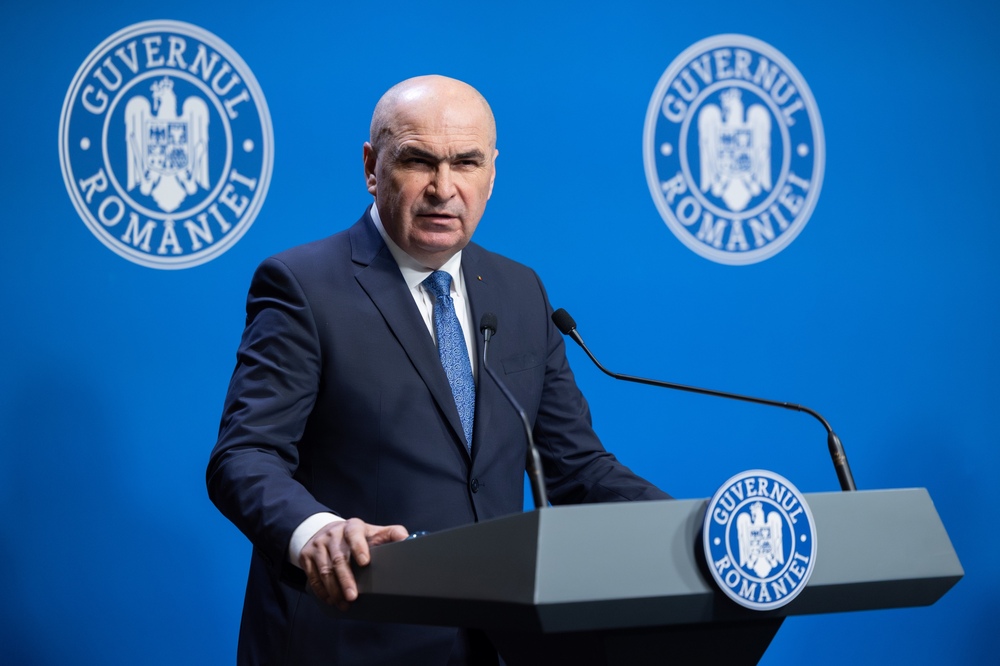
The Romanian government will pursue five strategic points for the development of the energy sector in order to ensure lower prices and improve the country’s energy security, Prime Minister Ilie Bolojan said at a press conference broadcast live online.
These measures include regulatory changes supported by the government and parliament, improving the performance of state-owned companies in the sector, removing speculative investors from the market, increasing storage capacity, and boosting strategic investments, including through cross-border interconnections.
Bolojan added that a new regulation on the rules for connecting to electricity grids will be adopted by the end of the month, noting that 90% of projects in this area are speculative.
As a positive example, Bolojan pointed to Spain, where, according to him, serious measures have been taken and speculation with prices has now been eliminated.
"The main problem at the moment is the extremely high price. We have made massive investments in photovoltaics and have reached a point where, on sunny days in Romania, Bulgaria, and Hungary, we see negative prices per megawatt. We will now invest in storage in order to respond to price fluctuations. If we store excess production during the day, we will be able to use it in the evening," Energy Minister Bogdan Ivan said at the press conference.
He added that by the end of this year Romania will have newly installed capacity of approximately 2,000 megawatts of solar power, 350 megawatts of wind power, and 2,200 megawatts of gas-fired generation, including the power plants in Arad and Constanta, as well as the one in Iernut, which is scheduled for completion in 2026, and the Mintia power plant, which is already at an advanced stage of construction.
Romania is set to complete new electricity generation capacity totalling 5,800 megawatts by the end of 2027, and will have 1,500 megawatts of storage capacity by the end of 2026, Ivan said.
"We have proved that nuclear energy is the safest source capable of providing baseload generation. Romania already has decades of experience. Next week, I will have an important discussion in Washington regarding the financing of these projects," Ivan added.
In response to journalists’ questions Bolojan said that "as the crisis in the Persian Gulf continues, it is clear that rising fuel prices will have an impact on inflation. As we can see, interest rates on international markets have increased, and this will inevitably have some effect on the market. If these developments persist, the indicators we used in drafting the budget and all our forecasts will be affected."
Both the Prime Minister and Energy Minister assured that there are currently no problems with petrol supplies, and that Romania has sufficient reserves and contracts to cover consumption.
“From the very first days of this military conflict, Romania activated both existing commercial contracts and new supply routes which can supply the domestic market with crude oil and diesel, as we need to cover around 40% of demand. As of today, our reserves are equivalent to approximately two million tonnes of fuel and oil," Ivan said.
/YV/
news.modal.header
news.modal.text