site.btaFive Political Forces to Enter Next Parliament, One on Threshold, Alpha Research Survey Shows
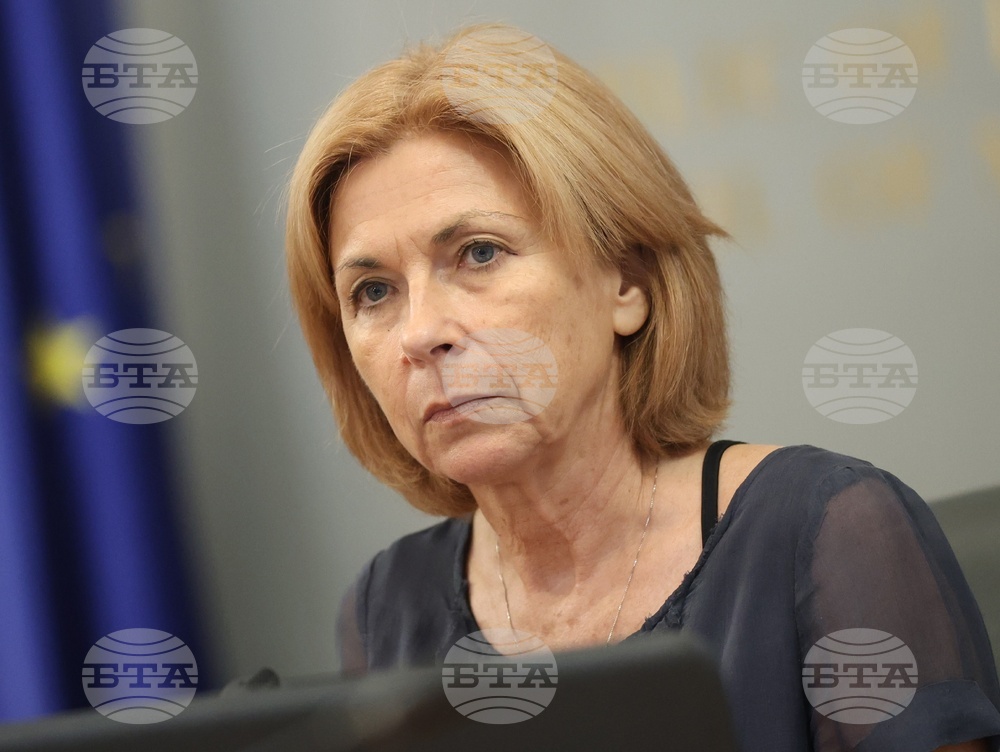
At present, five formations are certain to enter the next parliament and one is on the threshold, Boriana Dimitrova, head of Alpha Research’s social, political and electoral studies, said while presenting the results of a nationally representative survey of the adult population, financed by the Bulgarian National Radio (BNR). No formation is expected to secure a majority, she told BNR on Sunday.
The Alpha Research survey was conducted among 1,000 respondents in the period March 19 – March 26, 2026, using a stratified two-stage sample with quotas based on key socio-demographic characteristics. The information was collected through direct standardised interviews using tablets in the homes of the respondents.
The sociologists’ data show that if elections were to take place this Sunday, among those firmly decided to vote, 30.8% would support the list of Progressive Bulgaria.
GERB-UDF ranked second, with 21.2% of Bulgarians saying they would vote for them.
The Continue the Change – Democratic Bulgaria (CC-DB) coalition was third, garnering the support of 11.1% of those willing to vote.
The Movement for Rights and Freedoms ranked fourth with 9.8% declared support among voters. Vazrazhdane was fifth with 6.9%, according to the Alpha Research survey.
Below the 4% threshold for entering parliament were BSP – United Left with 3.9%, Moral, Unity, Honour (MECh) with 3% support, Velichie with 2.7%, There Is Such a People with 1.4%, and Alliance for Rights and Freedoms with 1.2%.
The Siyanie coalition received 2.8% support, while Blue Bulgaria stood at 1.6%. Other parties and coalitions enjoyed the support of 3.6% of Bulgarians, the survey shows.
More than half of respondents (55.8%) intend to cast their vote. 29.5% of Bulgarians are adamand that they will not exercise their constitutional right to vote and will not participate in the election, while 14.7% are undecided.
Dimitrova noted that around 3–3.1 million people currently intend to vote, with possible movement in the remaining few weeks, although there has been no sharp mobilisation in the first week of the campaign.
The coalition around Rumen Radev – Progressive Bulgaria – showed slight mobilization in the first week of the campaign, likely because Radev and the coalition itself have begun their campaign activities, she further commented. GERB-UDF consolidated its position, but a gap of between 8% and 9% is observed between the first and second largest political force, Dimitrova added. According to her, the 11.1% support for CC-DB does not represent the level of mobilization the formation had achieved during the protests. She also noted that BSP – United Left is seeing an interesting development and is “gradually, step by step, inching upwards”.
Dimitrova pointed out that there is a strong dominance of expectations for a coalition government. According to the survey data, 43.1% of respondents expect that after the elections and the formation of the new National Assembly, the country will be governed by a coalition government. 23.4% believe there will be no agreement and that the country will head towards new elections, while 14.4% think that one party will have a majority in the future parliament. Some 12% of respondents have no opinion, and 7% expect an expert (programme-based) government, which, however, would be short-lived.
/MR/
news.modal.header
news.modal.text