site.btaNew Optical Telescope to Be Installed at Rozhen Observatory as Bulgaria Expands Astronomy Capabilities
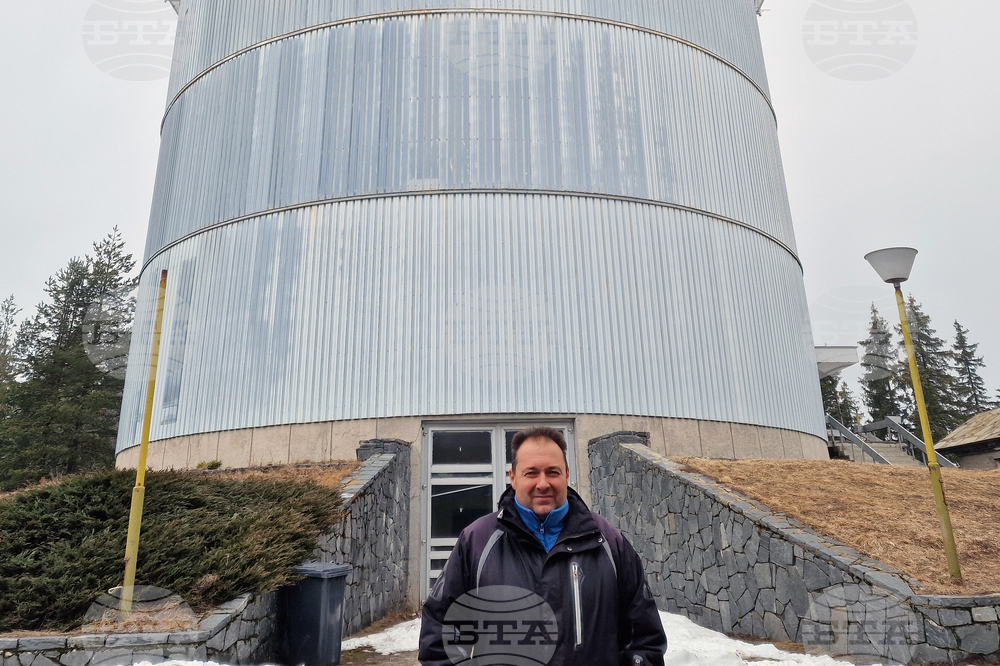
A new optical telescope for night observations, featuring an 80-centimetre mirror, will be inaugurated in April at the Rozhen National Astronomical Observatory, the observatory’s Director Nikola Petrov told BTA. The new instrument has been installed in one of the towers and replaces a telescope that had been in use for more than half a century.
The old device, based on technology dating back 50–60 years, is now being retired, while the new telescope will enable higher-quality and more precise observations of the night sky, Petrov explained. The instrument was manufactured by an Austrian company that also built the observatory’s 1.5-metre telescope, commissioned a couple of years ago.
According to the Petrov, construction of Bulgaria’s first radio telescope is also expected to begin this summer. The facility will become part of a European network of radio telescopes and will operate jointly with similar instruments across the continent, allowing observations not only in visible light but also in the radio range of the electromagnetic spectrum. Petrov said the new equipment will expand scientific capabilities and create better opportunities for Bulgarian astronomers to pursue research in the country.
Scientists from the observatory have also taken part this year in observations of the interstellar comet 3I/ATLAS, which originated outside the Solar System. Polarimetric observations were carried out jointly with the Institute of Astronomy and with telescopes from other observatories worldwide, yielding very good results, Petrov noted.
Research conducted at the Rozhen National Astronomical Observatory meets global scientific standards, including studies of quasars, the structure and star formation of nearby galaxies, supernovae, star clusters in the Milky Way, various classes of variable stars, magnetic stars, comets and asteroids, as well as solar activity.
On March 13, the observatory marked the 45th anniversary of its establishment. Petrov said that although the complex has gone through difficult periods over the years, it continues to develop and upgrade its scientific infrastructure.
The observatory's Director also expressed concern about upcoming challenges. At times in the past, the observatory faced uncertainty over whether it would have sufficient funds even to pay electricity bills and continue operating. “Today the times are again not easy and new challenges lie ahead. I hope any potential difficulties will not reach the level of basic operational problems, but I do have some concerns,” Petrov said, adding that given global developments, he cannot be fully optimistic about the future.
/MY/
news.modal.header
news.modal.text