site.btaSMEs in Bulgaria and Greece Will Save EUR 500 Mln Annually in Currency Conversion Costs, Bank of Greece Governor Stournaras Tells BTA
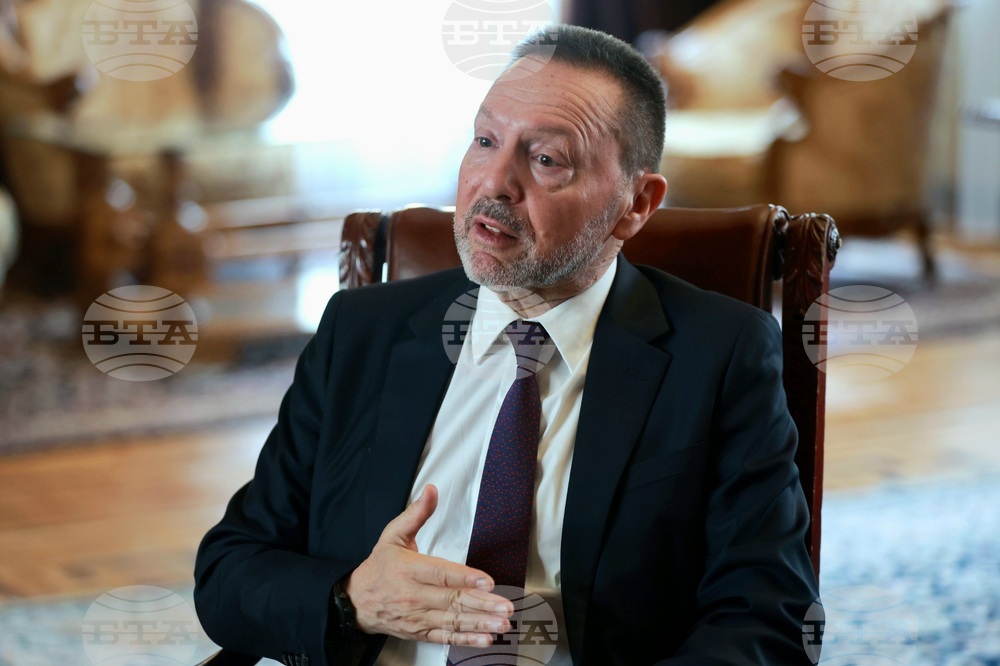
The Governor of the Bank of Greece, Yannis Stournaras, said in an interview with BTA in Sofia that Bulgaria has followed a “successful path” toward euro area membership and is already beginning to feel the real benefits of the common currency. Stournaras was in the Bulgarian capital to take part in the The World Ahead 2026 Sofia Gala Dinner, organized by The Economist.
He highlighted Bulgaria’s fulfilment of all euro area accession criteria, noting that maintaining the currency board for many years had been a key factor in stabilizing the economy, containing inflation, and strengthening public finances. “This creates a foundation for the country to benefit from lower interest rates, lower transaction costs, and greater financial stability within the euro area.”
Asked how Bulgaria’s entry into the euro area would affect economic and business relations between Sofia and Athens, the Governor of the Bank of Greece said that one of the main economic effects would be seen in cross-border trade. “Our estimates show that small and medium-sized enterprises on both sides of the border will save around EUR 500 million annually thanks to the elimination of currency exchange costs and the introduction of the common currency,” Stournaras said. According to him, removing currency risk and conversion costs will stimulate trade, investment, and tourism, inevitably leading to higher growth and prosperity in both countries.
Stournaras, who served as Greece’s finance minister from 2012 to 2014 and was involved in the initial efforts to tackle the debt crisis in his country, stressed that the euro has proven to be a successful project, with the number of participating countries nearly doubling since its creation and the currency establishing itself as a global safe asset.
In the context of Greece’s experience during the debt crisis, he noted that the country’s problems were not caused by the euro but by the accumulation of “twin deficits” - a high budget deficit and a large current account deficit — resulting from an expansionary fiscal policy and a loss of competitiveness. “The euro was part of the solution, not part of the problem,” he emphasized, recalling that European partners had provided access to financing while the country was implementing painful reforms.
According to him, participation in the euro area requires discipline - fiscal responsibility, sound banking supervision, structural reforms to boost growth, and strong institutions. Only in this way can countries sustainably benefit from the advantages of the common currency.
Commenting on monetary policy, Stournaras, who is a member of the Governing Council of the European Central Bank (ECB), said that at present the risks to inflation and growth are balanced and that the “meeting-by-meeting” approach remains the most appropriate. He defended the ECB’s response to recent external shocks, such as the pandemic, the war in Ukraine, and the energy crisis, stressing that excessively aggressive interest rate hikes would have led to a deep recession.
Regarding criticism that the euro fuels inflation, Stournaras pointed out that average inflation since the currency’s creation has been close to 2% and that recent inflationary pressures have mainly been the result of external supply shocks rather than the monetary system itself.
“The common currency reduces uncertainty, strengthens integration, and creates conditions for more investment,” the Governor of the Bank of Greece concluded, emphasizing that for Bulgaria the most immediate and measurable effect will be the saving of hundreds of millions of euros annually by businesses due to the elimination of currency-related costs.
/MY/
Additional





news.modal.image.header
news.modal.image.text
news.modal.download.header
news.modal.download.text
news.modal.header
news.modal.text