The World Ahead 2026 Sofia Gala Dinner
![Bulgaria Among Fastest-Growing Economies in EU, Head of Economist Intelligence Unit Says]()
![Bulgaria Among Fastest-Growing Economies in EU, Head of Economist Intelligence Unit Says]() Joan Hoey, editor of the annual Democracy Index and head of the Europe analysis team at The Economist Intelligence Unit (BTA Photo/Blagoy Kirilov)
Joan Hoey, editor of the annual Democracy Index and head of the Europe analysis team at The Economist Intelligence Unit (BTA Photo/Blagoy Kirilov)
site.btaBulgaria Among Fastest-Growing Economies in EU, Head of Economist Intelligence Unit Says
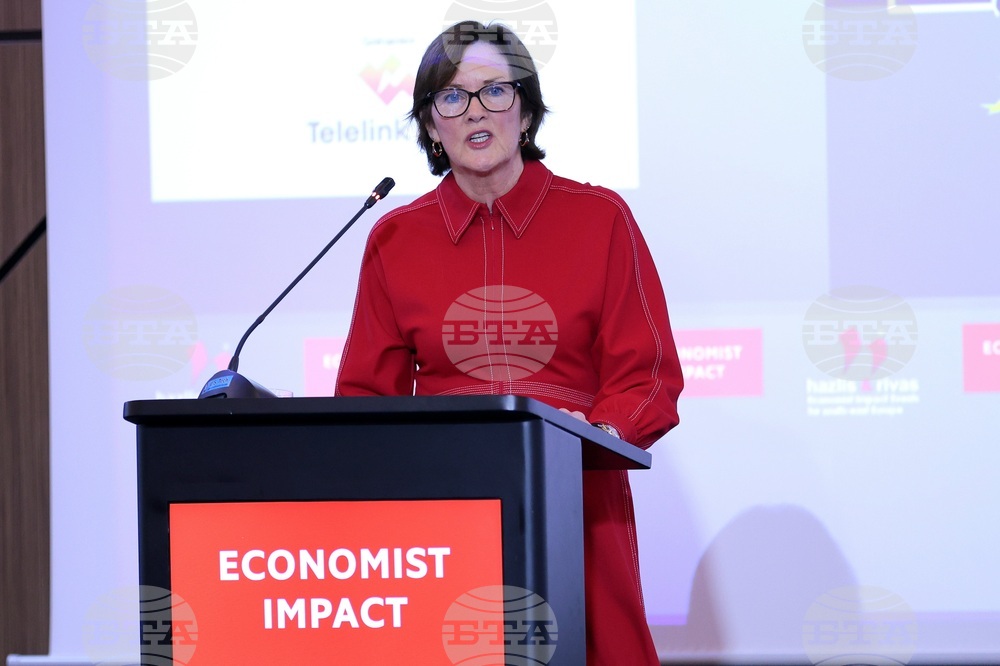
Bulgaria is one of the fastest-growing economies in the EU, it grew by 3% in 2025 and is expected to continue growing in 2026 said Joan Hoey, editor of the annual Democracy Index and head of the Europe analysis team at The Economist Intelligence Unit. She stated this at a conference during the World Ahead 2026 Sofia Gala Dinner on Thursday, organized by The Economist magazine at the Grand Hotel Millennium Sofia.
Official guests at the forum include Bulgarian President Iliana Iotova; Bulgarian National Bank Governor Dimitar Radev; Bank of Greece Governor Yannis Stournaras,; ECB Chief Economist Philip Lane; International Monetary Fund (IMF) Regional Representative for Central, Eastern and Southeastern Europe Carlos Mulas Granados, and leading business figures.
The Economist's analytical unit identified private consumption as the main driver of growth in Bulgaria, combined with external demand and a forecast of substantial interest from foreign investors in Bulgaria and Southeast Europe, linked to the ongoing nearshoring process of shortening supply chains.
According to their analysis, inflation in Bulgaria is expected to remain at current levels, which are in line with regional inflation rates and tend to ease. However, compared to pre-pandemic and pre-crisis levels, inflation will remain above 2019 levels and the EU average of over 2%.
Regarding Bulgaria's fiscal situation, Hoey said that the country is characterized by a very sound fiscal framework with its debt-to-gross domestic product (GDP) ratio is among the lowest in the EU.
She pointed out that a new growth model is needed for the country and the region as a whole. Hoey believes that an end to the war in Ukraine could have a strong positive effect on the region, particularly Bulgaria, as it would lead to investment in Ukraine's recovery and stimulate the economies of neighbouring countries.
The Economist Intelligence Unit's forecast for the EU suggests that growth in 2026 will remain volatile. US tariffs and policy uncertainties will be offset by lower inflation and interest rates. The focus is on Germany's U-turn in fiscal policy, which will lead to a change in trends from fiscal years 2026 and 2027 onwards. Growing investment in defence amid ongoing peace negotiations in Ukraine is identified as a driving force for European security needs.
/RY/MR/
news.modal.header
news.modal.text