BTA interview
![EP Rapporteur: Digital Euro Will Complement, Not Replace Cash]()
![EP Rapporteur: Digital Euro Will Complement, Not Replace Cash]() MEP Fernando Navarrete Rojas of the European People's Party (Christian Democrats) gives a press conference in Strasbourg in his capacity as rapporteur on a proposed regulation establishing the digital euro, July 8, 2026 (BTA Photo/Svetoslav Tanchev)
MEP Fernando Navarrete Rojas of the European People's Party (Christian Democrats) gives a press conference in Strasbourg in his capacity as rapporteur on a proposed regulation establishing the digital euro, July 8, 2026 (BTA Photo/Svetoslav Tanchev)
site.btaEP Rapporteur: Digital Euro Will Complement, Not Replace Cash
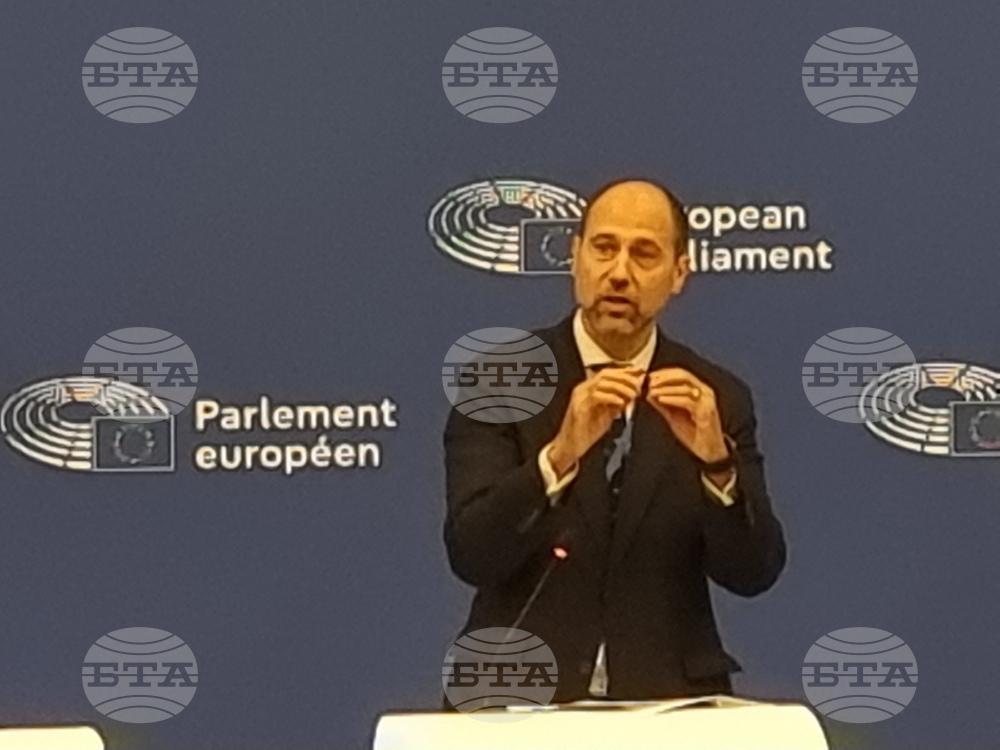
The European Parliament's rapporteur on legislation establishing the digital euro, Fernando Navarrete Rojas, said that the digital euro is intended to complement existing payment methods rather than replace cash.
Speaking in an interview with BTA after the European Parliament backed legislation on the digital euro and cash payments, the MEP said the two proposals form a single package designed to give citizens greater choice in how they make everyday payments.
"The objective is simply to provide more options," Navarrete Rojas said. He noted that while cash acceptance has declined in parts of Europe, the legislation seeks to ensure that merchants continue to accept cash across the European Union.
At the same time, the digital euro would provide an additional European payment option for those who prefer digital transactions, reducing the EU's dependence on payment technologies, standards and procedures developed outside the bloc.
"In the current geopolitical context, that dependence represents a serious risk that must be addressed," he said.
Navarrete Rojas explained that the digital euro is planned in two forms: an online version, similar to existing card-payment systems, and an offline version that would enable payments without an internet connection.
He said offline transactions would also provide an additional level of privacy because payments would be made directly between the payer's and the recipient's devices, without passing through intermediaries or transaction registers.
According to the rapporteur, the proposed legislation would also require manufacturers of electronic devices sold in the EU to provide access to the secure hardware elements needed for the European Central Bank to develop software supporting offline digital euro payments.
He rejected suggestions that the digital euro could become "programmable money" whose use could be restricted or whose value could expire.
"Digital euro holdings will not have an expiry date," Navarrete Rojas said. He added that, like euro banknotes and coins, the digital euro would remain central bank money and would not differ fundamentally from existing forms of public money.
/YV/
news.modal.header
news.modal.text