site.btaFruit and Vegetable Producers Call for Fair Value Rules Based on Production Costs, Not Wholesale Prices
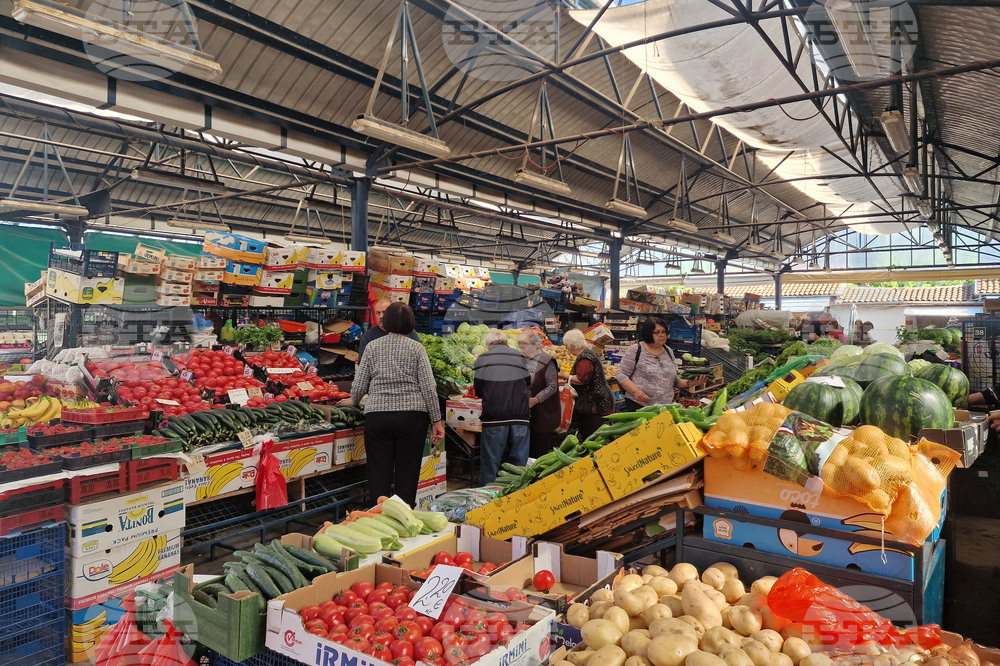
The price of Bulgarian agricultural produce should not fall below its cost of production and should include a markup of at least 10%, the Fruit and Vegetable Branch Chamber said in a statement addressed to Deputy Prime Minister and Minister of Economy, Investments and Industry Alexander Poulev. The document was submitted as part of the public consultation on a draft methodology for determining the fair value of goods under the Consumer Protection Act, published on August 7, 2026.
In their position, the Chamber said that commercial markups throughout the supply chain should not to come at the expense of agricultural producers. According to the organization, fair pricing would help support the sustainable consumption of Bulgarian fruit and vegetables in line with their seasonal availability.
As confirmed by the sector analysis of the Commission for Protection of Competition, "in the fruit and vegetable sector, pricing is shaped by the simultaneous impact of seasonality, weather conditions, short marketing windows, perishability, storage losses, transport and fuel costs, cold-chain infrastructure, wholesale markets, intermediaries, imports, and small producers’ limited access to stable sales channels. For this reason, measures in this sub-sector cannot be reduced to controlling retail prices, but must cover the entire supply chain: from production, purchasing, wholesale markets, storage, transport, imports, wholesale and retail trade." The analysis further notes that due to the mentioned vulnerabilities "the fruit and vegetable sub-sector is emerging as a distinct risk area within the food supply chain".
The Chamber emphasizes that, for yet another year, despite a good harvest of fruit and vegetables, Bulgarian producers have been driven to despair by the lack of a viable market and by farm-gate prices that do not even cover the costs of growing their produce.
Against this backdrop, during the debate and adoption of the latest amendments to the Consumer Protection Act, the Chamber broadly supported the introduction of a "fair value" mechanism for food products. The Chamber recognized the government’s stated objective of ensuring "continued, consistent and effective consumer protection against unjustified price increases," as well as creating "sustainable mechanisms for transparency, oversight and public trust in a dynamic economic environment".
At the same time, the Chamber argues that amendments of the Act improperly limit the determination of fair value to products included in the so-called basic consumer basket, in this case only tomatoes, cucumbers, potatoes and apples, and requires the calculation to start from the "wholesale price plus", which comprises the wholesale price, operating costs and a commercial markup.
For this reason, the industry organization does not support the draft methodology. In the Chamber’s view, calculations of "fair value" should be based on production costs rather than wholesale price data derived from the daily figures published by the State Commission on Commodity Exchanges and Wholesale Markets.
The Chamber argues that the methodology should use price data collected by the National Revenue Agency, the Customs Agency, and the state-owned System for Argo-Market Information (SAPI).
On 7 August, the Ministry of Economy, Investments and Industry published for public consultation a draft methodology for determining the fair value of basic food products. The methodology provides for an integrated model for determining fair value based on objective market data, including wholesale prices, operating costs, allowable technological losses, a target operating margin, and comparisons with price levels in EU Member States using internationally recognized statistical indicators.
/RD/
news.modal.header
news.modal.text