site.bta"If the Public Is Willing to Bear the Measures": Finance Minister Shares Plan to Tackle Excessive Deficit
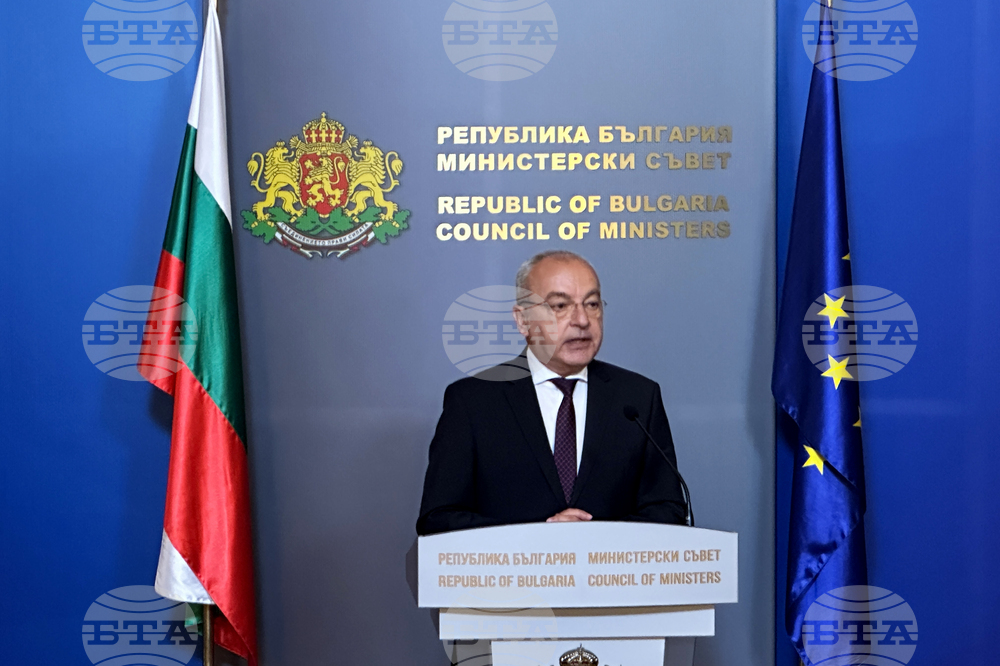
Finance Minister and Deputy Prime Minister Galab Donev presented a package of measures to tackle the excessive deficit. At a press conference on Wednesday, he said that reducing the deficit from 7.4% to 3% is possible and depends on the measures that will be proposed in the State Budget Act and implemented by the Government.
“If the public is willing to bear the measures, the first step should be a freeze on incomes, as well as the removal of all mechanisms that link wages to the national average gross salary and the minimum wage,” Donev said. He expressed the view that structural reform and consolidation of the State administration are needed, along with restrictions on public spending regardless of its source.
Earlier on Wednesday, the European Commission announced that it has recommended the opening of an excessive deficit procedure (EDP) for Bulgaria after concluding that the country does not comply with the European Union's deficit criterion under the bloc's fiscal rules.
“We are not touching delegated budgets - funding for culture, education, healthcare and psychiatric hospitals,” the Deputy Prime Minister further stressed. He said that the measures the Government will take concern both the expenditure and revenue sides of the budget. “Taxes and social security contributions will not be increased,” Donev assured. He said that current tax rates would remain unchanged, but there is potential for additional revenue from the shadow economy.
“There will be changes and measures aimed at increasing revenue for the Treasury. The excise duty timetable for tobacco products will be brought forward, and there will be measures targeting other sources of revenue to support expenditure-side measures, so that increased revenues can ease spending pressures. No new taxes will be introduced,” he said.
Donev announced that the 3% deficit reported over the past five years was the result of payments worth millions and billions being postponed and rolled over into the following year. He said that the current deficit of 7.4% amounts to more than EUR 8.5 billion, or almost EUR 9 billion. However, there are a further EUR 2.2 billion in unpaid liabilities that have been “hidden away in drawers”, pushing the deficit even higher. These EUR 2.2 billion include projects of the Road Infrastructure Agency and municipalities, Donev said.
He specified that by April 30, the caretaker government should have submitted to the European Commission the Annual Progress Report under the National Medium-Term Fiscal-Structural Plan for 2025-2028, but failed to do so. “Therefore, everything that the European Commission presents in today’s report is based on 2025 data, without including the unforeseen expenditures and the costs expected to be submitted for payment in 2026,” the Deputy Prime Minister said, explaining that the European Commission does not have access to the latest data for 2026. According to him, the caretaker government did not want to carry out a consolidation of public expenditure and instead passed the “hot potato” to the regular Government.
Donev announced that meetings would be held with nationally representative employers’ organizations and trade unions to agree on specific measures for consolidating public expenditure so that the excessive deficit can be reduced to acceptable fiscal parameters. He suggested that the European Commission would announce on Thursday its decision to place Bulgaria under an excessive deficit procedure, under which the country would be subject to monitoring. The Government will pursue a responsible policy aimed at keeping public expenditure within acceptable limits. According to him, the task is difficult and unpleasant, and if it had been easy, “those masters of balanced budgets within a 3% deficit would have achieved it and would not have hidden expenditures in order to postpone them over the years.”
The Deputy Prime Minister also said that the state budget can currently no longer rely on dividends from state-owned companies such as the Bulgarian Energy Holding and the State Consolidation Company, from which an interim dividend amounting to EUR 560 million will not be paid into the state budget this year. Donev stressed that this demonstrates that the reported 3% budget deficit was in reality higher because of concealed and deferred spending.
He announced that at the Government meeting on Wednesday a decision had been taken to set a state debt ceiling of EUR 3.8 billion. The Finance Minister recalled that in 2025 there had been a decision of the Council of Ministers that never reached Parliament. “In January there was also such a proposal submitted by MPs, which was never considered,” the Deputy Prime Minister recalled. According to him, despite knowing the true state of the budget, the caretaker government did not submit a similar request to the National Assembly. “Without this EUR 3.8 billion, we will face difficulties paying pensions, salaries and social benefits in July this year, as well as problems financing payments under the National Recovery and Resilience Plan,” Donev said. He explained that this debt is unavoidable and expressed hope that the proposal would quickly be submitted to Parliament so that a decision can be taken by June 20 and Bulgaria can access the financial markets.
/RY/
news.modal.header
news.modal.text