site.btaBulgarian Astronomers Discover New Super-Earth
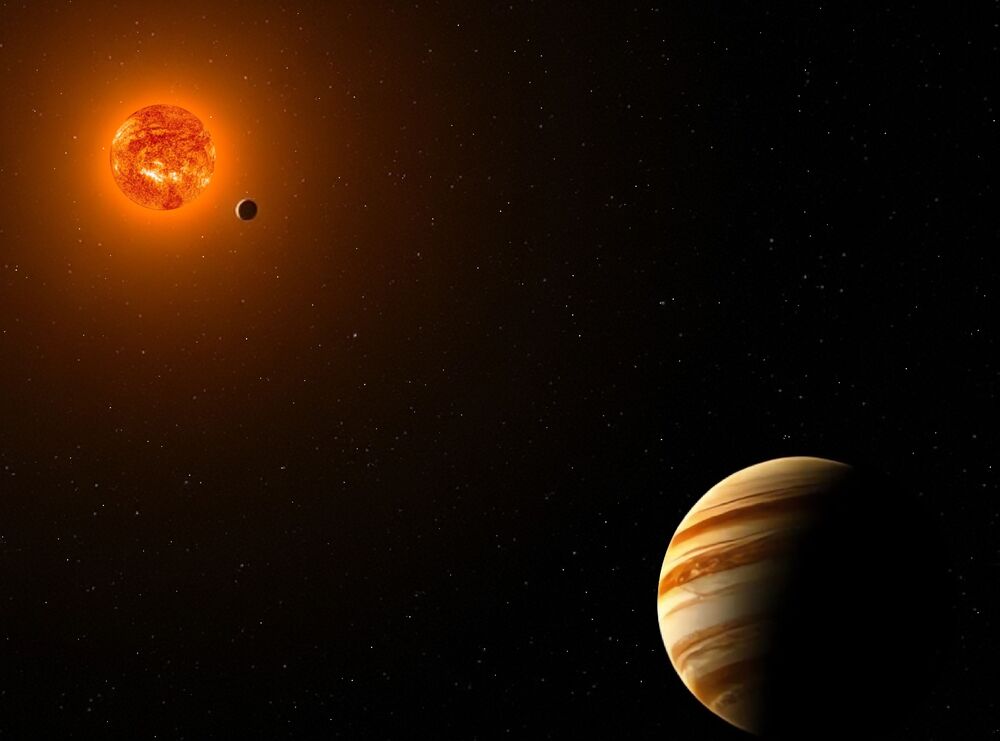
The Bulgarian exoplanet research team of the EXO-RESTART project at the Department of Astronomy at St. Kliment Ohridski University of Sofia's Faculty of Physics has a major contribution to a new scientific publication, reporting of a newly discovered Super-Earth orbiting the star GJ 1137.
The discovery is based on analysis of the star's long-period magnetic activity and has been accepted for publication in the prestigious journal Astronomy & Astrophysics. Lead author of the study is Denitsa Stoeva, a doctoral student at the Department of Astronomy and a junior researcher on the EXO-RESTART project.
Exoplanets are all planets that orbit stars outside the Solar System. The search for exoplanets, especially those similar to Earth, is one of the most pressing scientific challenges today.
Ever since 2005, scientists have known that an exoplanet orbits GJ 1137. It was discovered by Dr. Christophe Lovis’ team using the radial velocity method. Now, twenty years later, a team of astronomers with significant Bulgarian participation analyzed the system again and discovered a second exoplanet.
The Bulgarian research team's work is supported by the project EXOplanetary dynamics and stability: Reverse Engineering of STable multiplanetary ARchitecTures (EXO-RESTART), funded under contract KP-06-DV/5 of December 15, 2021, with the Scientific Research Fund under the National Scientific Programме "Top-Level Research and People for the Development of European Science".
The scientific publication "Long-period magnetic activity in the K dwarf GJ 1137 and a new super-Earth on a 9-day orbit" is available as pre-print at: https://arxiv.org/abs/2603.04919.
/RY, KK/

news.modal.header
news.modal.text