site.btaCriminal Code Revisions Criminalize Commercial Activities that Could Be Linked to Russia - Vazrazhdane
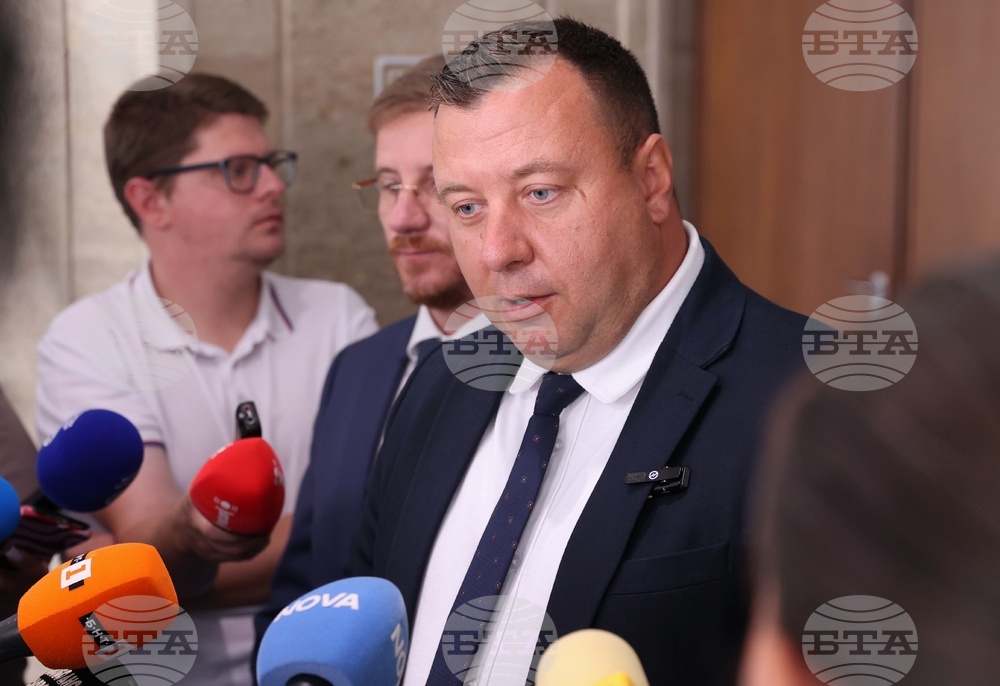
Speaking to reporters in Parliament's lobby here on Thursday, Vazrazhdane Deputy Floor Leader Petar Petrov said that the Criminal Code amendment bill approved by MPs at first reading earlier in the day criminalizes a range of commercial activities that could be linked to the Russian Federation.
The bill, submitted by the Council of Ministers, amends the Criminal Code to transpose a European directive on the definition of criminal offences and penalties for the violation of EU restrictive measures. The bill provides for certain forms of violations of EU restrictive measures, as well as actions aimed at circumventing them, to be criminalized as offenses.
“The ruling majority has begun to show its true face and, for the first time, is criminalizing as offenses activities that it claims constitute circumvention of sanctions against Russia, without even saying that they should be identified as violations of EU restrictive measures,” Petrov said. He noted that, for the first time in Bulgarian criminal law, an attempt was being made to establish criminal liability for legal entities, including banks, financial institutions, insurance companies and even the Patent Office. Drafted hastily, the bill fails to specify that criminal liability should be borne by a natural person. Under Bulgaria’s Criminal Code, liability is personal and cannot be imposed on companies or banks, Petrov added.
The Vazrazhdane Deputy Floor Leader said the bill also creates ambiguities and contradictions. Despite criticism of the bill from the Finance Ministry, the National Statistical Institute, the Supreme Court of Cassation, the Supreme Prosecutor's Office of Cassation and Parliament’s Committee on Legal Affairs, the bill was approved at first reading, he added.
The proposed bill covers many more activities than those falling within the scope of the European directive, and it is not sufficiently precise, but rather reflects a desire to criminalize non-compliance with sanctions against Russia, the MP added. “Will we not come under scrutiny from the European Court of Human Rights by criminalizing activities that are otherwise lawful — consulting, financial and legal services — if they are linked to failing to provide information about sanctioned individuals?” Petrov asked.
/PP/
news.modal.header
news.modal.text