site.btaSANS Undergoing Internal Restructuring, Chairman Plamen Tonchev Says
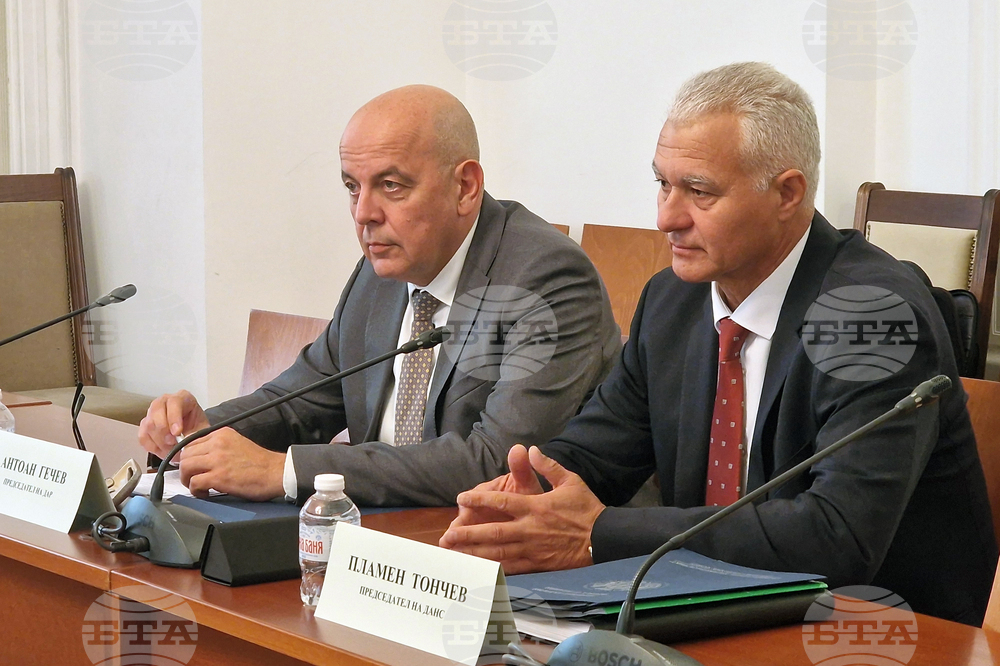
The State Agency for National Security (SANS) is undergoing internal restructuring, including the removal of a large number of management positions, SANS Chairman Plamen Tonchev told here on Thursday the Parliamentary Committee for Control of the Security Services, the Application and use of the Special Intelligence Means and the Data Access under the Electronic Communications Act.
The Committee considered SANS's 2025 annual activity report, submitted by the Council of Ministers on June 11, 2026. The report was adopted with five votes in favour, one against and three abstentions.
Administrative burdens have increased in recent years, with about 30% of management positions identified as having no actual functions to oversee, Tonchev said. The Agency's territorial structures will also be reorganized, with five territorial directorates to be established. Each regional centre will have a structure staffed at the level necessary to handle the Agency's day-to-day tasks, he said. According to Tonchev, clerical staff, maintenance workers and drivers will be retained only at the five major centres to be established.
"I recommended to the Director of the General Directorate for Combating Organized Crime (GDCOC) that, where there are plans to expand the regional structures, our colleagues who cannot be relocated to Sofia or the major territorial centres should be reassigned to Interior Ministry structures," Tonchev said.
Asked by MP Aleksandra Sterkova of Democratic Bulgaria whether the security services knew the whereabouts of Petyo Petrov, known as "The Euro", Tonchev said that SANS had no powers to conduct searches. If information about Petrov's whereabouts was obtained in the course of operational search activities, it would be provided to the Interior Ministry, he said.
Asked about claims that 400 SANS employees were being "purged", Tonchev said too many people had been appointed to unsuitable positions at the Agency last year. The Agency's staff had not been reduced but had actually increased, he said.
MP Atanas Atanasov of Democratic Bulgaria asked how many cases involved the use of special surveillance means as an urgent measure. Tonchev said the Agency's practice was to use them as a priority in cases related to terrorism. There had been about five such cases conducted within the framework of the law, he said.
SANS is working to establish the circumstances surrounding a money-laundering case involving Ukrainian nationals in Varna, as well as other cases across the country, Tonchev said in response to a question from MP Ivelin Parvanov of Vazrazhdane. The materials concerning the Varna case had been submitted to the prosecution service, the SANS chairman added.
/IV/
news.modal.header
news.modal.text