site.btaMedia Review: August 11
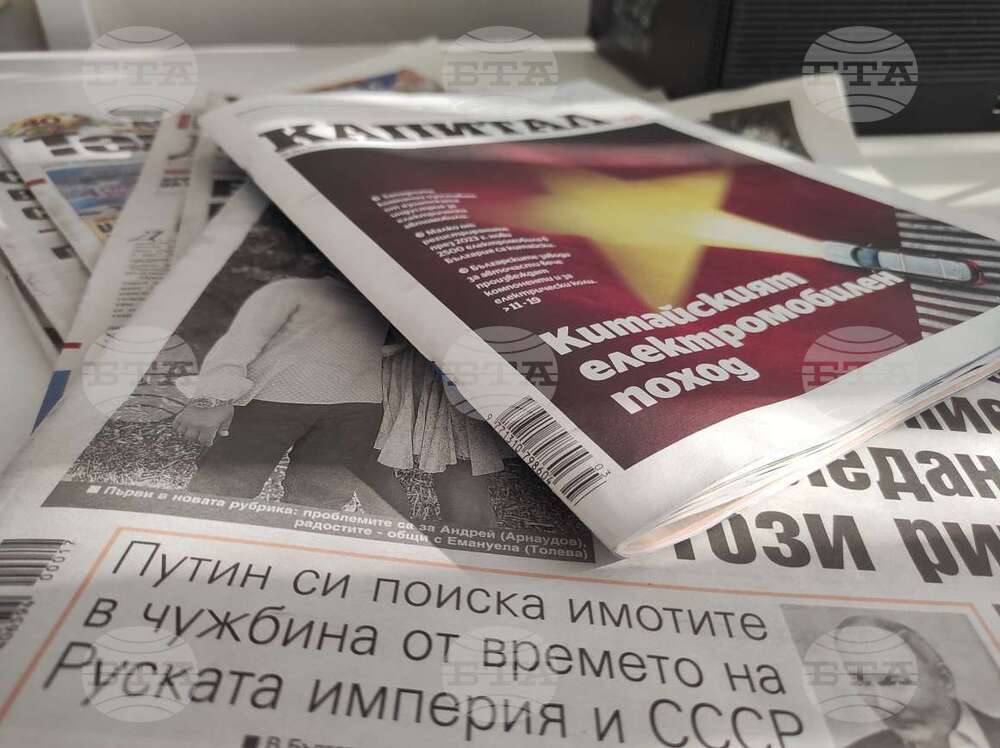
HEADLINES
The drone that entered Bulgarian airspace near Kardam and the explosions and fire at an EMCO ammunition plant near Tryavna dominate print, broadcast and online coverage on Tuesday. Reports focus on gaps in drone detection, plans to buy counter-drone systems, contacts with Ukraine and Romania, and the investigation into the separate ammunition-warehouse incident.
Another leading topic is the fatal beating of Georgi Kuzev in Plovdiv, for which five minors have been charged. Coverage examines online radicalization, self-styled paedophile hunters, the responsibilities of parents and media outlets, and whether penalties for exceptionally serious crimes committed by minors should be increased.
POLITICS
Trud says a seven-day online poll of 1,491 readers found that 45.81% believe GERB should change its leadership to restore its political position. A further 21.86% favour breaking with all previous political partnerships, 13.28% want the party to rebuild its local structures and 8.92% call for a clearer political orientation. Another 10.13% are undecided.
***
Trud reports in an interview with constitutional law professor Plamen Kirov that Bulgaria needs an entirely new Election Code because repeated amendments have left the present legislation inconsistent. “The Election Code has become a patchwork,” Kirov said. He says machine voting may remove some local counting irregularities but could enable manipulation on a much larger scale if software is compromised, while the rules do not explain what should happen if machines begin printing blank slips.
Kirov expects a run-off in the presidential election and notes that Progressive Bulgaria and the Bulgarian Socialist Party support President Iliana Iotova. He also defends the office of Vice President as a guarantee of continuity and says changes restoring the President's broader powers to appoint caretaker governments are unlikely before the election because they require a qualified parliamentary majority.
DEFENCE AND SECURITY
24 Chasa writes that the drone which entered from Romania and exploded 100 m inside Bulgarian territory near Kardam was most likely a Ukrainian-made Maya decoy. Defence Minister Dimitar Stoyanov says the two-by-two-metre aircraft has a wooden airframe, a metal engine, a range of up to 600 km and capacity to carry up to 5 kg of explosives. Its damaged GPS module cannot yield flight coordinates, but its serial number has been sent to Ukraine.
Stoyanov wants at least ten counter-drone systems and an electronic-warfare system to be acquired as quickly as possible, with around EUR 127 million earmarked. “There is a need for new systems, purchased as quickly as possible,” Stoyanov said. International security expert Slavcho Velkov calls the incursion a breach of national air security because the drone exploded about one km from a compressor station on the Trans-Balkan gas pipeline route. Mediapool.bg adds that the incident exposed long-standing radar-coverage gaps, while experts say the response was too slow and question why Romania did not detect or report the aircraft.
***
Trud reports that Foreign Minister Velislava Petrova-Chamova met Ukrainian Ambassador Olesya Ilashchuk and requested all available information about the incident. Ilashchuk says Ukraine did not intentionally direct unmanned aircraft towards Bulgaria and is ready to cooperate fully. Petrova-Chamova has also informed her EU counterparts. Bulgaria remains in contact with Romania, and NATO allies are due to exchange updated information on Wednesday.
***
Trud and 24 Chasa write that explosions and a fire destroyed an ammunition warehouse at the EMCO plant near the village of Belitsa, Tryavna Municipality. About 300 workers were evacuated safely, no one was injured, no other buildings were affected and air-quality measurements found no pollution. Interior Minister Ivan Demerdzhiev says there is no evidence of external interference and that the cause appears more likely to be internal. The Gabrovo prosecution service is investigating.
BNT later reported that the forest fire caused by ammunition fragments had been brought under control, with no risk to nearby settlements. Chief Commissioner Alexander Dzhartov, head of the General Directorate Fire Safety and Civil Protection, said crews remained at the site to extinguish isolated hotspots. Former interior minister and munitions expert Valentin Radev said an ordinary industrial error was the most likely cause but conclusions should await the investigation.
Dnevnik also provides a chronology of major explosions at Bulgarian arms plants and depots since 2008, including incidents at facilities linked to arms trader Emilian Guebrev and examined for possible connections to Russian military intelligence.
SOCIETY AND HOME AFFAIRS
Telegraph writes that the Interior Ministry's Cybercrime Directorate has begun extensive monitoring of social-media profiles and groups for aggressive content, threats and recorded violence after the Plovdiv killing and the filmed abuse of a child in Radomir. Ten people were present during the fatal beating in Plovdiv, five have so far been charged, and further charges remain possible. Demerdzhiev says self-appointed online vigilantes cannot dispense justice and the Government is considering legislative restrictions on minors' access to social media.
Mediapool.bg also reports that Demerdzhiev has promised stronger action against online radicalization and groups that turn violence into social media content. “Some of these children are being radicalized in closed online groups, where they are taught that cruelty is strength and empathy is weakness,” Demerdzhiev said. He has discussed legislative measures with Prime Minister Rumen Radev but says parents remain the first line of protection.
***
Dnevnik reports that the Association of European Journalists-Bulgaria is urging media outlets not to glamorize vigilantism or present unlawful practices as acceptable. The organization says uncritical coverage of violent self-styled paedophile hunters can legitimize their conduct and calls on the Council for Electronic Media and law-enforcement authorities to exercise greater vigilance.
BNR reported that lawyer Dimitar Markovski, who represents Kuzev's family, called for the maximum penalty for exceptionally serious murders committed by minors to be raised to 20 years. He said people who filmed the attack without intervening were not automatically accomplices but could be investigated for failing to assist the victim, while investigators still had to establish whether others acted as instigators or accessories.
***
Dnevnik writes that synthetic drugs are reshaping the narcotics market. Fentanyl seizures rose from 66 grams in 2014 to 6.893 kg in 2025, while heroin seizures fell from more than 1.15 t in 2021 to 794 grams in 2025. A recent operation against two linked criminal groups in Sofia and Ruse yielded 12.6 kg of fentanyl, valued by investigators at about EUR 300 million on the illicit market. Police say a Sofia laboratory was producing between 6 and 10 kg a day.
The site adds that 3,195 of the 21,187 people convicted in 2025, or just over 15%, were found guilty of drug-related offences. Cannabis remains the most commonly seized drug by volume, while cocaine seizures increased from 26.9 kg in 2014 to nearly 400 kg in 2025.
***
Telegraph reports that an AI-generated scam video has cloned the image and voice of Metropolitan Gavriil of Lovech to advertise medicines and other products. His office says he has never endorsed such goods or participated in the video, and the case has been referred to the competent authorities with a request for the recording to be removed.
ECONOMY
Capital writes that the information technology labour market is moving from broad-based hiring and automatic double-digit pay increases towards selective recruitment, specialization and AI-assisted efficiency. Average IT pay rose by 6.2% in 2025, down from 23.2% in 2024, to a gross monthly EUR 3,347. Software-sector pay averaged EUR 3,822, while pay in outsourced IT services fell by 4.4% to EUR 2,665.
Employment at the 100 leading technology and telecommunications companies nevertheless increased from 44,749 to 49,720. SAP Labs Bulgaria hired 400 specialists in 2025 and more than 150 in the first months of 2026, while A1 Bulgaria plans more than 300 new positions by year-end. Other companies are reducing teams, freezing general pay increases or recruiting only for specialist roles.
***
Telegraph writes that registered property transactions fell by 16.8% year-on-year in the first half of 2026 after many cash buyers invested before the euro was introduced. Construction began on 19,106 homes during the same period, around 35% more than a year earlier, suggesting that substantially more supply will reach the market over the next few years.
Nearly 70% of Sofia property purchases are now mortgage-financed, compared with 54% in Varna and 46.2% in Plovdiv. In Nessebar, only 13% involve mortgages. Burgas stands out because the 3,480 homes whose construction began during the period exceeded completed sales by 104%, while residential listings rose by 16%.
***
Telegraph reports in an interview with economist Rumen Galabinov that the demographic crisis is contributing directly to higher government debt. An ageing population and labour shortages leave fewer workers paying taxes and social-security contributions while more people draw on the pension, healthcare and education systems. Galabinov says the country may eventually have to raise social- and health-insurance contributions, increase the retirement age or attract more workers from third countries.
He says reducing planned capital spending could bring this year's deficit down from 5.7% of GDP to around 4%, while restoring it to 3% by 2028–2029 will require fiscal consolidation, administrative restructuring, stronger investment and exports, and measures against the shadow economy.
***
Nova TV reported that the Government was preparing voluntary labels for wholly Bulgarian food and wine products and for restaurants serving them. Former Consumer Protection Commission chair Dimitar Margaritov supported the idea but said the system must ensure that products carrying the label are genuinely Bulgarian and should help small producers cooperate. Konstantin Zankov of the Institute for Analysis and Assessment in Tourism said promoting local food could attract more restaurant customers. Margaritov said the measure might also reduce prices, while a clear methodology was needed to define a fair price.
Nova TV also reported that fruit and vegetable growers near Haskovo were protesting against low farm-gate prices and lack of market access, which they blamed principally on imports. Producers said peppers fetched about EUR 0.40, compared with the EUR 0.75–0.80 needed to cover costs, while first- and second-grade tomatoes fetched about EUR 0.70 and EUR 0.50 respectively. Support for gherkins amounted to EUR 1,000 per hectare, which one grower said did not cover even the cost of netting. Fruit and Vegetable Branch Chamber Chair Tsvetan Tsekov said producer organizations and legislative changes were needed to prevent the sector from disappearing.
ENERGY AND ENVIRONMENT
Mediapool.bg reports that the Sofia Administrative Court has conclusively overturned Bulgargaz's refusal to disclose the volumes of gas received under its agreement with Turkiye's BOTAS between 2023 and 2025 and the amounts paid. The case followed an Access to Public Information Act request by Factcheck.bg editor Vasilena Dotkova.
The court says information on the expenditure of public money is subject to an overriding public interest and rejects Bulgargaz's reliance on commercial secrecy and ongoing renegotiation of the agreement. The state supplier has 14 days to provide the data.
***
Capital writes that the country already has almost twice the operating battery-storage capacity implied by SolarPower Europe's forecast for the end of 2026. The weekly has tracked 100 operating systems with total power of 4,844 MW and capacity of 14.7 GWh, compared with the organization's implied forecast of 7.5–8 GWh.
A further 2,110 MW and 6.075 GWh of advanced projects could bring the total to nearly 7 GW and 20.8 GWh by year-end. Capital notes that 14.7 GWh is probably a lower bound because there is no comprehensive public battery register. The rapid expansion may narrow the midday-evening price spread on which battery arbitrage depends, making balancing-market revenue and system services increasingly important.
***
BNR reported that Bobov Dol Thermal Power Plant was building a biogas facility on a 1.5-hectare site next to its production area. The plant will produce methane by fermenting biomass, principally straw and silage. The first construction phase was 80% complete and was due to finish by the end of October.
BNR added that authorities were investigating the legality of a nearby round-the-clock surveillance camera monitoring pollution and conditions around the plant. Bobov Dol TPP complained to the prosecution service, citing the facility's status as a site relevant to national security.
***
BNR, bTV and Nova TV reported that the Danube at Ruse had fallen by 3 cm in 24 hours to 114 cm below the reference zero level. Most gauging stations along the Bulgarian section recorded falls of between 1 and 3 cm, while the level at Oryahovo was unchanged. Vessel-draught restrictions remained in force, and a vessel had run aground near Lom without obstructing navigation. Nova TV added that the minimum measured depth near Batin and Belene was about 1.6 m, compared with at least 1.8 m elsewhere.
bTV also reported that former Kozloduy Nuclear Power Plant board chair and nuclear energy expert Georgi Kaschiev said a further fall of about 30 cm could force the plant to shut down. A decline of 10 to 12 cm would reach the first critical threshold and require output reductions; another 20 cm could cause cavitation in the cooling-water pumps. “If it falls another 20 cm, the plant must be shut down,” Kaschiev said. Forecasts suggested that the first threshold was unlikely to be reached within two weeks, although low Danube levels have historically persisted until mid-October.
HEALTHCARE
Trud writes that a joint survey by Medical University-Sofia and the National Sports Academy Vassil Levski shows severe workload and burnout among general practitioners. Among respondents, 55% have patient lists exceeding 1,500 people, 75% report high or very high physical fatigue, and half work without a permanent nurse. A further 85% consider their medical equipment inadequate or highly inadequate, while 70% spend more than two hours a day on paperwork.
The survey finds that 45% are considering or actively planning to work abroad and 40% are considering leaving the profession. More than 30% see over 30 patients a day, 63% often or constantly work beyond official hours, and 90% perform regular or periodic duty shifts.
***
BNT reported that the shortage of general practitioners in remote areas was worsening and that more communities risked being left without medical care. Bulgarian Medical Association Deputy Chair Ivan Madzharov said such practices had never been attractive and were disappearing as their doctors aged or died. “There should be a special government policy to incentivize doctors,” Madzharov said.
Madzharov added that 90% of the negotiations between the Association and the National Health Insurance Fund had been completed. He expected a new National Framework Agreement running through 2028 to be signed by early September, with a new budget and annex agreed each year.
***
bTV reported that importers of unregistered medicines used to treat rare diseases opposed proposed centralized procurement, saying it could delay treatment. Svetla Kacharova, chair of the Association of Importers of Unregistered Medicinal Products for Rare Diseases Treatment, said claims that identical medicines had been sold at markups of up to 100 times had not been substantiated by data later published by the Health Ministry. “There is no way to centralize a procedure intended for a named patient,” Kacharova said.
The governing Progressive Bulgaria said the proposed amendments preserved hospitals' right to obtain such medicines without public procurement under conditions set by an ordinance pursuant to the Medicinal Products in Human Medicine Act.
JUSTICE
Capital's analysis by lawyer Martin Kostov says the proposed administrative measures against property fraud will remain insufficient unless the law requires owners to be notified before declaratory notarial deeds based on witness testimony are issued. Such a deed does not itself transfer ownership but can create apparent title that facilitates a sale or mortgage and forces the registered owner into lengthy litigation.
Kostov proposes mandatory notification of registered owners or identifiable heirs, an entry in the property-registration system as soon as proceedings begin, automatic multichannel alerts and termination of the non-contentious notarial procedure whenever an interested party objects. The adverse-possession claimant would then have to bring the dispute before a court. He also proposes more transparent disciplinary practice and clarification of whether the Notary Chamber's statutory guarantee-fund mechanism is operating.
CULTURE
Telegraph writes that archaeologists have uncovered a massive rock-cut sarcophagus and burial chamber at Perperikon. The structure, precisely hewn to a depth of half a metre and once covered by a tiled roof, was looted in antiquity. It dates from the Late Roman period, in the 4th–5th centuries and continues a much older Thracian rock-burial tradition.
Excavation head Nikolay Ovcharov says close to 50 rock tombs are now known in the region. Most are broadly dated to the 2nd–1st millennia BC, although many remained objects of veneration in Roman times.
/KT/
news.modal.header
news.modal.text