site.btaMedia Review: August 6
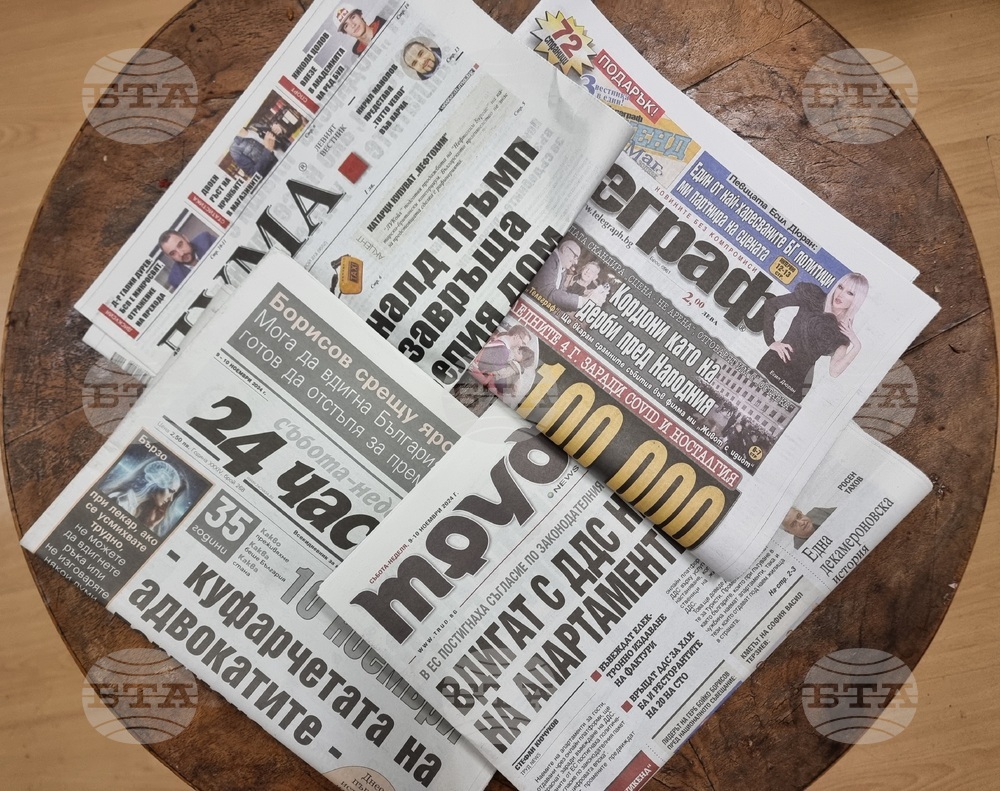
The August 2 confrontation between Bulgarian and Italian teenagers in Bansko, the race ahead of the October 25 presidential election, concerns over fentanyl and key economic issues feature prominently in Bulgaria's news media on Thursday.
COMMENTS ON BANSKO INCIDENT
On Thursday, Prime Minister Rumen Radev commented on the confrontation between Bulgarian and Italian teenagers outside a hotel in Bansko, urging foreign politicians who criticized Bulgaria over the incident to first familiarize themselves with the facts. According to preliminary information from the Interior Ministry, presented by Bansko police chief Hristiyan Parmakov, the altercation was preceded by alleged provocative behaviour by a group of young Italian Jews, who reportedly made offensive gestures from their hotel rooms, leading to verbal abuse from Bulgarian youths.
Radev said Bulgaria was ready to provide all available facts about the incident and called on all visitors to respect the country's laws, the dignity of Bulgarian citizens and private property. He added that guests in Bulgaria should avoid behaviour that could provoke tensions or disrupt public order.
***
Telegraf presents different perspectives on the incident, including those of local residents, Bulgarian authorities and participants in the Bnei Akiva summer camp. Despite the international attention surrounding the incident in Bansko, the youth camp is continuing as scheduled. Hotel Zara staff told Telegraf that the programme is running normally, with Italian students currently staying at the hotel and another group expected on August 10. Local residents interviewed by Telegraf largely described the incident as a "storm in a teacup" and said the international attention it has attracted was disproportionate to what actually happened. Italian students, identified as Ariel, Gabriel, David and Eli, said they had been subjected to threats and Nazi gestures outside the hotel. They said they had felt scared and that police had intervened, while Federico Spizzichino, head of the Rome-based organization, called the incident another example of "worrying signs of antisemitism in Europe". The Foreign Ministry in Sofia said Bulgaria strongly condemns all forms of antisemitism and remains in contact with the Interior Ministry and Italian authorities over the incident. The ministry stressed that such acts are unacceptable and that competent institutions are continuing checks to establish all facts.
bTV reported that following political reactions in Italy and Bulgaria, local residents in Bansko have shared accounts presenting a different perspective on the incident. One woman said some of the youths had allegedly entered a neighbour's private property after climbing over a fence, and that police assistance was needed after attempts to make them leave failed. Other residents and shop owners described alleged problems during the group's stay, including rude behaviour towards staff and tensions in local businesses.
***
Social scientist Kancho Stoychev told Nova TV that the incident attracted significant public attention mainly because of the participants' backgrounds. He said similar conflicts occur every day and noted that in this case the confrontation remained purely verbal.
POLITICS
An analysis by mediapool.bg says Continue the Change and Democratic Bulgaria are seeking to present Andrey Gurov as the united candidate of Bulgaria's pro-European democratic camp against the incumbent President Iliana Iotova, casting him as the antithesis of Prime Minister Rumen Radev's foreign policy. While the goal is for Gurov to reach a runoff against Iotova, the analysis says that outcome is far from certain, with Vazrazhdane leader Kostadin Kostadinov also expected to compete for the nationalist and pro-Russian vote. Meanwhile, GERB leader Boyko Borissov's strategy could prove decisive for the presidential election. With GERB weakened after the April 19 parliamentary vote, Borissov is expected to delay announcing whether the party will field its own candidate, endorse Gurov, or remain neutral. Each option carries risks, while an ambiguous stance could split GERB voters and potentially benefit Iotova in a runoff.
The analysis outlines several possible scenarios for Borissov. In the most favourable one for his party, he fields a surprisingly strong candidate capable of restoring GERB's political standing despite its recent electoral setback. Alternatively, he could refrain from nominating a candidate and instead present himself as a unifier by backing Gurov as the joint centre-right candidate, although Continue the Change and Democratic Bulgaria are trying hard to avoid this. If Gurov were to lose a runoff against Iotova, Borissov would incur little political cost while avoiding a direct confrontation with Rumen Radev, which the analysis says he appears reluctant to do. If Borissov refrains from giving voting instructions to GERB supporters, some of their votes could ultimately shift to Iotova. The GERB leader acted similarly in the 2023 Sofia mayoral runoff, when he never made clear whether he supported Vanya Grigorova or Vassil Terziev.
***
Political analyst Lyubomir Stefanov told BNR that President Iotova will need to establish her own political profile in the presidential campaign rather than rely on Rumen Radev's popularity, as being associated with his approval ratings could overshadow her own candidacy. Stefanov said polls increasingly show that PM Radev remains the main source of support for his party, carrying it largely through his personal popularity. The Prime Minister's approval ratings mask what the analyst described as institutional weakness and the shortcomings of the party's representatives in Parliament and government.
GERB and its leader Boyko Borissov remain capable of making a strong late move before the vote, while Vazrazhdane could use the October election as an opportunity to expand its influence. According to Stefanov, a more radicalized campaign on foreign policy or other issues could benefit Iotova by making her appear as a more moderate candidate.
Stefanov also criticized the performance of the ruling Progressive Bulgaria party during its first 100 days, saying it had failed to deliver a clear and convincing message that it could address the country's problems and had not demonstrated a level of competence that would justify voters' support.
***
On Nova TV, journalist Silvia Velikova commented on Radev's performance, saying that he had gained political confidence and was creating the impression that he was indispensable. She noted that he had weathered several crises, including budget-related issues and the deployment of US tanker aircraft at Bezmer Air Base, and said his ability to avoid major political damage was largely due to public frustration with the alternatives.
***
In an interview with 24 Chasa, former finance minister Vladislav Goranov commented on a US Justice Department document concerning OFAC's decision to keep businessman Vassil Bojkov on the US sanctions list. Goranov said the document reflects the US government's legal position defending OFAC's refusal to reconsider the designation and argued that OFAC had rejected Bojkov's claims that Borissov and Goranov had extorted him for bribes as insufficient evidence. Goranov said US legal arguments maintain that alleged circumstances surrounding a bribe do not remove the responsibility of the person who paid it, adding that a wealthy and influential person would have had options to seek institutional protection if subjected to pressure. Goranov also said his own request for OFAC to review his inclusion on the sanctions list is still pending, with communication ongoing but no final decision reached.
***
24 Chasa frontpages a report that Bulgarian intelligence services received zero points and ranked last alongside those of Hungary and Slovakia in a ranking by French magazine L'Express assessing European intelligence agencies. The survey, based on evaluations by 60 current and former senior intelligence officials from 25 countries, placed the UK's MI6 first, followed by France's DGSE, the Netherlands' intelligence services, Ukraine's agencies and Germany's BND. Participants rated services on reliability and effectiveness, selecting the five best-performing agencies. Bulgaria's poor result was reportedly due to the continued vulnerability of Bulgarian political elites to Russian influence.
ECONOMY
Speaking to BNR, economist Shteryo Nozharov said the disbursement of funds under the EU Recovery and Resilience Plan is a lengthy process and cannot be attributed to any government that has been in office for only a few months. Bulgaria has so far received 68% of the funds, while further payments depend on the completion of planned reforms and investment projects. Nozharov said there is a good chance the country could receive at least 85% of the total funding this year, providing more than BGN 1.5 billion in liquidity support for the budget, although it would not reduce the deficit.
***
On Bulgarian National Television, Ombudsman Velislava Delcheva said that major changes to labour law were introduced through budget legislation without public consultation. She has asked the Constitutional Court to review 2026 State Budget Act provisions on the minimum wage and employment service. Delcheva argued that the new rules create legal uncertainty and blur the distinction between working time, length of service and contributory service. She argued that combating abuses of part-time employment does not justify restricting labour rights.
***
Trud has a story headlined "Pensioners Help Fill Labour Gaps". National Social Security Institute data show that more than 231,000 Bulgarians continue working after retiring on a service-and-age pension, an increase of nearly 6,000 over the past year. The largest number, 59,519, are employed in the public sector, while more than 20,000 work in healthcare. Many disability and survivor pension recipients remain in employment, with the total number of working pensioners estimated at around 350,000.
***
In a commentary in 24 Chasa, travel and tourism expert Bayko Baykov says Bulgaria is seeing growing interest among foreign visitors in city tourism, a trend that became more noticeable after the COVID-19 pandemic. He linked the rise mainly to the expansion of air connections by Bulgaria Air, Wizz Air and Ryanair, which opened new routes from markets such as Italy, Spain and Poland. Foreign tourists increasingly arrange their own three- to four-day city breaks focused on history, culture, gastronomy, nightlife and spa experiences. Bulgaria's cities offer cultural attractions without the overcrowding seen in many Western European destinations, while affordable flights and easy airport access have further boosted demand. The trend is mostly visible in Sofia, Plovdiv, Varna, Burgas and Veliko Tarnovo. The number of tour operators in Bulgaria offering walking, cycling and horse-riding trips is growing, Baykov also said.
***
Tourist traffic along Bulgaria's Black Sea coast is around 20% lower this summer compared with last year, with a longer-term decline also visible, entrepreneur Dimitar Todoranov told Radio Stara Zagora, part of Bulgarian National Radio. He said higher prices reflect rising labour, insurance, accommodation and inflation costs rather than only profit margins, adding that nearly half of seaside businesses are operating at a loss. According to Todoranov, the main issue is the balance between price and quality of service.
***
Trud, segabg.com and mediapool.bg are some of the media reporting that a company linked to the family of businessman Nikolay Banev has won a lawsuit against Bulgaria's Parliament over alleged violations of EU law in a privatization case dating back to 2000. The Cabinet has approved up to EUR 6 million to cover the court-awarded compensation, accrued interest and legal costs. Of the total, EUR 2.45 million is compensation, with EUR 3.52 million in statutory interest accrued since 2013. Banev's Helio-Tour-S AD, a tourism company, originated from the privatization of regional Balkantourist assets.
***
The Bulgarian Food Safety Agency has busted an operation churning out fake extra virgin olive oil, Trud reports on its front page. Authorities have uncovered seven tonnes of yellowish oily liquid labelled as extra virgin olive oil at a site in the village of Zhiten near Sofia. The products, falsely presented as Greek olive oil, were packaged in tins, plastic containers and bottles bearing "Extra Virgin" labels and were reportedly sold at prices well below market levels. Inspectors said the oil was stored in contaminated containers with no documentation or traceability linking it to a legitimate business operator. The bottles bore the logos of international quality certification bodies, which authorities believe were most likely counterfeit. Three persons were arrested.
DRUGS
Following the discovery of a suspected fentanyl laboratory in Sofia on Tuesday, dnevnik.bg interviewed Tihomir Bezlov of the Center for the Study of Democracy, who said the seizure could cause a temporary shortage if the lab was producing at the reported scale, although it is unclear whether other facilities exist. He said there is no evidence Bulgaria exports fentanyl as no seizures of Bulgarian-made fentanyl have been reported elsewhere in Europe. He believes the production was most likely intended for the domestic market. Bezlov described Bulgaria as an outlier in the Balkans, with fentanyl having largely replaced heroin despite no similar trend in neighbouring countries. He attributed this shift to heroin shortages following restrictions on Afghan opium production and warned that fentanyl's narrow margin between a typical and a fatal dose has contributed to a rise in overdose deaths. There were 65 registered fentanyl overdoes deaths in 2025 and 40 so far this year. He also said there is no evidence linking Mexican cartels to fentanyl production in Bulgaria or suggesting the country has become a regional production hub.
Marian Sabev of the Center for the Study of Democracy told bTV that the key question is whether the case marks a shift towards Bulgaria playing a role in processing, mixing and distributing highly potent synthetic opioids. He cautioned against drawing conclusions about the scale of production or potential doses before more facts are known, noting that the type of fentanyl produced has not been established and that authorities may have detained producers but not the entire distribution network.
Also on bTV, Dr Vladimir Nikolov, head of the State Psychiatric Hospital for Treatment of Drug Addiction and Alcoholism, highlighted the risks posed by fentanyl, saying that if investigators' estimate of production of up to 10 kg per day is confirmed, this would mathematically correspond to around five million potentially lethal doses.
***
Mediapool.bg reports that Bulgarian authorities, acting on intelligence from Ukraine's Security Service (SBU), have arrested a suspected international drug trafficker accused of running a network supplying psychotropic substances to Ukraine and EU countries. According to the SBU, the suspect coordinated 14 clandestine laboratories producing alpha-PVP, mephedrone, amphetamine and precursors while directing the operation from a Balkan resort. The network allegedly involved at least 30 people and had the capacity to produce more than 50 kg of synthetic drugs a month. Extradition proceedings to Ukraine are under way, and the suspect faces up to 13 years in prison if convicted.
Quoting Ukraine's national police, dnevnik.bg reports that during the operation in the Bulgarian Black Sea city of Burgas, police detained the alleged head of the criminal network, a 39-year-old Ukrainian national from Chernivtsi, and a 31-year-old chemist from Ivano-Frankivsk region suspected of involvement in drug production. Authorities seized 50 kg of psychotropic substances valued at some EUR 775,000. Investigators said the group smuggled drugs and precursors across borders on international passenger buses, concealing the illegal cargo among passengers' luggage. There has been no information about Bulgarian involvement in the large-scale anti-drug operation from Bulgaria's Interior Ministry, the website said.
HEALTH CARE
Mediapool.bg reports that the Health Ministry has proposed a major restructuring of the public health administration, including merging regional bodies and cutting 440 staff positions by the end of 2028. The first stage would transform the 28 Regional Health Inspectorates from independent legal entities into territorial units of the ministry.
Former health minister Kostadin Angelov, now MP of GERB, criticized the plan as weakening the state's capacity to respond to health crises like COVID, arguing it would undermine the regional public health network. The Health Ministry rejected the criticism, saying the reform would change only the administrative model and preserve all specialist activities, control functions, expert staff and healthcare services.
***
Medicine is the most sought-after university programme in Bulgaria, with nearly five applicants competing for each place, while dental medicine attracts more than four candidates per place, a Telegraf review shows. At Sofia University, law and psychology are among the most popular programmes during the 2026/27 admissions campaign.
ENVIRONMENT
Trud has interviewed Svetoslav Ivanov, diver and Technical Director of ECO.BG, who says Bulgaria is set to gain something unprecedented in the Black Sea: a technological artificial reef designed to help restore the marine ecosystem, support scientific research and attract divers. The pioneering project is being developed by startup ECO.BG. The reef will be created from the former government vessel Atanas Dimitrov. Late last year, ECO.BG acquired the 34-metre water bus, built in Bulgaria in 1969. "Colleagues in Burgas launched the initiative by scuttling the vessels Pioner and Chavdar to create artificial reefs. We decided to continue and expand on that effort," he says.
/DD/
news.modal.header
news.modal.text