site.btaUPDATED Low Danube Water Levels Do Not Threaten Water Supply Along Bulgarian Stretch, Ministry Says
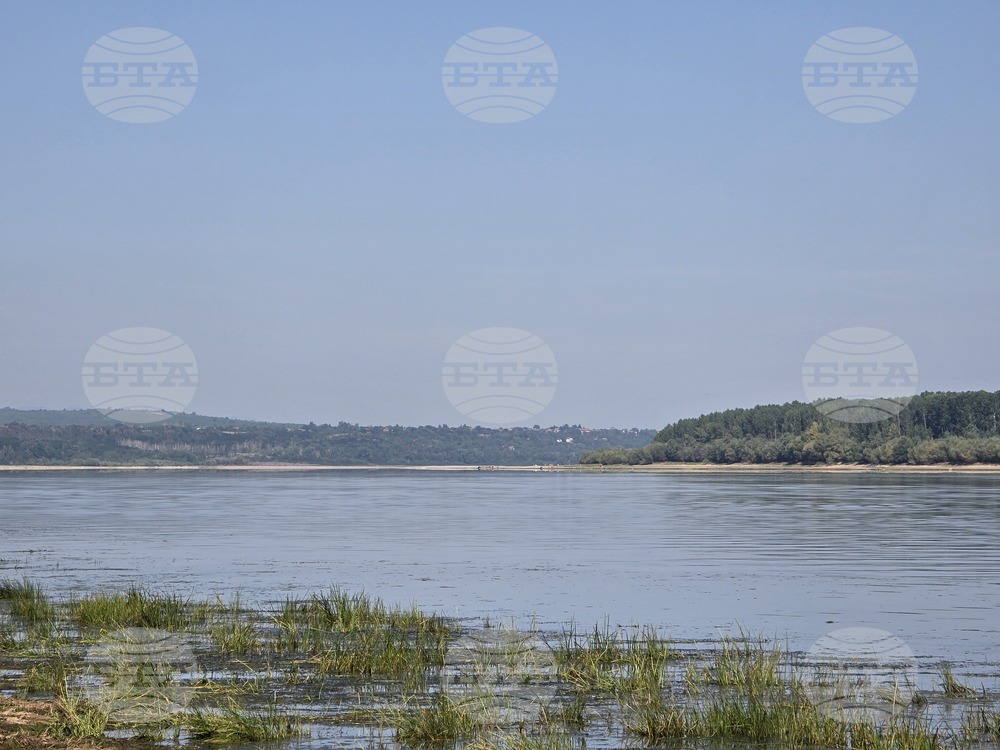
The current low level of the Danube River is not causing problems with the water supply of settlements along the river in Bulgaria, according to the latest data released by the Ministry of Regional Development and Public Works on Tuesday.
The Ministry said water levels in all shaft wells along the Danube, from Vidin to Silistra, are being monitored closely, while preventive measures are being implemented where necessary.
In Vidin Region, the local Water Supply and Sewerage operator operates 14 shaft and tubular wells along the river, supplying drinking water to 29 settlements. Water levels in the wells have declined in line with seasonal trends, but there is currently no need to introduce water rationing or other restrictions on consumption. The Ministry noted that since these water sources entered service, no water supply restrictions have ever been imposed because of critically low river levels or reduced yields. If necessary, the operator has four backup water sources capable of supplying most of the water needed for the town of Vidin and another 21 settlements.
In neighbouring Montana Region, the local water utility uses two Ranney collectors that are not directly recharged by the Danube, and no decline in their water levels has been recorded. These wells supply the town of Lom and the villages of Zamfir, Momin Brod, Slivata, Dobri Dol, Archar, Septemvriitsi and Yarlovitsa. At the end of June, the company sent letters to all municipalities calling for restrictions on the use of water from the public supply network for non-essential household purposes, as there are no alternative water sources available in the event of a crisis and water conservation measures are introduced every summer.
Ten settlements in Pleven Region also rely on wells along the Danube for their water supply. They include the towns of Belene and Nikopol and the villages of Lozitsa, Byala Voda, Somovit, Brest, Zagrazhden, Dabovan, Gigen and Iskar. According to the Ministry, there are currently no indications that water rationing or supply disruptions will be necessary.
A slight decline has been recorded in water sources drawing from the Danube in Vratsa Region. Riverbank wells supply the town of Kozloduy, the Kozloduy Nuclear Power Plant, and the villages of Glozhene and Hurlets. Because of falling water levels in the wells, the local municipality was advised on July 29 to take measures limiting the use of drinking water for non-potable purposes. However, no water restrictions are currently planned. Monitoring data have also shown persistently elevated drinking water consumption in the region in recent weeks. In view of the high summer temperatures and forecasts for continued hot weather, the Vratsa water utility sent letters to municipal mayors on July 30 urging preventive action.
In Veliko Tarnovo Region, the water utility Yokovtsi Water Supply and Sewerage operates 11 tubular wells along the Danube, supplying the town of Svishtov, the village of Vardim and part of the village of Tsarevets. The operator said the wells currently provide sufficient water for household consumption and that reserve water sources are available if additional capacity is required.
In Razgrad Region, Water Supply–Danube Ltd. manages six Ranney wells on the Danube river terrace, which constitute the region's only water source. Static water levels in the wells are currently at their lowest since 2008, although no changes to their operating regime are necessary at this stage.
The water utility in Ruse Region operates nine wells along the Danube. Their output has fallen by about 50% as a result of the river's declining level. Nevertheless, available supplies remain sufficient to meet demand, and no additional restrictions on water use are required. The operator also maintains 24 deep tubular wells in reserve that can be brought into operation if needed.
All shaft wells operated by the Silistra regional water utility are functioning normally despite the lower river level. No water-saving measures or supply restrictions have been introduced, although enhanced monitoring of water source levels is in place.
According to the Ministry's latest nationwide report, covering the period between July 27 and August 2, as of August 3, 2026, one town and 41 villages in 19 municipalities across Bulgaria were under a water rationing regime. A total of about 22,000 people are affected, including 17,000 residents of villages and 5,000 people living in the town. The settlements under water restrictions are mainly in the regions of Veliko Tarnovo, Varna, Montana, Razgrad, Pernik, Gabrovo and Sofia Region. Compared with the same period last year, the number of affected settlements has decreased severalfold. As of August 4, 2025, nearly 186,000 people in 15 towns and 228 villages across 75 municipalities were experiencing water supply problems.
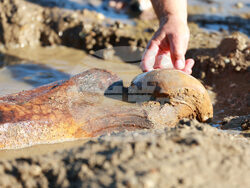
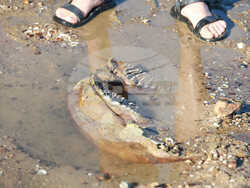
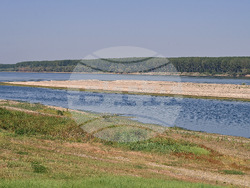
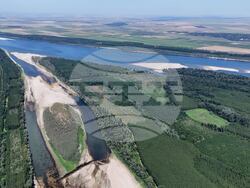
The low level of the Danube River has created a number of difficulties and prompted restrictions in several Bulgarian towns in recent days.
Energy Minister Iva Petrova said Tuesday there is no danger of the Kozloduy Nuclear Power Plant suspending operations because of the Danube's low water level. Speaking during a visit to Bulgaria's only nuclear power plant, she said that if the current trend in the river level continues, the plant will be able to operate normally in the coming weeks.
Water levels along the Bulgarian section of the Danube continued to fall on Tuesday.
Shipping in the Bulgarian section of the Danube River has not been suspended, but only a limited number of vessels continue to operate due to restrictions caused by low water levels, the Executive Agency for Exploration and Maintenance of the Danube River (EAEMDR) said earlier in the day. Despite the continuing decline in the river's level, the Ministry stressed that there is currently no risk to the water supply of settlements relying on Danube water sources.
Earlier on Tuesday, the Executive Agency for Exploration and Maintenance of the Danube River reported that navigation along the Bulgarian section of the Danube has not been suspended. However, because of the low water levels, only a small number of vessels are currently operating on the river.
/TM/
Additional





news.modal.image.header
news.modal.image.text
news.modal.download.header
news.modal.download.text
news.modal.header
news.modal.text