Wrap-up
![Election Code Reform Push Reopens Debate on Machine Voting, Polling Abroad]()
![Election Code Reform Push Reopens Debate on Machine Voting, Polling Abroad]() Bulgaria's Parliament holds a regular plenary sitting, Sofia, July 8, 2026 (BTA Photo/Minko Chernev)
Bulgaria's Parliament holds a regular plenary sitting, Sofia, July 8, 2026 (BTA Photo/Minko Chernev)
site.btaElection Code Reform Push Reopens Debate on Machine Voting, Polling Abroad
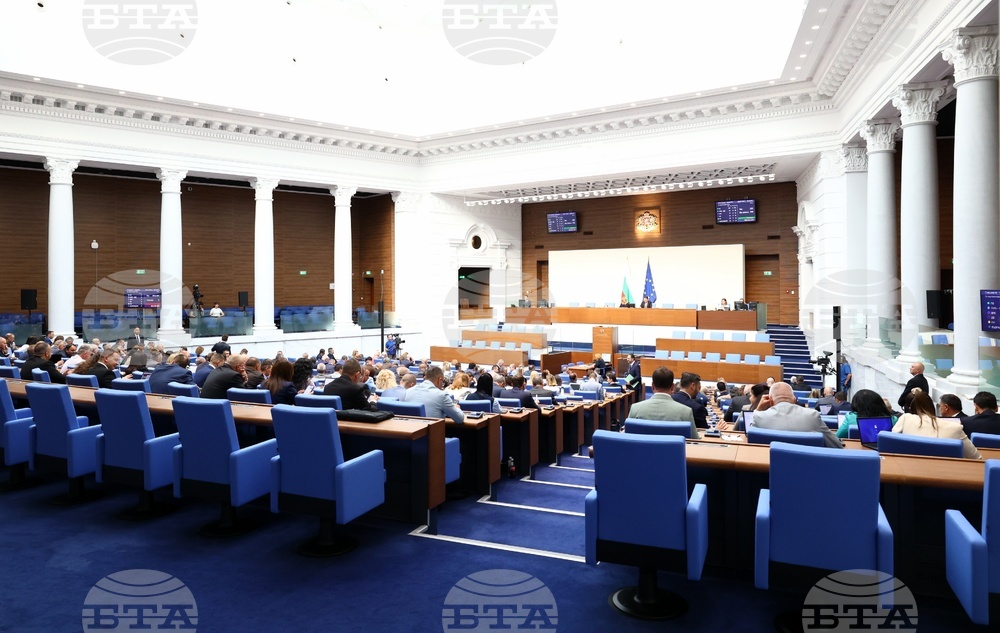
At Wednesday's plenary sitting of Bulgaria's National Assembly, Continue the Change moved draft amendments to the Election Code, triggering a broad political debate over the future of machine voting, voting abroad, and election integrity safeguards. Parliamentary parties are divided over whether to restore full-scale machine voting, expand voting sections beyond the EU, and abolish the suspended separate constituency for Bulgarians abroad.
The amendments seek to fully restore machine voting, machine-produced printed tally sheets, introducing a four-seat multimember constituency abroad for parliamentary elections, digitizing electoral rolls, and using ID card scanners at polling sites. MP Stoyu Stoev said previous concerns about machine voting had been disproved by a 2022 Central Election Commission analysis, which found discrepancies were caused by human error, and argued that the lack of a constituency abroad reflects a lack of political will rather than technical obstacles.
Vazrazhdane Deputy Floor Leader Peter Petrov said his parliamentary group will support the introduction of fully machine-based voting, but not the provisions allowing paper ballots to be used in voting sections with fewer than 300 registered voters. Petrov said Vazrazhdane would also oppose the motion to scrap the limit on the number of voting sections in non-EU countries, citing the party's longstanding position on polling stations in Turkiye. He said Vazrazhdane had advocated exclusively machine-based voting for the past several years because, as he argued, paper ballots had resulted in widespread irregularities and electoral fraud, issues that were also addressed by the Constitutional Court in 2025.
Democratic Bulgaria Floor Leader Nadejda Iordanova said the ruling majority supports two long-standing priorities of her parliamentary group: restoring machine voting as the main voting method and removing the cap on voting sections outside the EU. However, she said Democratic Bulgaria would oppose the abolition of the multimember constituency abroad at second reading and would seek broader consultations on stricter enforcement of the ban on publishing opinion poll results during the prohibited period.
Interior Minister Ivan Demerdzhiev said his Ministry is well placed to share in certifying voting machine software and vote-counting software, as proposed by Progressive Bulgaria. He said the Ministry's Cybercrime Directorate would oversee the process and argued that involving the Ministry would help strengthen public confidence that both voting machines and tallying software function properly, noting that machine voting has been associated with fewer invalid votes and fewer manipulation concerns.
GERB-UDF opposed a return to machine-only voting, with MP Stefan Arsov arguing that the current mixed paper-machine system works well and should be kept for future elections. The parliamentary group said it would vote against Progressive Bulgaria's motion for fixed voting and would approach the Foreign Ministry and the Central Election Commission about information on the share of voters using paper ballots and machines, while awaiting further assessment on whether to remove the cap on voting sections in non-EU countries.
Later on Wednesday, the newly appointed CEC held its first working meeting with its Public Council, focusing on machine voting, election transparency and cooperation with civil society organizations. The Public Council presented an analysis of machine voting. Participants discussed a proposal to establish a joint working group to review the process for verifying voting machines and the mechanism for printing and producing paper records during machine voting. They also discussed preparations for the CEC's upcoming awareness raising campaign on voters' rights and responsibilities, as well as ways to harness the Public Council's expertise in developing the Commission's public information initiatives.
/LG/
news.modal.header
news.modal.text