Wrap-up
![Reactions to 2026 State Budget Draft]()
![Reactions to 2026 State Budget Draft]() National Assembly sitting on June 25, 2026 (BTA Photo/Nikola Uzunov)
National Assembly sitting on June 25, 2026 (BTA Photo/Nikola Uzunov)
site.btaReactions to 2026 State Budget Draft
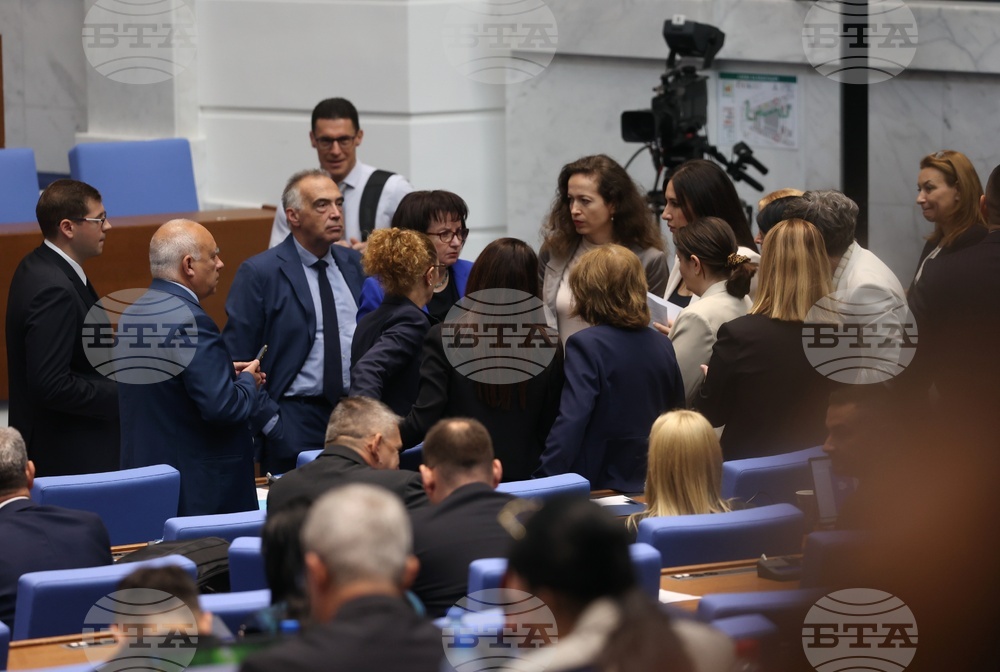
Politicians reacted Thursday to the 2026 State Budget Bill presented a day earlier by Finance Minister Galab Donev. The draft faced criticism by all parliamentary groups except the ruling Progressive Bulgaria and the Movement for Rights and Freedoms which has not commented on the topic.
Progressive Bulgaria Floor Leader Petar Vitanov argued that the main challenge is not just the size of the deficit, but "the vicious budgeting model imposed in recent years - a model based on a continuous increase in public spending, without the necessary connection with labour productivity and the real capabilities of the economy." He said that previous administrations accumulated huge financial commitments in 2024 and 2025, leaving, what he called, "time bombs" in the state finances. Vitanov concluded by stating that Progressive Bulgaria will not give in to calls to immediately reduce the deficit to 2%. Every measure included in the government's draft budget will be assessed on its own merits, while discussions between the Ministry of Finance and trade unions are yet to take place, he told reporters in Parliament later on Thursday.
GERB-UDF MP Temenuzhka Petkova called it a budget of political hypocrisy and irresponsibility towards the trust that Bulgarian citizens put in Progressive Bulgaria. She told a news briefing that the revenue projections in the draft budget are nearly the same as those set by the Zhelyazkov cabinet, but expenditures are by EUR 2.740 billion higher. The deficit is also higher, as is the debt ceiling, she added. In her words, the “mantra” that had been propagated - that the Zhelyazkov Cabinet’s budget was "a budget of plunder and theft" - is being debunked.
Democratic Bulgaria MP Ivaylo Mirchev said that the parliamentary group insists that the Finance Minister withdraw the proposed draft budget and revise it. The coalition is calling for a budget deficit of no more than 3% and no additional spending. “This budget lacks any meaningful reforms, and even worse, it is inflationary and will not lead to anything positive,” he said. According to him, the pre-election promises made to the protesters have been abandoned. “We do not see, in any way or anywhere, that the channels through which the main flows of money are directed to the networks of companies linked to GERB and MRF have been shut off,” Mirchev also said. DB Deputy Floor Leader Bozhidar Bozhanov said that if the budget is not withdrawn, the parliamentary group will vote against it in the plenary chamber.
Continue the Change Chair and MP Assen Vassilev described the draft budget as "drip irrigation for people and businesses and a waterfall of euros for circles of companies in construction and energy, and for the Supreme Judicial Council (SJC)." Vassilev noted that the SJC budget is set to increase from EUR 43 million in 2025 to EUR 108 million in 2026, a rise of about 150%. He also criticized the planned 35% increase in operating expenditure for the state administration, including spending on utilities, official vehicles and building maintenance. According to him, the draft allocates an additional EUR 1.5 billion for administrative operating costs, compared with an increase of EUR 500 million for pensions. According to Vassilev, the draft budget freezes the minimum monthly wage at EUR 620 until a new mechanism for setting it is introduced in 2027.
Vazrazhdane MP Dimo Drenchev said the parliamentary group proposes the return of contributions from the universal pension funds to the National Social Security Institute (NSSI). "This would reduce the NSSI’s deficit by nearly EUR 4 billion," he added. There are many areas where cuts can be made, such as introducing a temporary tax on banks’ excess profits, he noted, arguing that "banks are the only ones benefiting from the country’s entry into the eurozone so far." If a government does not carry out reforms in its first year - or even in its first 100 days, it will never do so, Drenchev said.
The Fiscal Council expressed support the government's proposal to gradually align social security contribution rules for civil servants and magistrates with those applying to other employees but opposes compensating them through higher salaries. The independent body said it has repeatedly criticized the preferential treatment under which the state currently pays the full social security contributions for civil servants, military personnel, police officers and magistrates. It argued that the arrangement dates back to a time when civil servants were relatively poorly paid and is now unfair to other public-sector employees and workers in the private sector. The Council welcomed the government's intention to equalize contribution rules but said the reform should also cover military personnel and police officers from August 1 to avoid maintaining different regimes for different groups of public employees.
/RY/
news.modal.header
news.modal.text