site.btaContinue the Change MP Velichkov Warns Judicial System Act Changes May Fall Short on Supreme Judicial Council Reform
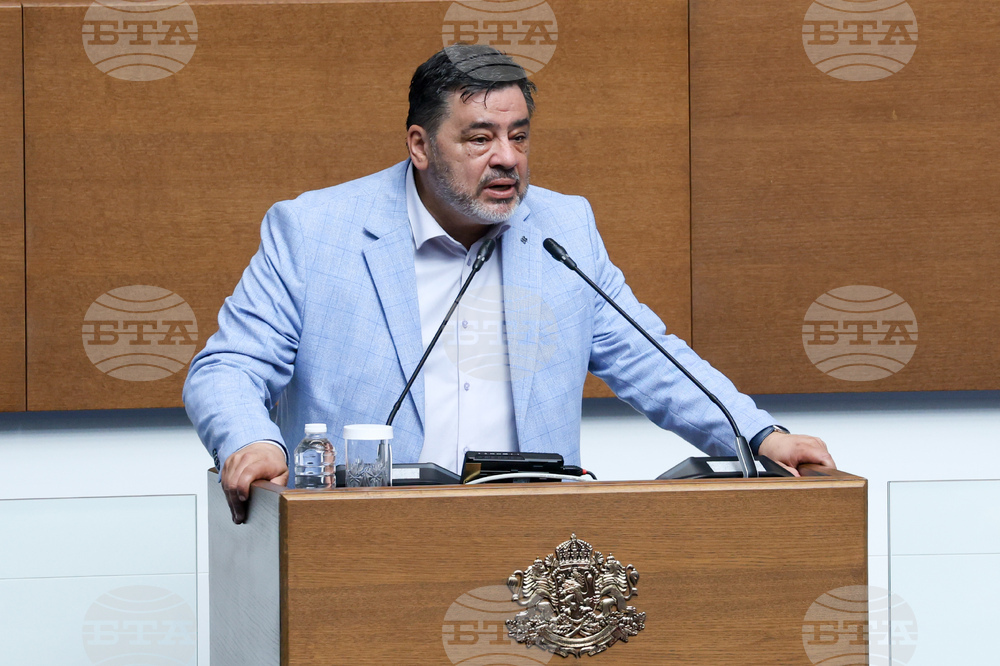
Continue the Change MP Velislav Velichkov warned on Friday that the Judicial System Act changes may fail to produce a new independent Supreme Judicial Council without political will.
In a statement on changes to the Judicial System Act, Velichkov appealed to Progressive Bulgaria (PB), saying the two groups could still jointly elect a fundamentally renewed and independent Supreme Judicial Council (SJC), but only with political will and an understanding of the moment’s importance.
For two straight days, the Legal Affairs Committee debated and voted at second reading on the consolidated bill amending the Judicial System Act, Velichkov said. MPs tabled dozens of proposals aimed chiefly at introducing fundamentally new mechanisms, criteria and procedures for electing the SJC’s parliamentary quota and improving the organization, transparency and accountability of the election of its professional quota. After two committee sittings, that goal has not been achieved at this stage, possibly because of lengthy debates on other provisions in the bill and MPs’ fatigue after a session lasting more than eight hours on Wednesday and more than five hours on Thursday, Velichkov said.
He said that most of the opposition’s sound proposals were unfortunately rejected almost without debate, chiefly on the grounds that they lacked approval from professional circles of judges and prosecutors. Velichkov said proposals to turn the parliamentary, or rather political, quota into a public quota and to allow the country’s largest and most important professional and sectoral organizations to nominate respected, high-calibre lawyers were rejected outright.
Proposals for magistrates to vote by appellate region, five in all, in electing the professional quota were also rejected. Instead, the position of judges and prosecutors taking part in the debate prevailed: voting should be organized by judicial district, 28 in all, which seriously threatens ballot secrecy, given that some judicial districts have between 25 and 31 judges and between 15 and 20 prosecutors, who would have to form separate polling stations, he said. “Excuse me, but this is like the entrance of an apartment block voting in one section,” Velichkov said. In his words, this creates a direct risk of conditions for a controlled vote.
Add to that the adopted provision that the rules for electing the professional quota will be adopted by the SJC Judges Chamber and Prosecutors Chamber in their current composition, and the situation becomes truly alarming, he said. According to him, there is a real risk that the current SJC will set rules that make it easier to preserve the status quo in the judiciary by reproducing the same flawed models which, for at least two decades, “have ensured the election to various supreme judicial councils of magistrates convenient to and obedient to leading politicians.”
“We should recognize that we are in an extraordinary situation in which parallel networks of backroom justice have clearly been built and are operating successfully, tolerated for years by at least two different Supreme Judicial Council line-ups and especially by the current one,” Velichkov said. “Both you, and I am addressing our colleagues from Progressive Bulgaria, and we from Continue the Change-Democratic Bulgaria, were ultimately elected by the people on promises and a mission to change this scandalous situation and ensure judicial independence and the rule of law by electing a fundamentally new and independent SJC, which would then conduct the elections of a new Prosecutor General and Chair of the Supreme Administrative Court in a fundamentally different and publicly acceptable way. We can still do this together, so that we also have the required majority of 160 votes afterwards to elect these people,” Velichkov said.
There is still time, at least a week before the plenary sitting at which the bill will be debated, but political will and an understanding of the moment’s significance are needed, because the first step is the most important and determines all that follows, the MP said.
The amendments to the Judicial System Act reached Parliament after three separate bills tabled by PB, DB and CC were approved at first reading in May and later consolidated into a single bill. The proposals focus on the criteria and procedures for electing members of judicial bodies, including the Supreme Judicial Council, and on limiting the powers of SJC members whose terms have expired.
The reform debate is tied to the forthcoming renewal of the SJC, whose composition will be decisive for key appointments in the judiciary. The proposed changes seek to strengthen safeguards against the concentration of influence, improve the transparency of the election process and address concerns over the ability of an expired SJC to make long-term personnel decisions.
/DD/
news.modal.header
news.modal.text