site.btaMedia Review: February 6
POLITICS
Bulgaria will not ratify the charter of Donald Trump's Board of Peace, although the country's Prime Minister Rosen Zhelyazkov has signed it, MEP Manfred Weber told the group of the European People's Party (EPP) in the European Parliament, as quoted by MEP Radan Kanev in a Facebook post. The news is covered by Dnevnik.bg and other media. During an EPP meeting in Zagreb last weekend, Bulgaria's GERB leader Boyko Borissov reportedly told Weber that "some special issues" between the United States and Bulgaria made it necessary for Zhelyazkov to sign the document, but Sofia will not ratify it. Kanev commented: "I was concerned to learn that there are special issues between Bulgaria and the United States. I suspect – and hope – that these issues are personal, not national. I would be aggrieved if personal issues entailed national humiliation and risks."
Radev's allegations, which were referred to by MPs of Continue the Change – Democratic Bulgaria (CC-DB), were met with indignation from Denitsa Sacheva, Deputy Floor Leader of GERB-UDF, according to a news report on MediaPool.bg. Sacheva's remarks came after Ivaylo Mirchev (CC-DB) said that signing the Board of Peace charter and then stating that it will not be ratified was an instance of hypocrisy. Sacheva replied by saying that it is very bad to leak a conversation with Bulgaria's partners, which was not held on camera and which concerned Bulgaria's national security. Sacheva stressed that the "special issues" have to do with this country's "energy security and national security."
* * *
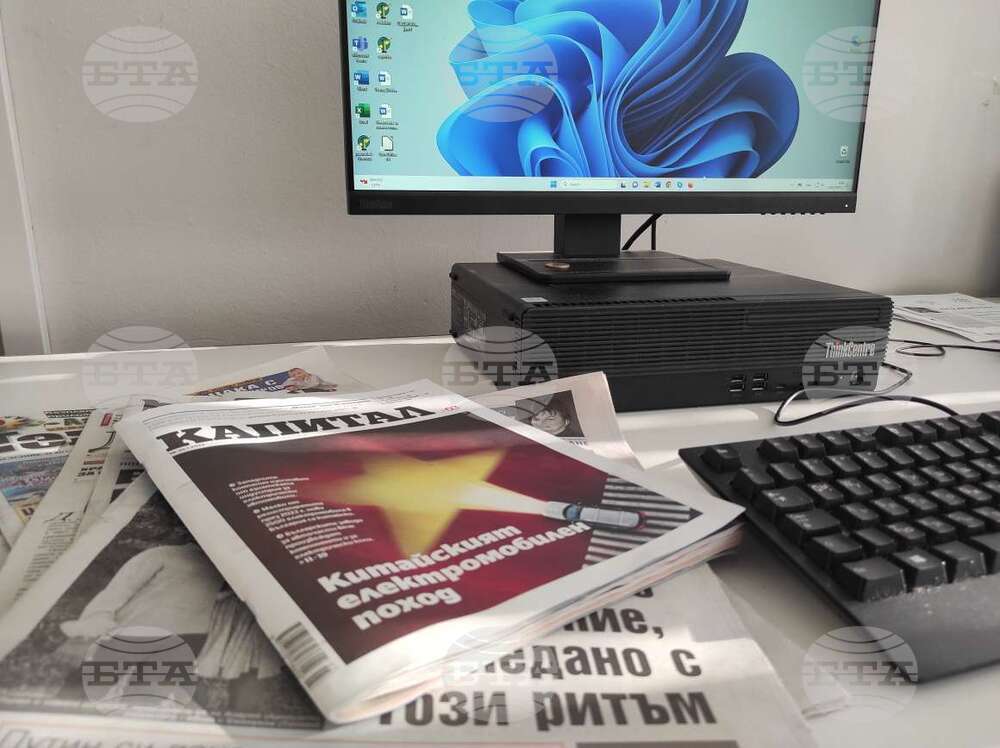
"What Two-Speed Europe Means," caps the cover story in the Capital weekly. The magazine says that the security guarantees upon which the European Union was built after World War II are weakening; the global trade system is breaking into separate blocs; and the strategic rivalry between the United States and China exposes Europe to the risk of being an arena rather than an active factor in world politics. The question is not whether the EU should change but how it can do it swiftly and resolutely enough.
The idea of forming a hard core of six countries (Germany, France, Poland, Spain, Italy and the Netherlands) has resurfaced, the analysis goes. With their combined economic worth of EUR 13.5 trillion, accounting for 65% of the EU economy, the six are willing to take on a leading role in deepening integration – in the fields of defence, foreign policy, industrial strategy and fiscal coordination. The important thing, according to Capital, is whether the proposed core will, indeed, become a driver of deeper integration, or whether it will institutionalize the division between "the first track" and the "second track" in Europe. Basically, the goal is clear: the EU should have a strong and well-working economy and a single voice on the international scene which does not simply echo Washington or Beijing.
Discussing where Bulgaria stands in these developments, the analysis says that a well-working balance for Europe can be found in the realization that unity no longer means sameness. The core will inevitably federalize in the areas of defence and finance in order to survive, while the periphery will develop according to its capacity for reform. Bulgarian MEP Kristian Vigenin has told the weekly: "[I]f the core countries want to build an exclusive elite club, we must oppose it firmly. A multi-speed EU is a bad idea because it will leave us in the periphery. If, however, the concept is that they become a motor for the EU, not wall themselves off but together pull the other countries forward, the initiative can be useful." Vigenin insisted that Bulgaria should be very cautious. He said that segregation should be prevented from recurring in Europe. "The new reality calls for a smaller but stronger core, and the lack of a clear strategy about how Bulgaria should position itself vis-a-vis the core holds a risk with long-term implications," Vigenin said.
* * *
A strong people's party can provide an antidote to the weakness of Bulgaria's multi-party system, political scientist and historian Trendafil Mitev writes on Trud.bg. He says that all the parties which exist nowadays are unable to run the country effectively. "The solution is to establish a new party of the people. It can and should rally the people around small business ownership, the working class, those working in the agrarian sector, the nationally responsible intelligentsia." This is the public and political zone where former president Rumen Radev should use his energy, the author suggests.
ECONOMY
Bulgaria has narrowed income disparities compared with OECD countries, albeit at a slower pace than other economies of the region, according to the organization's latest economic survey of Bulgaria, SegaBG.com reports. Labour productivity growth, however, is lagging. The average per-capita income in the country has reached 60% of the OECD average. The survey was presented by OECD Secretary-General Mathias Cormann in Sofia on Thursday. He hopes that the process of Bulgaria's accession to the OECD (Organisation for Economic Co-operation and Development) will be brought to a successful conclusion by the end of 2026.
* * *
The cabinet is drafting changes to the rules for implementation of the Public Enterprises Act aimed to introduce the figure of the integrity officer in state-owned companies and to provide for compulsory checks for compliance with ethical standards, possible conflicts of interest and corruption risks, 24chasa.bg says. The integrity officer will be elected by the company's management or supervisory board. The rights of the subjects of the checks are also covered by the proposed provisions. The subjects will have the right to read the documents from the check, provide written explanations, give evidence and be informed of the results of the probe. Reports of wrongdoings will be confidential, and the sources will be protected.
WINTER OLYMPICS
Dnevnik.bg says that 20 Bulgarian athletes are taking part in the 2026 Olympic Winter Games in Milan-Cortina, which open on Friday, February 6. They account for less than 1% of the total number of entrants in what are the largest-scale Winter Olympics ever, which will be held on an area of 22,000 square kilometres in the north of Italy. There are many reasons for the modest Bulgarian participation – from unsatisfactory conditions for practicing winter sports in the country to a volatile domestic political situation, the website says. It notes that, historically, Bulgaria has never been a factor in Winter Olympics. The country has won only six medals, half of them earned by short track speed skater Evgenia Radanova. But now, riding the wave of spectacular achievements in snowboarding and Alpine skiing and robust performances in biathlon and ski jumping, hopes are that these 20 boys and girls will put an end to the long waiting, the story says.
MediaPool.bg highlights security anxieties in Italy following reports about the presence of officers of the US Immigration and Customs Enforcement (ICE) agency, which has gained notoriety for two civilian killings in Minneapolis in January. Despite protests in Milan against the ICE enforcers' presence, they will stay there, working solely within the framework of the US diplomatic missions without performing executive functions.
CULTURE
The ruins of the Roman Amphitheatre of Serdica in downtown Sofia will become an outdoor space for performing arts, 24chasa.bg says, quoting Culture Minister Marian Bachev. The website notes that the present-day story of the ancient ruins is one of the most absurd cultural-historical sagas in Bulgaria which has been going on for 22 years, but there is a light at the end of the tunnel. Things finally got going after the landplot owned by the Bulgarian Energy Holding was transferred to the State in exchange for a property in Sofia's Vitosha Borough.
Interviewed by the website, Deputy Culture Minister Todor Chobanov says that the building of Goethe-Institut Bulgaria, which is a monument of culture and is adjacent to the Roman Amphitheatre, will remain as it is, probably shedding some temporary structures at some point in the future. The Arena di Serdica, the hotel where some of the ruins stand today, is private property, and public opinion should carefully weigh the possibility of spending tens of millions to acquire it, Chobanov says. Asked whether Bulgaria can adopt legislation similar to the laws in Italy, where archaeology is a priority and brings significant financial revenues, Chobanov says the Italian State is far richer than Bulgaria and can afford to buy property. The way to go is to carry out a reform, for example, to set up a national fund which can use money from various sources.
CRIME
A 15-year-old boy is among the people searched for by the police in the Petrohan triple murder case, the boy's father, spelunker Yani Makulev, said on Nova TV's morning talk show on Friday. The teenager has gone missing along with two men, one of whom is the owner of the Petrohan lodge, where three people were found shot and killed. According to Makulev, the two men and his son had gone sea diving. They were last heard on January 29, and then their telephones went off. Makulev does not know where they are, but he knows that his son is in safe hands. He expects further developments in the next couple of days and is convinced that the three will turn up. He believes that the murders were committed by someone outside the community.
/VE/
news.modal.header
news.modal.text