site.btaJoining the Eurozone Will Create Additional Pressure to Boost Competitiveness and Fiscal Sustainability - Central Bank Governor
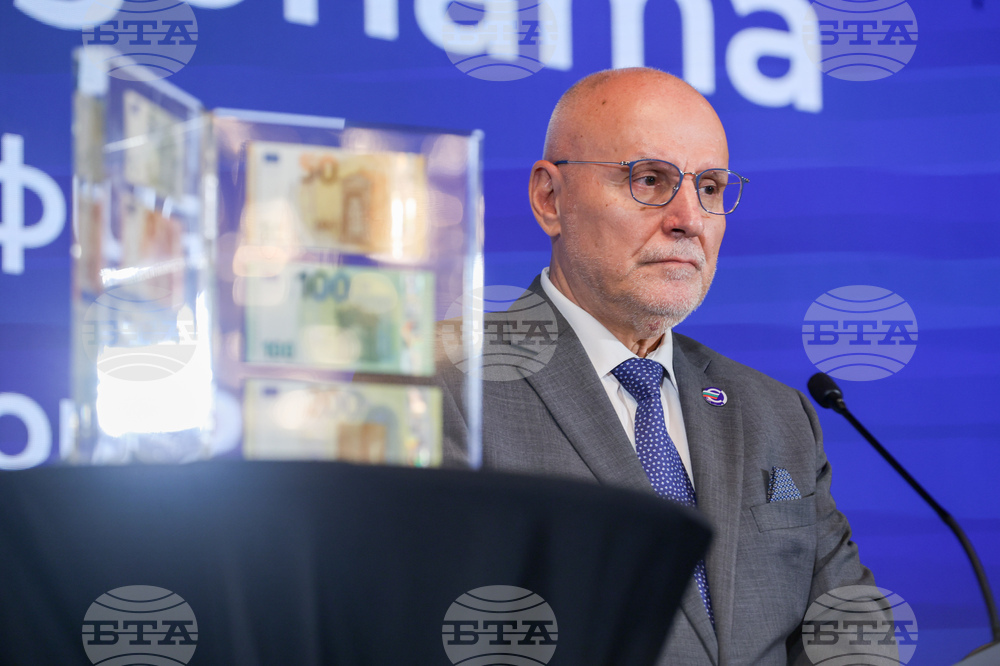
Joining the eurozone will create additional disciplinary pressure on Bulgaria to improve competitiveness and achieve better fiscal sustainability, the Bulgarian central bank Governor, Dimitar Radev, says in an interview with Capital Weekly, that is published on the Bulgarian National Bank’s website.
According to Radev, Bulgaria’s low public debt is an important advantage, but fiscal sustainability is determined not just by the level of debt, but by the trajectory of public finances.
"This trajectory over the past five years has been unfavorable, as all analyses clearly show. That is why the message from professional institutions is that this trend needs to be reversed and a disciplined fiscal position restored," he said.
He added that the key question is what size and role the state should have in the long term—a political question that requires a political answer.
“To be concrete—if we want to maintain the sustainability of Bulgaria’s current public finance system without generating imbalances or debt, government spending should be around 40% of GDP. Consistently exceeding this threshold puts us in a position to choose between higher taxes, higher debt, or a combination of both," Radev explained.
He noted that it would be useful for political parties to take a clear position on this issue in their economic programs, as these decisions should be reflected in the budget through a clear plan and measures.
"Joining the eurozone will help because it will create additional disciplinary pressure to improve competitiveness and fiscal sustainability," Radev emphasized.
Regarding past delays in Bulgaria’s euro adoption, Radev said that despite changes in public sentiment about the euro and political instability, the country has managed to maintain a strategic course, though several times the process was threatened.
"Undoubtedly, until 2020 we were moving relatively steadily, with a real chance of joining [the eurozone] on January 1, 2023. That was the original plan. Croatia entered the process a year after us and managed to complete the final stage, while we continued to navigate the political labyrinth. The important thing is that the goal was eventually achieved," he said.
Radev also commented on the removal of the currency board, noting that while it is one of the most successful economic reforms in Bulgaria’s recent history, people should not attribute to it supernatural qualities.
"The board in no way prevented the deterioration of the country’s fiscal position. It could have been repealed by a single parliamentary decision. It played its role, but the disciplining effects within the eurozone are no weaker or smaller," he said.
The BNB Governor, who is now also part of the Governing Council of the European Central Bank, emphasized that from now on, Bulgaria must pursue a sensible policy. According to him, if the country wants to reap all the benefits of eurozone membership, there are at least three key areas.
"The first is a predictable and sensible macroeconomic policy, based on a stable fiscal framework. The second is the implementation of structural reforms that have long been postponed. The third is active participation in the eurozone’s institutional framework, meaning in decision-making on policy formulation," he said.
Regarding the conversion of lev into euro and expectations for a more transparent economy, Radev said that from a logistical and cash management perspective, there are no surprises, noting that over a third of lev in circulation have already been withdrawn.
"This dynamic was also observed in Croatia and in previous new member states," he said.
He added that from now on, all relevant data must be collected to carry out serious analyses.
"There is an element probably related to the shadow economy - this is an interesting topic, and we will analyze it. The conversion may have helped somewhat, but the problems are more fundamental, and I don’t think we have solved them completely. It is important not to attribute essentially technical processes with effects they do not have. It is neither useful to create overblown expectations about the euro nor to believe propaganda about a catastrophe," he said.
Radev does not expect sharp movements or major changes in loan interest rates as a result of joining the eurozone. He also noted that the central bank supports the initiative to give citizens the opportunity to invest in government securities, predicting that this instrument could realistically be implemented by the end of the current year.
/NF/
news.modal.header
news.modal.text