site.btaUPDATED July 2: 135th Birth Anniversary of Dipl. Eng. Ivan Ivanov, "Sofia's Uncrowned King"
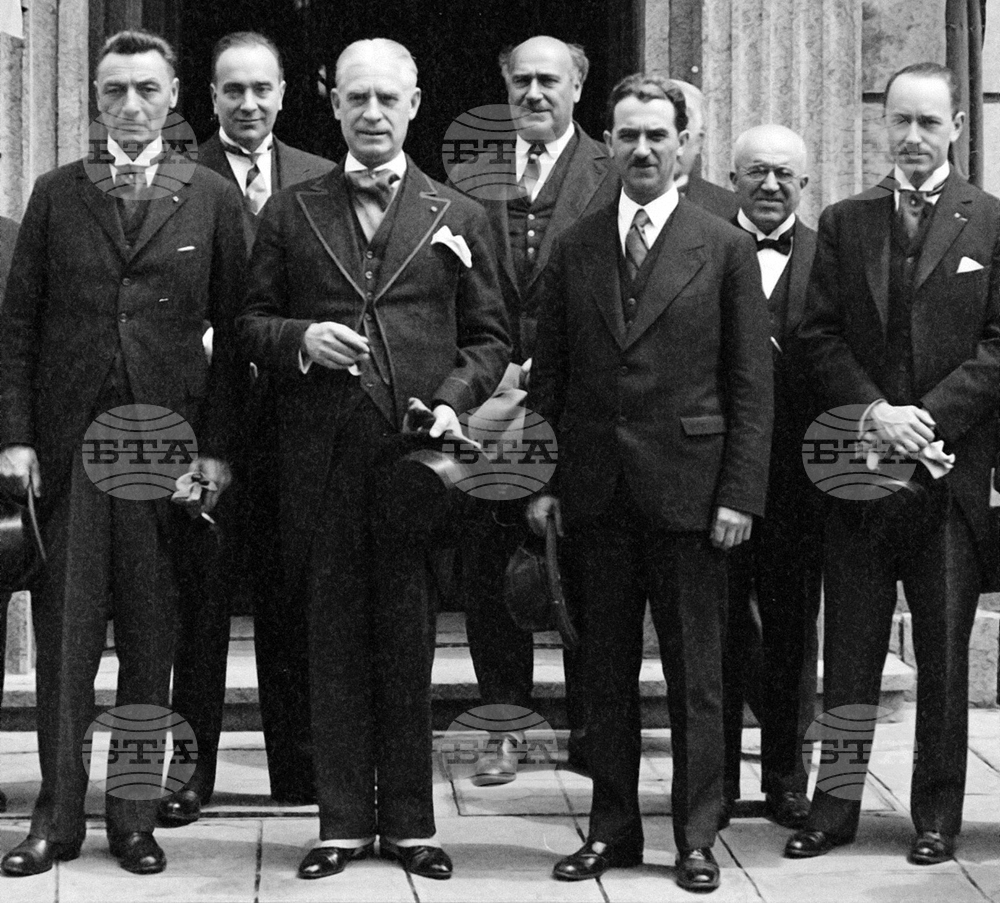
Thursday marks the 135th birth anniversary of Dipl. Eng. Ivan Ivanov (1891-1965), one of Sofia's most successful mayors and the second longest-serving one (in office for 10 years, three months and 15 days, from 1934 to 1944).
Born in Sliven on July 2, 1891, Ivanov studied for six years at the Military School in Sofia (1903-1909) before leaving for Germany in 1910. He graduated in civil engineering from the Technical University of Munich in 1915. Back home and after seeing action in the two Balkan wars and WW I, he joined Sofia Municipality in 1919 as deputy head of the Water Supply and Sewerage Department. In this capacity, he led the survey and design of the Rila-Sofia Water Supply System and its two associated hydroelectric power plants, at Mala Tsarkva and Simeonovo (1919-1924). Between 1925 and 1933, he was also in charge of the construction of the water supply system itself - one of the most remarkable hydraulic engineering projects of the 1930s and Bulgaria's largest to be completed before WW II, that secured a reliable source of drinking water for the rapidly growing city.
The Rila-Sofia Water Supply System was 81.7 km long, comprising 38.5 km of canals, 17.9 km of tunnels (including the 3,558-metre tunnel connecting the Beli Iskar and Levi Iskar rivers) and 25.3 km of pipelines. Collecting water from a catchment area of 196 sq km, the project operated entirely by gravity, using a vertical drop of 920 metres and requiring no pumping energy, which made it arguably one of the world's cheapest urban water supply systems. It delivered water from the Beli Iskar Reservoir (1,876 m above sea level) to Sofia (550 m) at a rate of 2.5 cu m/sec. The project increased Sofia's daily per capita water supply from 45 litres in 1923 to 200 litres - matching Paris and exceeding Vienna by 50 litres and London by 43 litres. The system was inaugurated at the Yunak sports grounds on April 23, 1933.
Ivanov also participated in designing the Brashlyan Irrigation System and in a comprehensive study of the Iskar River basin from the Rila Mountains to the Danube. Between 1950 and 1957, he directed the construction of the Iskar hydraulic Engineering complex, the Pasarel, Kokalyane and Sofia hydroelectric power stations, and the Pancharevo Dam, whose reservoir was created on his initiative in 1956. In 1936 he also designed the Beli Iskar Dam, which was completed in 1945.
During his decade as mayor, Ivanov oversaw a period of extensive urban modernization. Many of Sofia's landmark public buildings were completed during his tenure, including the Palace of Justice, the Bulgarian National Bank and the Sts. Cyril and Methodius National Library. The city also expanded its public infrastructure with new public baths, 15 schools, housing for workers and social kitchens for disadvantaged residents. Ivanov was also the designer of the Beli Iskar Dam, another key project in the capital's water supply system.
Ivan Ivanov was appointed Sofia's 37th mayor by royal decree on May 24, 1934. During his decade-long tenure, he presided over a period of extensive urban modernization that came to be known as the city's "ten golden years". Under his leadership, Sofia was transformed into a modern European capital. Nicknamed the "Uncrowned King of Sofia", he made an outstanding contribution to urban planning, landscaping, public transport, electrification, and the construction of many of the capital's landmark public buildings, including the Bulgarian National Bank, the Palace of Justice, the Telephone House, Bulgaria Hall, the ministries of defence and of interior, the National Library, Sofia University, the Musical Theatre, the Sofia City Hall in Gurko St., and the Military Publishing House.
The capital's modern water-supply and sewerage network was completed, dozens of streets were asphalted, new boulevards and bridges were built, and a newly established municipal sanitation service was equipped with 30 trucks and staffed by 830 employees, making Sofia one of Europe's tidiest cities.
Together with Municipal Gardens and Parks Head Georgi Duhtev, in 1934 the mayor launched an extensive landscaping programme. New parks were laid out, including major sections of Borisova Gradina, and he also promoted the development of the Vitosha Nature Park, established in 1934.
His administration built 15 new schools, kindergartens and public bathhouses, plus housing for workers and soup kitchens for disadvantaged residents. Ivanov was also the principal initiator of the Maria Luiza open-air swimming complex, which he inaugurated on July 6, 1939.
Sofia's first municipal bus service was launched on April 26, 1935, initially using ten Czech-built Praha buses and serving three routes from August of that year. On February 8, 1941, Bulgaria's and the Balkans' first trolleybus line entered service in Sofia. Two M.A.N. trolleybuses operated along the 3.3-km route linking the suburban spa district of Gorna Banya and Gornobanski Pat Blvd. via six intermediate stops.
As mayor, Ivanov regularly inspected the city on foot or by tram, speaking directly with residents and personally monitoring municipal projects. He also tackled rising electricity prices. Following a lengthy legal battle, the local authority regained control of the city's electricity supply in 1941 by buying out a money-losing concession previously held by the Belgian company Societe d'Electricite de Sofia et de Bulgarie.
Under Ivanov, the municipal administration was thoroughly reorganized, with new departments set up and regulations enforced, while recruiting highly qualified professionals to discontinue the inefficient bureaucratic practices of earlier years. One of the municipality's greatest achievements during his mayorship was the settlement of all financial liabilities built up during and after WW I.
Determined to curb Sofia's uncontrolled post-war expansion, Ivanov and his aides introduced a new framework for urban development. A Statutory Ordinance on the Building Development of the Capital City of Sofia, adopted in 1934, gave the municipality two years to prepare a comprehensive master plan. Following an international competition, a German urban planner, Prof. Adolf Mussmann, known for his work in Stuttgart and Dusseldorf, was awarded the contract on January 26, 1935. He produced the first comprehensive architectural and urban development plan for Sofia.
Despite strong public opposition to the extensive demolitions, land expropriations and redevelopment envisaged by the plan, the Municipal Council approved it on May 28, 1938. It called for predominantly low-rise detached residential buildings of no more than four or five storeys (22 metres), extensive green spaces, and strict limits on urban expansion and speculative land development. Mussmann envisaged a city occupying 40-45 sq km with a maximum population of 600,000 to 800,000. The outbreak of World War II frustrated the implementation of the plan. Nevertheless, Sofia's next master plan, drafted under architect Lyubomir Neykov and approved in November 1961, was largely based on Mussmann's vision.
The Greater Sofia Municipality was created in 1938 as a new administrative unit, incorporating the villages of Knyazhevo, Dragalevtsi, Gorna Banya, Krasno Selo, Darvenitsa, Boyana, Slatina and Nadezhda.
During the Allied air raids of Sofia in 1944, Ivanov remained in the city despite the risk to his own life, personally directing emergency and rescue operations and assisting distressed residents.
Following the communist takeover on September 9, 1944, Ivanov was arrested and initially charged with economic offences before political accusations were added, alleging pro-German and pro-fascist sympathies, not least because he was fluent in German and was married to a German woman. The principal charge against him centred on a proposal he made during the euphoria surrounding the return of Southern Dobruja to Bulgaria in 1940 to rename three central boulevards after Adolf Hitler, Benito Mussolini and Victor Emmanuel III.
In reality, Ivanov had opposed government demands to purge Sofia Municipality of communist employees, insisting that professional competence mattered more than political affiliation. Although he maintained frequent contacts with senior officials of Nazi Germany in his capacity as mayor, subsequently declassified German reports indicate that they regarded him as politically distant because he did not share their ideology.
On April 22, 1945, the People's Court sentenced Ivanov to life imprisonment and confiscation of his property, even though prosecutors demanded the death penalty. On appeal, the sentence was reduced to 15 years in harsh prison conditions. On the orders of Prime Minister Anton Yugov, he was taken from prison each day to supervise construction work on the Beli Iskar Dam. He was pardoned and released on November 9, 1946, and was judicially rehabilitated in 1948. After his release, one of Bulgaria's most distinguished hydraulic engineers and urban planners was forced to earn his living as a plumber.
Ivanov's expertise earned him election as a corresponding member of the Bulgarian Academy of Sciences (BAS) in 1934. He was expelled from the Academy in 1945 and was posthumously reinstated in 1991 in recognition for his services to Bulgarian engineering and public life. In 2025, the Academy received a donation of books from Ivanov's personal library, as well as plans and documents related to his work. BAS acknowledged him as one of the capital's most distinguished civic leaders whose legacy continued to inspire historical research.
Ivan Ivanov passed away in Sofia on June 20, 1965. A boulevard in the capital city was named after him in 2013.
/NF/

news.modal.header
news.modal.text