site.btaTsar Samuel's Remains' Transfer to Sofia: What Experts Say
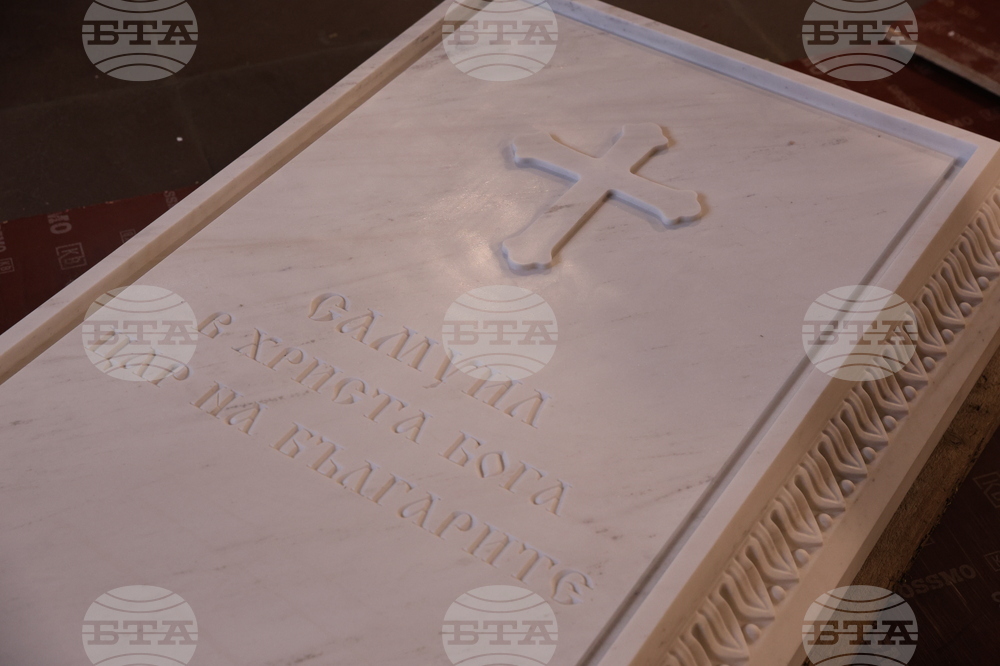
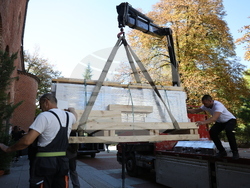
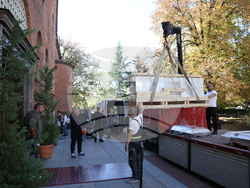
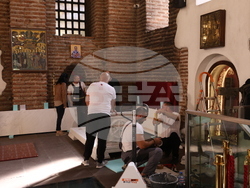
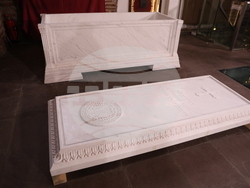
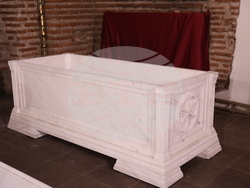
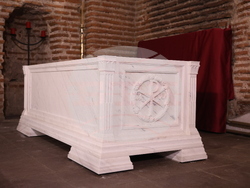
After an agreement with Greece that Prime Minister Rumen Radev has described as "historic", the remains of Tsar Samuel, one of the most prominent rulers of the First Bulgarian State, will be transferred to Sofia in a state ritual on Saturday, October 3.
Tsar Samuel (r. 997–1014) led Bulgaria through decades of war with the Byzantine Empire and maintained the Bulgarian state and its political independence across much of the Balkans despite sustained Byzantine pressure. His reign is associated with the continuation of the Bulgarian medieval state after the fall of Preslav and the transfer of its political centre to the southwest. Samuel's defeat by Byzantine Emperor Basil II at the Battle of Kleidion/Klyuch in 1014, followed by his death later that year, marked a turning point in the prolonged Bulgarian-Byzantine wars. The First Bulgarian Empire was conquered by Byzantium in 1018, but Samuel's resistance and his role in defending the Bulgarian state have secured him a lasting place in Bulgarian historical memory.
Below is what historians had to say about Tsar Samuel and his role and legacy in Bulgarian history, and the significance of the transfer of his remains.
Medieval history professor Ilia Iliev of the Institute of Historical Research at the Bulgarian Academy of Sciences:
The transfer of Tsar Samuel's remains to Bulgaria is of enormous importance for understanding the country's medieval past, as is also evident from public sentiment. Evidence establishing that remains belonged to a particular ruler is generally circumstantial, as is the case with Samuel. Unfortunately for Bulgarian people, the places where our famous ancestors are buried remain unknown, especially when it comes to the rulers of our medieval history. Despite these uncertainties, the very fact that such remains are being transferred and that this part of our medieval past is being given renewed consideration is of great importance.
Samuel built a palace and the so-called royal basilica on the island of Agios Achillios. The apse of the basilica bore the names of the metropolitan sees of the Bulgarian Church, while members of the royal family were buried in its narthex. Ordinary people could not have been buried in such a place. After his death, the king was probably taken to this church.
The remains are being studied using modern scientific methods. The only thing that can be established with certainty is whether the bones from the two graves belonged to blood relatives. This would strengthen the likelihood that the remains belonged to the ruler and his son.
The Bulgarian Academy of Sciences has continued to study Tsar Samuel as part of Bulgaria's medieval history and actively participated in organizing commemorations marking 1,000 years since his death. It is also preparing a series of meetings and conferences related to the transfer of his remains to Sofia.
Prof. Georgi Nikolov of the St Kliment Ohridski University of Sofia, co-founder of the Association of Byzantine and Medieval Studies in Bulgaria and member of the Academic Council of the Ivan Dujchev Centre for Slavo-Byzantine Studies:
Judging by Tsar Samuel's skeletal remains, he was short in stature, around 1.55 metres, but in the eyes of historians he appears as a giant because of his imposing historical figure. Greatness is not always found in thunderous victories; it can also lie in suffering and tragedy, as was the case with Tsar Samuel.
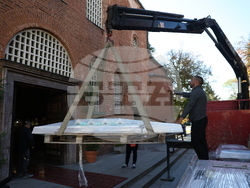
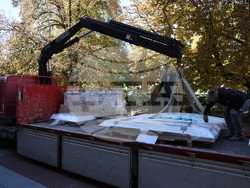
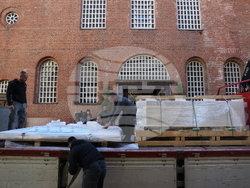
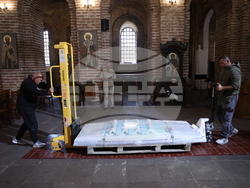
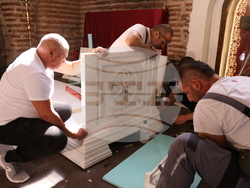
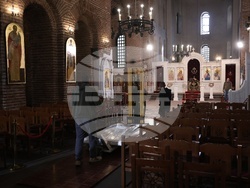
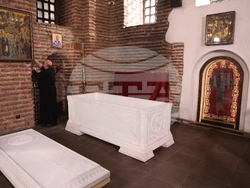
When Tsar Samuel's skeleton was discovered in 1969 by Greek professor Nikolaos Moutsopoulos, the bones were initially taken to the Aristotle University of Thessaloniki, where they remained for no more than a year or two. Since then, for around 55 years, Samuel's remains have been kept at the Museum of Byzantine Culture. If we weigh the event of receiving Tsar Samuel's remains on the scales of history, it can be regarded as a positive act.
In the Middle Ages, the emphasis [in assessing Samuel's rule] was placed more on his qualities as a warrior. Byzantine chroniclers wrote that "he was a warlike man who never knew rest" and that he was "invincible in strength and unsurpassed in courage". Chronologically, Samuel spent around 40 years at war, which is unique. Something similar can perhaps be seen to some extent in the reign of Tsar Simeon the Great. Samuel took the helm of the state before becoming tsar, and his first military campaigns date from after 971, long before he became tsar in 977. Until his death, Samuel remained on the battlefield, with his final battle against the Byzantines taking place just months before his death.
In modern times, the emphasis [in assessing the tsar's legacy] has shifted to Samuel's tragic death after seeing his blinded soldiers. This reflects contemporary notions of humanism and humanity. These are the two sides of the way Tsar Samuel's personality has been perceived - in the Middle Ages and in the present day.
The transfer of the remains by Greece and Prime Minister Kyriakos Mitsotakis is an act of goodwill, as the remains being returned to Bulgaria were discovered on what is now Greek territory. It is an act of good neighbourliness and shows that Byzantine chroniclers, as well as modern Greek historians, the Greek public and the country's authorities, know very well who Samuel was and what his historical significance was, and have therefore agreed to return his remains to Bulgaria.
Dimitar Cholev, Director of the Education and Culture Directorate at Petrich Municipality:
Petrich is one of the places in Bulgaria most closely associated with the memory of Tsar Samuel and the events at the end of the First Bulgarian Empire. Several key historical sites linked to the ruler and the Samuel era are located in the municipality, and their legacy remains an important part of local cultural and tourism initiatives.
The history of the Samuel era is also reflected in the municipality's annual initiatives, including the national tourist trek "In the Footsteps of Samuel's Warriors", which brings together schoolchildren and younger children. Educational workshops related to Tsar Samuel are also organized by the Petrich Historical Museum, with the aim of passing historical memory on to younger generations and maintaining the connection between the places, events and people associated with the history of the Petrich region.
More than five years ago, Petrich joined the national campaign for the return of Tsar Samuel's remains to Bulgaria, collecting signatures in support of the initiative.
The municipality is also organizing free transport to Sofia for residents wishing to attend the state ceremony marking the arrival of Samuel's remains on October 3.
/NF/
Additional








news.modal.image.header
news.modal.image.text
news.modal.download.header
news.modal.download.text
news.modal.header
news.modal.text