site.btaCouncil of Ministers Approves Changes to Labour Code on Minimum Wage and Family Allowances for Children
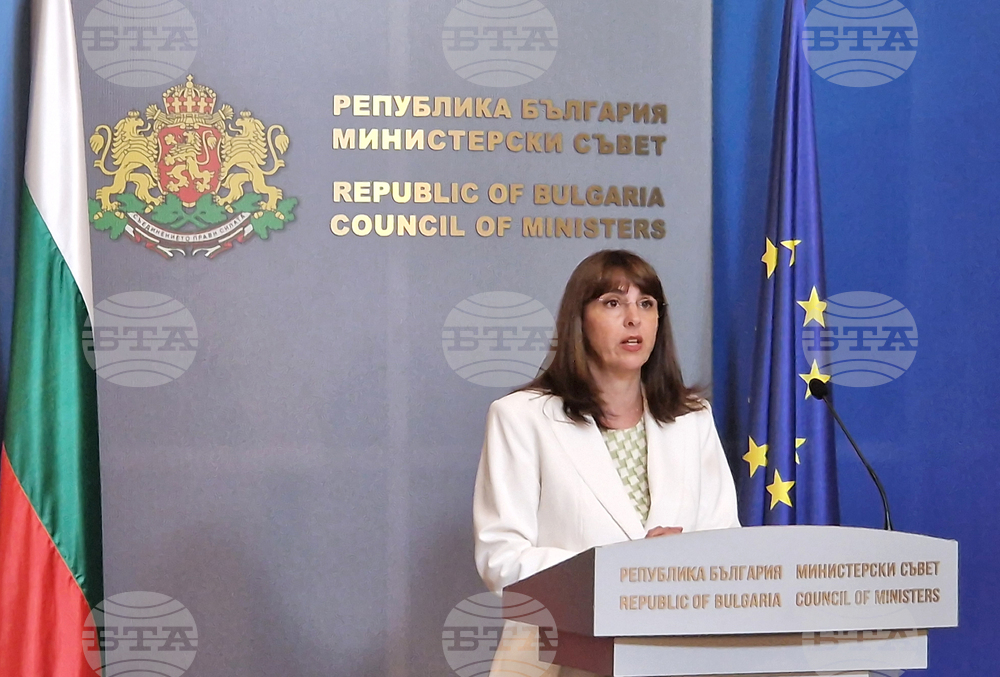
The Council of Ministers approved amendments to the Labour Code establishing a new mechanism for determining the minimum wage, Labour and Social Policy Minister Nataliya Efremova told a briefing at the Council of Ministers on Wednesday.
The amendments set out the criteria and indicators for determining the minimum wage, as well as reference values for assessing its adequacy. The mechanism was developed jointly with the social partners in August.
Each year, the government will be required to propose the minimum wage by August 15, following consultations and negotiations between the social partners. Its adequacy will be assessed every three years.
Efremova said the government would seek to bring the minimum wage to a level that reaches both 60% of the median wage and the cost-of-living level. The National Statistical Institute (NSI) will provide the cost-of-living data and will have nine months from Parliament's adoption of the bill to develop a methodology for calculating it.
The new mechanism provides for four criteria that will form a composite indicator and determine the upper limit of negotiations: purchasing power, the overall level of wages, minimum wage growth and labour productivity. These will be measured through changes in the small consumer basket price index, gross median wage, average gross wage and gross value added per person employed over the previous ten years, respectively.
Efremova said the minimum wage for 2027 would be set within a range of EUR 620.20 to EUR 672.80. The lower figure is the current minimum wage, while the upper figure was calculated under the new formula. Asked which figure she expected it to be closer to, she said it would be "rather clearly" on the higher end.
Efremova warned that a delay in determining the minimum wage could result in it not being increased next year. "We are practically already in the budget procedure," she said.
At the briefing, Efremova also said the Council of Ministers had approved amendments to the Family Allowances Act aimed at making family benefits more accessible. The changes are intended to provide greater support to parents and reduce unnecessary burdens on those entitled to such benefits.
The amendments remove the requirement to repay the one-off allowance for students in first, second, third, fourth, and eighth grade if the child has more than five unexcused absences.
Pregnant foreign citizens and families of foreign citizens granted protection under the Asylum and Refugees Act will also become eligible for family benefits for children. They have not been eligible for such benefits until now, Efremova said.
The rules on monthly family benefits will also change. Currently, the benefits are suspended for the entire year when a child has a specified number of absences from preschool or school. Under the amendments, they will be suspended only for the month in which the absences occurred, the minister said.
/KK, YV/
news.modal.header
news.modal.text