site.btaBulgaria Emerges as Global Leader in Battery Storage, Ember Analysis Shows
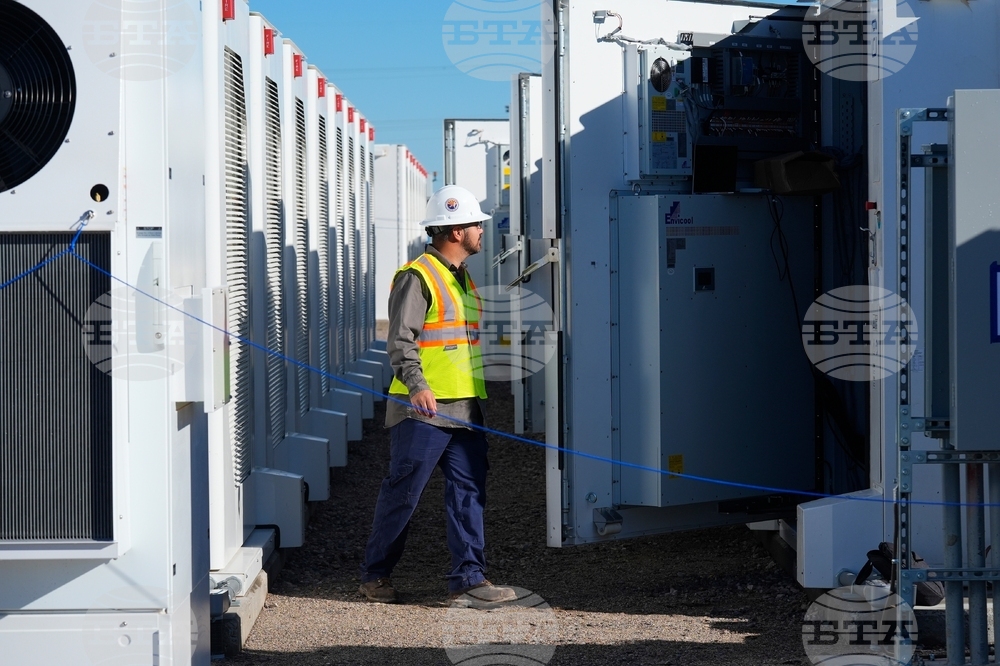
Bulgaria has emerged as one of the world’s leading markets for battery energy storage, with the capacity added in 2025 theoretically sufficient to shift 77% of the country’s new daily solar generation into hours without sunlight. This puts Bulgaria first among the markets examined, narrowly ahead of Chile at 76% and Australia at 60%, according to a new analysis by energy think-tank Ember published on Wednesday.
Battery storage capacity has grown particularly rapidly in Bulgaria. The country added around 3 gigawatt-hours (GWh) of new battery capacity in 2025, after having virtually none just a year earlier. By May 2026, installed capacity had more than doubled to 8.6 GWh. According to Ember, this growth was supported by government funding and streamlined permitting procedures, with further expansion expected through 2030.
The data show that battery development is already changing the role of solar power in Bulgaria’s electricity system. During the first half of 2023, solar power made virtually no contribution to meeting evening electricity demand. Three years later, the combination of solar power and batteries covered an average of nearly one-quarter, or 24%, of the country’s electricity demand between 7:00 p.m. and 9:00 p.m.
Between 7:00 p.m. and 7:00 a.m., solar power shifted through batteries accounted for an average of around 10% of electricity consumption. According to the authors, Bulgaria has recorded the most significant transformation among the leading markets examined, with a substantial share of the strong growth in solar generation now reaching consumers outside daylight hours.
By comparison, in California, solar power and batteries covered more than one-quarter of electricity demand between 7:00 p.m. and 9:00 p.m. during the first half of the year, up from 6.8% during the same period in 2023. In Chile, batteries already allow solar power to meet more than 10% of demand during evening hours and through to around midnight.
Against this backdrop, the EU as a whole is lagging behind the leading markets. In 2025, 27 GWh of battery capacity was added across the bloc, theoretically enough to shift just 16% of new daily solar generation into other hours. That was below the global average of 18%. However, scenarios developed by European electricity transmission system operators project that installed battery capacity in the EU will quadruple between 2025 and 2030.
Ember stressed that the 77% figure for Bulgaria represents the theoretical potential of new batteries relative to the increase in solar generation, rather than the actual measured share of electricity shifted. Not all batteries are used exclusively to store solar power, while their utilization also depends on electricity market rules.
For its calculations for Bulgaria, the analysts used hourly data from the European Network of Transmission System Operators for Electricity (ENTSO-E). The solar generation data include the charging and discharging of batteries co-located with solar power plants. Since the activity of standalone batteries is not reported as a separate category, Ember estimates it based on the difference between reported hourly consumption and generation plus net imports, while also accounting for the effect of pumped-storage hydropower facilities.
The report places Bulgaria’s development in the context of the rapid global expansion of solar power. Solar plants generated just over 10% of the world’s electricity during the first half of 2026, a new record and nearly double the 5.6% share recorded in the first half of 2023. Solar generation increased from 769 terawatt-hours (TWh) to 1,564 TWh over the three-year period, while total global electricity generation grew by 12%.
According to the analysis, the challenge is the heavy concentration of solar generation during daylight hours. On an average day during the first half of 2026, solar plants covered more than 25% of global electricity demand between 11:00 a.m. and 2:00 p.m., but their contribution fell to almost zero between 8:00 p.m. and 5:00 a.m. As a result, fossil fuels continue to play a significant role after sunset, even in markets with high shares of solar power.
The rapid decline in battery costs is beginning to change this picture. The average global cost of installing battery storage fell by 95%, from USD 2,634 per kilowatt-hour in 2010 to USD 140 in 2025. Global battery capacity additions are expected to reach 459 GWh in 2026, 50% more than the 307 GWh added in 2025. The new capacity could theoretically shift 34% of new daily solar generation into hours without sunlight, compared with 18% in 2025 and just 4% in 2021.
“Cheap daytime solar power has become the most powerful force reshaping electricity grids worldwide, growing faster than any other source of electricity. Batteries have now become cheap and capable enough to unlock the next stage of solar power’s growth,” said Kostantsa Rangelova, an analyst covering global electricity markets at Ember and the report’s author.
/YV/
news.modal.header
news.modal.text