site.btaForest Fires Set New Records Across Four Continents, Bulgaria Among Worst Hit in EU
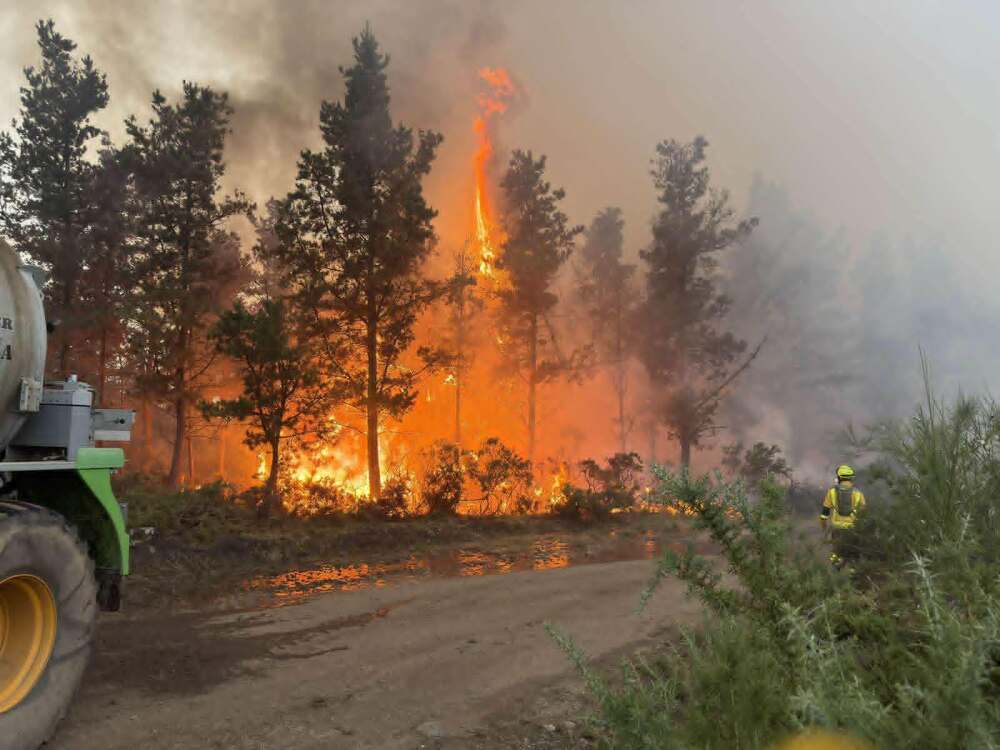
Forest fires have set new records across four continents over the past two years, with the fire season starting earlier, affected areas expanding and economic and human losses increasing, the Branch Chamber of Woodworking and Furniture Industry said.
Official data from the European Commission's EFFIS/Copernicus system, as well as Canadian and US authorities and Bulgarian institutions, point to similar trends. Experts attribute the worsening situation to climate change and the way forests are managed.
According to a Bulgarian National Audit Office report citing EFFIS data, Bulgaria was among the 10 EU countries most affected by forest fires in 2025 relative to its territory, losing around 30,000 hectares of forest, much of it within the Natura 2000 protected network. The country's worst fire last year affected more than 4,500 hectares near Ilindentsi in the Pirin Mountains and burned for nearly a month. Nearly 3,500 fires were recorded in Bulgaria in July 2025, almost 20% more than in July 2024.
The chamber said only around 5% of forest fires in Bulgaria were caused by natural factors, with the remainder linked to human negligence, actions or inaction.
Globally, forest losses caused by fires in 2023 and 2024 were approximately twice the 20-year average, and three times higher in tropical forests. Global carbon emissions from forest fires rose by 60% between 2001 and 2023, while wildfire smoke pollution is associated with more than 1.5 million deaths annually, the chamber said.
The European Commission's Joint Research Centre has described 2025 as the worst wildfire season on record in the EU, with 1.08 million hectares burned, nearly twice the 2006-2024 average. Across Europe, the Middle East and North Africa, 2.24 million hectares burned, 20% more than in 2024.
Experts say longer and hotter fire seasons, drought, low humidity, strong winds and the accumulation of dry biomass in poorly managed or ageing forests are contributing to the worsening trend. More than 90% of fires in Bulgaria and worldwide are directly or indirectly linked to human activity, the chamber said.
The chamber also cited international experience suggesting that active forest management, including the removal of dry vegetation and the planting of climate-resilient species, can help reduce fire risks. It said the accumulation of dry biomass in unmanaged forests can increase fire intensity, while regular forestry intervention is among the most effective tools for limiting wildfire risks.
/NZ/
news.modal.header
news.modal.text