site.btaCentral Bank Governor: Draft 2026 Budget Deepens Negative Fiscal Trend
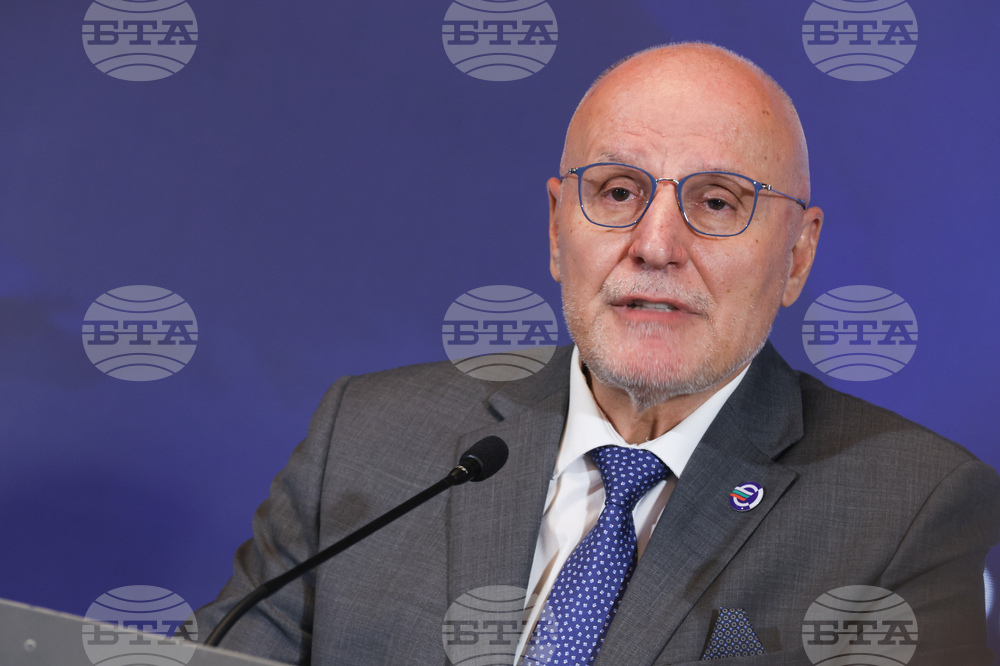
Bulgarian National Bank (BNB) Governor Dimitar Radev said Thursday that the proposed 2026 state budget, which envisages a deficit of 5.7%, deepens rather than reverses the negative fiscal trend that has developed since 2020. He was attending the European Central Bank's annual forum in Sintra, Portugal.
Radev said the trend had accumulated under successive governments and noted that, with Bulgaria already subject to an excessive deficit procedure, such fiscal signals carried even greater weight.
The BNB Governor spoke about the forum, the draft 2026 budget, Bulgaria's first six months as a member of the euro area, the suspension by an EU Member State of the approval procedure for the design of Bulgaria's first commemorative euro coin, and the ECB's monetary policy framework.
According to Radev, the BNB's macroeconomic forecast, which projects slower economic growth and higher inflation, does not in itself complicate fiscal policy but reflects a less favourable external environment affecting most European economies, as well as existing domestic imbalances.
He said Bulgaria's euro area membership had already begun to generate economic benefits. The transition had been smooth and well organized thanks to the long-term preparations made by the BNB and the banking sector.
He pointed to growing investor interest, improved prospects for the capital market and better access to financing. Radev also welcomed the decision by several of Bulgaria's leading banks to continue offering free lev-to-euro exchange services after July 1.
Radev stressed that euro area membership does not automatically deliver all potential benefits. Going forward, national policies, including improvements to the investment environment and the stabilization of public finances, would be crucial, he added.
Commenting on the main theme of the 2026 ECB forum, dedicated to Europe's economic future and innovation, Radev said the strongest message to emerge was the growing need for Europe to act more quickly.
He noted that the United States continued to widen its lead by investing more and converting new technologies into economic growth more rapidly.
"Europe is not lagging behind in creating innovation. The problem is that it is much slower in turning innovation into a competitive advantage," Radev said.
He added that closing this gap would require greater investment, a better-functioning capital market and faster adoption of new technologies across the economy.
Radev also commented on ECB President Christine Lagarde's announcement of a revised monetary policy approach, under which interest rate decisions will be based on incoming data and enhanced analytical methods at each Governing Council meeting rather than on a predetermined policy path.
He described the shift as a natural response to a changing global environment marked by geopolitical conflicts, trade tensions, energy shocks and supply chain disruptions.
"In such an environment, traditional models have a much shorter horizon of reliability," Radev said.
He added that monetary policy decisions would increasingly be guided by current data and risk developments rather than by pre-announced trajectories.
Asked about the suspension by an EU Member State of the approval procedure for the design of Bulgaria's first commemorative euro coin dedicated to the Bulgarian alphabet, Radev said the BNB's position remained unchanged.
"The central bank has fulfilled all its responsibilities in the process in full compliance with the applicable legal and procedural requirements," he said.
/RY, YV/
news.modal.header
news.modal.text