site.btaMonopoly Undertakings May Not Quote Excessively High Prices, Parliament Resolves
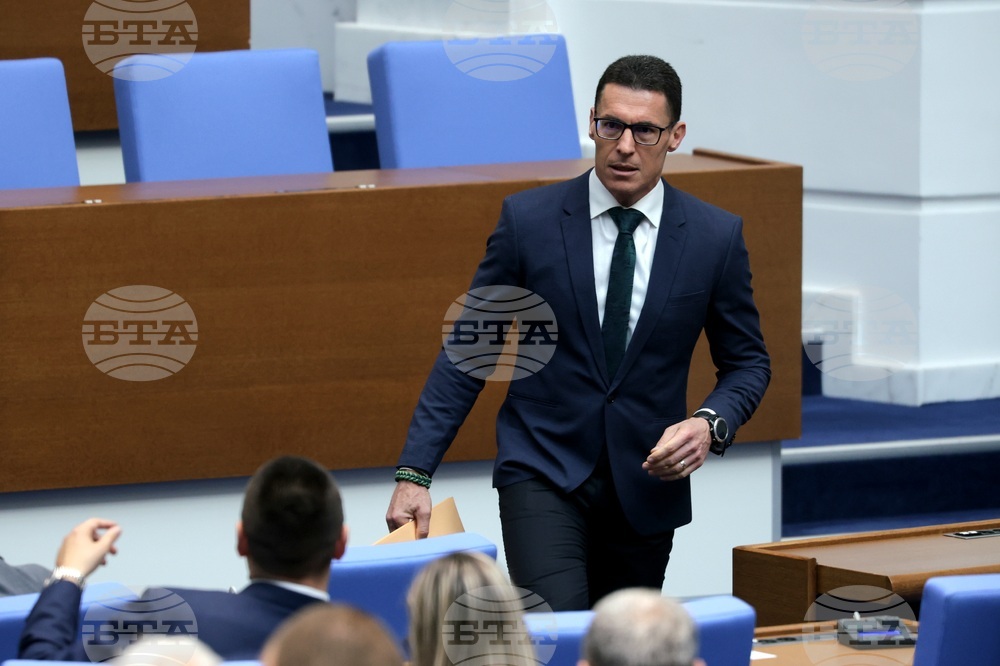
Undertakings in a monopoly, dominant or collective dominant position were barred from quoting excessively high prices, Bulgaria's Parliament resolved on Thursday, passing conclusively amendments to the Protection of Competition Act moved by Progressive Bulgaria.
The revisions define "exceedingly high price" as "a price which substantially exceeds the economically justified costs of production, acquisition and sales, including a reasonable profit margin, and is unfair per se or vis-à-vis comparable products and services".
The Commission on Protection of Competition (CPC) will be competent to impose a pecuniary penalty amounting to up to 10% of the total turnover for the preceding financial year of an undertaking violating the prohibition.
Dominant position will be the existence of economic interdependence or other factors between two or more undertakings enabling them to act jointly irrespective of competitors, suppliers or buyers and to restirct market competition. An undertaking with a market share of at least 50% will be required to prove that it does not abuse its dominant position. Undertakings which hold jointly a market share of at least 60% will be under a burden of proof that they do not abuse their collective dominant position.
The amending law establishes a central electronic register for traceability of the supply chain for agricultural and food products, inputs and other goods at the wholesale stage until they reach end consumers.
The Debate
CPC Chairperson Rosen Karadimov: The amended law introduces clear criteria that are needed in order to ascertain the existence of collective dominance and a link between undertakings. Collective dominance provides protection and clarity to business. The CPC proves the collectiveness of undertakings, which is not at all easy to prove and should not be underestimated. According to the CPC activity report, which will be submitted next week, the Commission has issued 1,200 decisions and has conducted as many proceedings. The supply chain and pricing are heavily distorted, and the CPC will not be turned into a bludgeon.
Martin Dimitrov MP of Democratic Bulgaria: The CPC is vested with unseen and unheard-of powers. If the Commission does not implement the law in good faith, we may lapse into the other extreme. When business comes under such pressure, it may see itself compelled to raise prices rather than lowe them, which is what we aim. For this reason, we cannot second the motion.
Nadejda Iordanova MP of Democratic Bulgaria: Undertakings are presumed guilty until otherwise proven. Economic actors must prove that they are innocent instead of the other way round.
Konstantin Prodanov MP of Progressive Bulgaria: Guilt is not imputed. An objective economic situation is ascertained. The law is necessary so as to bring to light pricing because price components are among the most closely guarded business secrets. Regarding collective dominance, we have consulted the practice of Austria, Germany and Estonia. The CPC must prove that the prices have been increased and must enable those concerned to justify them.
Assen Vassilev MP of Continue the Change: We do not think that the dominance status is properly defined. If several unrelated companies jointly account for a 60% market share, you say that they are in a collective dominant position, but you do not specify how many companies are supposed to form this share. Here is where the presumption of guilt comes in.
Ayten Sabri MP of Movement for Rights and Freedoms: We will back the provisions as moved because we concur on the purpose of curbing the market distortion, enhancing transparency down the supply chain, and more effectively safeguarding consumers against inflation volatility.
Tsoncho Ganev MP of Vazrazhdane: The bill is touted as something new, but at the same time the CPC is proposed as a bludgeon against the retail chains.
/MR/
news.modal.header
news.modal.text