site.btaMedia Review: June 2
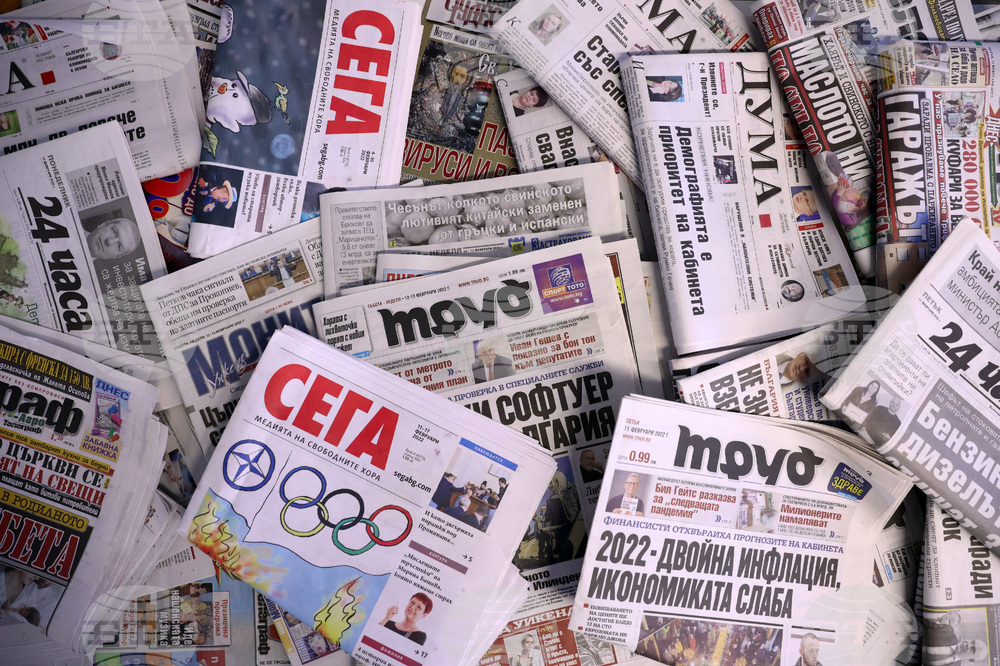
All media outlets report the power-holders' plans to take out new debt, remove COVID-related pension supplements and cut the per-vote subsidy for parties. The measures were presented to journalists Monday in the National Assembly by Konstantin Prodanov, Chair of the Ad Hoc Parliamentary Committee on Budget and Finance.
Discussions surrounding the Baba Alino illegal construction scheme are also in the highlights.
FISCAL IDEAS
Dnevnik.bg and mediapool.bg report a comment by Continue the Change chair and former finance minister Assen Vassilev, describing the government's justification for taking on EUR 3.8 billion in external debt to complete projects under Bulgaria’s Recovery and Resilience Plan as "completely unfounded." He argued that the fiscal reserve contains EUR 4.8 billion in available funds, which is sufficient to cover the projects, while Finance Ministry data show strong revenue growth, including a 20% increase in tax revenues and a 15% rise in social security contributions compared with the same period last year. According to Vassilev, the government is on track to collect more than EUR 7 billion in additional revenue this year, raising questions about why it would need to borrow such a large amount. In Mediapool.bg, he is quoted as saying: "Progressive Bulgaria need to urgently get their priorities right or else we will come to a situation similar to the one in December."
In December 2025, the government dominated by GERB-UDF resigned under the pressure of massive street protests that were initially triggered by the power-holders' fiscal plans.
BABA ALINO
The Baba Alino case, which erupted into public view in late May following investigations by BIRD, reports from local activists and alerts from the Vazrazhdane party about extensive construction on forest land near Varna's Golden Sands resort, has sparked a political dispute over who bears responsibility for the development, that continued in the news media on Tuesday.
In an interview on Bulgarian National Television's morning programme, former Varna mayor Ivan Portnih denied any involvement, arguing that he was never informed about the project and pointing to alleged forged documents and inaction by the current municipal administration. "I absolutely, categorically state that during my time in office, I received no information about construction in the area of the illegal settlement near Varna. I am not responsible for it whatsoever," said Portnih. He stated that the District Prosecutor's Office had informed notaries in the region that many of the papers for the project were forged. "They were issued by a district architect who has held this position since 2004 - in other words, before GERB even existed and before I was involved in politics," he specified. Portnih put the blame on Varna Mayor Blagomir Kotsev and said he was questioned by the Municipal Council multiple times about illegal development. "At every Municipal Council session, we ask Kotsev questions related to illegal construction - not just about this case, but also about blatant cases of construction right under people's noses in the heart of the Sea Garden". Kotsev is obliged to respond to the municipal councilors and their questions within a month. For more than two years, he has neither responded nor provided any information," said the former mayor.
In contrast, former prime minister Nikolay Denkov, who is now an MP of Continue the Change, contended in an interview on bTV's morning programme that current mayor Blagomir Kotsev was the only official to order a halt to the construction, while blaming multiple state institutions for failing to act despite warning signs dating back to 2023. "The first alerts emerged in 2023. By 2024, buildings had been registered in the cadastre, illegal connections had been made to the electrical installation and the water supply and sanitation systems, and the National Construction Control had failed to act. All of this shows that a number of institutions have not reacted in a timely manner at all," he pointed out. He added that Blagomir Kotsev had submitted information to the State Agency for National Security (SANS) in March 2025. "This information has obviously been processed, and I can confirm this categorically." One of the key questions, he said, is how these buildings appeared in the cadastre. "This is not the responsibility of the municipality. It is the responsibility of the Ministry of Regional Development and Public Works. The Minister of Regional Development says that the mayor is entirely responsible, yet he has also fired the head of the cadastre in Varna, who is his subordinate. This is contradictory."
Meanwhile, GERB deputy chair Rumen Hristov, in an interview with bTV, maintained that such large-scale illegal construction could not have gone unnoticed and called for a parliamentary investigation to determine which officials enabled or ignored violations of the law. "The question is who in the chain was silent, who listened and issued the tolerance certificates, which [Regional Development] Minister Shishkov said were fake," Hristov said. "The law is not being respected. It is obvious that these residential facilities and blocks of flats were built by bypassing the laws in the country.” According to Hristov, this issue should be included in the agenda of the parliamentary oversight committee. 'Such cases that lead to doubts regarding Bulgaria’s national security must be investigated. We already have parliamentary regulations and have formed committees. At the earliest opportunity, we should review the decisions of the former head of the State Agency for National Security, Delyan Denev", he said.
ECONOMY
24 Chasa reports that household deposits have exceeded EUR 56 billion, while household debt has exceeded EUR 30 billion, reversing a trend seen at the end of 2025. According to Central Bank data, for the first four months of the year, the value of loans taken out exceeded the value of savings held in banks. The increase was EUR 1.702 billion, mainly due to new mortgage loans totalling EUR 1.117 billion. Mortgages increased by EUR 337 million in just one month. The most likely reason for the ongoing credit boom is low interest rates. The average increase in the cost of housing loans remains at 2.45%. For consumption loans, there has been a slight increase of 0.18 percentage points to an average of 8.81%. While some people continue to save, others prefer to invest in the housing market and consumption. This dynamic is also evident in the growth rate. Since the end of 2025, household deposits have grown by 2.5%, while loans have increased by almost 6%. This trend has continued despite the start of an increase in deposit interest rates.
In an interview on Bulgarian National Television's morning programme, MEP Tsvetelina Penkova discusses Bulgaria's place in the European energy landscape and the prospects for the sector. She stated that nuclear energy already occupies a strategic place in European policies and that, for the first time, European funding is being considered for the construction of new nuclear capacities. "Until 2022, nuclear energy was a taboo topic at the European level. At some point, however, we realised that without basic energy capacities and an energy source in which the European Union and Bulgaria have serious expertise, we cannot guarantee energy security and low prices." She also said that Central and Eastern Europe functions as a kind of energy island, which directly affects prices for businesses and households. "We produce electricity, but we are unable to sell it at competitive prices. We remain locked into an isolated market in which consumers and industry pay significantly higher prices. The main bottlenecks in the network are located in the Austria-Hungary region. The new regulation aims to direct investments towards unclogging these bottlenecks and building infrastructure to better connect our region with the rest of Europe", Penkova noted. According to Penkova, Bulgaria will play a key role in future European energy projects. "Bulgaria is strategically important. It is no coincidence that the European Parliament designated a Bulgarian as the main negotiator under this regulation. Our geographical location places us at the entrance to potential electricity and energy resource supplies from countries such as Turkiye and Azerbaijan", said the MEP.
Appearing on Nova TV's morning programme, Dimitar Mihaylov, the Executive Director of the Association of Pig Breeders in Bulgaria, expressed scepticism about the expectation of a significant reduction in food prices, deeming it unrealistic. "I do not believe that the prices of basic foods can fall by 15%," he commented. He believes that the market should be allowed to function freely and that the role of the state is to create rules and regulations without interfering directly in market processes. He added that the legislative changes being prepared contain good ideas for supporting Bulgarian producers, who often find themselves at a disadvantage when negotiating with large retail chains. "Our market power is smaller, and our negotiating position is significantly weaker. Every year, prices are negotiated between producers and retail chains, but unfortunately, these prices become lower and lower each year," Mihaylov pointed out. He said that pressure on purchase prices forces producers to reduce their production costs, which may ultimately affect the quality of the food on offer. He also stressed that the European Union is working to combat such unfair trade practices. He added that there is a risk that Bulgarian producers will be pushed out of the market by more competitive imported products if the trend continues.
In an interview with Bulgarian National Radio, former Minister of Labour and Social Policy Hassan Ademov stated that vulnerable groups in difficult financial situations should be supported, rather than have their rights revised. Ademov also noted that Bulgaria has the longest maternity leave in the EU. He discussed the options available to fathers. He believes that it would be better to ensure all children have a spot secured in a creche. Regarding the idea of reducing salary costs by 10%, he said that the Administrative Reform Council must produce a report for 2025 analyzing all state administrative structures and proposing solutions. He confirmed that there are indeed structures with overlapping functions. He believes that a balance must be found between the cost of state administration and the quality of services provided by the administration. He believes that layoffs alone will not solve the issue. 'In the era of digital technologies, AI should be given the opportunity to improve the quality of services offered by the state administration," said Ademov.
SOCIETY
Transgender and non-binary people in Bulgaria have become targets of what activists and experts describe as a growing “moral panic,” according to an article by Mediapool produced in cooperation with European media partners from Italy, Poland, Greece and Austria. Robin Zlatarev, a non-binary activist, told Mediapool that discovering and accepting their gender was a long process marked by isolation and uncertainty. Coming out to family members was difficult, although public engagement in LGBTQI advocacy ultimately facilitated conversations with relatives. While Zlatarev says family and friends proved supportive, they believe public attitudes toward transgender people have deteriorated over the past decade. According to Zlatarev, public debate in Bulgaria has increasingly shifted from broader LGBTQI issues toward disputes over "gender" and gender identity, with transgender people becoming the primary focus of social and political controversy. The article also highlights the legal situation of transgender people in Bulgaria following a 2023 ruling by the Supreme Court of Cassation, which effectively ended the possibility of legal gender recognition. The court held that sex should be understood exclusively in its biological sense. As a result, transgender people can face practical difficulties when their appearance differs significantly from the information contained in official identity documents. According to advocacy organizations, these legal barriers affect access to services, travel and healthcare, while creating additional psychological stress. Access to information has improved compared with previous years, helping younger people better understand gender identity issues. Nevertheless, community organizers and mental health professionals continue to report high levels of anxiety, depression and social isolation among transgender and non-binary individuals.
According to Dnevnik.bg, a new phenomenon has emerged: social media influencers are illegally promoting and distributing prescription weight-loss injections, such as semaglutide/Ozempic, directly to their followers, bypassing medical regulations and operating "under the nose" of health authorities. According to Bulgarian legislation, only non-prescription medicinal products can be distributed online in accordance with the Medicinal Products for Human Use Act. The Customs Agency informed Dnevnik that synthetic peptides are often incorrectly declared as "chemicals for research use", despite being freely available in online stores. Influencers even sell them in private Instagram chats, where they refer to milligrams. They point to customer feedback as a guarantee of quality, claiming that customers have achieved the desired results. While the peptides in question have been studied in terms of their mechanisms, there is insufficient clinical evidence to prove their effectiveness and safety in humans. One example is the synthetic peptide CJC-1295, which is among the few with quality human studies; however, it is not approved by either the US Food and Drug Administration (FDA) or the European Medicines Agency (EMA). The most common side effects of these drugs are nausea, vomiting and severe fatigue, which can lead to pancreatitis and intestinal health problems.
24 Chasa features an interview with Dr Julian Karadzhov, a biochemist and author of two comprehensive publications on narcotic substances. In the interview, Karadzhov discusses the incident in Blagoevgrad, South-west Bulgaria, in which a 16-year-old girl died after falling from a fifth-floor window following an LSD party. In the article, he claimed that Bulgarian society is monstrously incompetent and unwilling to address such incidents in detail. It wants things to be solved simply, quickly, and clearly. He added that complex, multifaceted problems such as narcotics require deep awareness that is currently lacking. "There is nobody among those who should be dealing with this at state level. They talk about a non-existent drug control agency", he said. He is concerned about the lack of trust that young people have in those in power. "Even if the authorities try to convey something amidst all the meaningful and meaningless information pouring from the media, young people simply do not listen to these people", Karadzhov noted. According to him, drug use and children are different topics. The vast majority of drug users are adults and that children are an important issue simply because they are children, not because they play a significant role in drug use. He noted that the next drug to be targeted is fentanyl, which has various safe medical uses. In his conclusion, he reiterated that neither children nor the general public would listen to someone who spoke to them "like a communist party secretary".
UKRAINE WAR
The Trud daily carries an opinion piece by journalist Veselin Kirov, who argues that the European Union should play a more active role in achieving peace in Ukraine. Kirov cites data from the Kiel Institute for the World Economy showing that, although Ukraine has received over EUR 300 billion in aid, the desired outcome of the European leaders - the strategic defeat of Russia - has not been achieved. He goes on to argue that the EU should adhere to the principles set out in its founding documents, such as rendering war "not merely unthinkable, but materially impossible". He believes that the current High Representative of the European Union for Foreign Affairs and Security Policy, Kaja Kallas, should be replaced, as she is "burdened with chronic Russophobia bordering on fanaticism". He proposes that the next logical step is to "transform passive formulas such as 'no negotiations on Ukraine without Ukraine' and 'no solutions for European security without the EU' into active mandates by appointing an EU special envoy for peace in Ukraine. This envoy would be tasked with coordinating with Moscow, Washington, Kiev and the mediators, rather than Europe merely observing the process from the sidelines. The EU should also leverage the EUR 200 billion in frozen Russian assets to secure guarantees for Ukraine's security. He concludes the article by stating that negotiations should begin as soon as possible, with the options being a just peace with guarantees for both Ukraine and Russia, or an unjust one.
/NF/
news.modal.header
news.modal.text