site.btaMedia Review: May 27
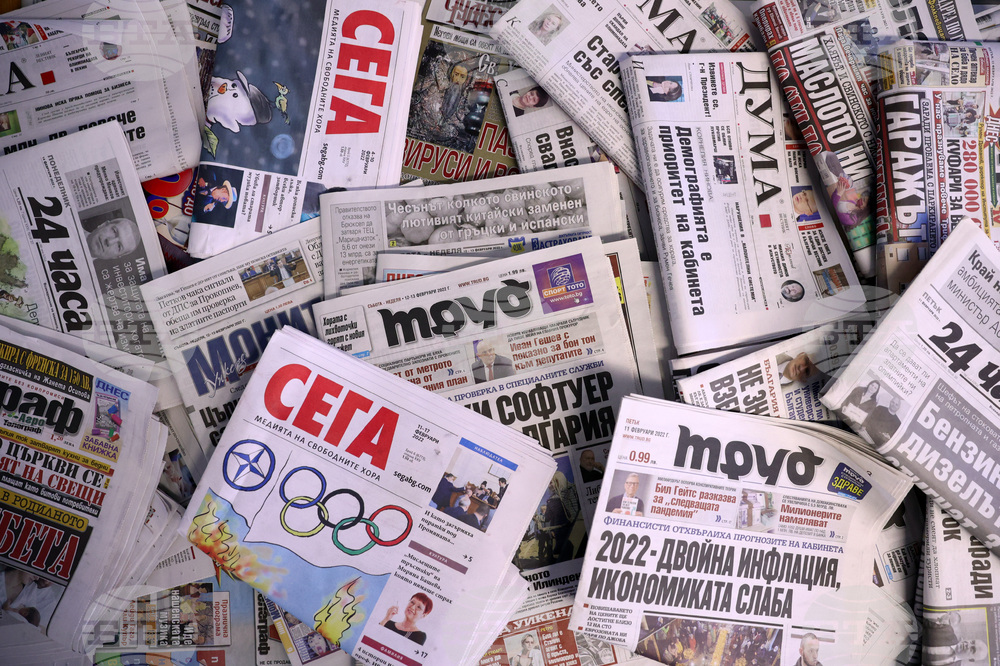
FOREIGN POLICY
Dnevnik.bg reports that Prime Minister Rumen Radev is visiting France and Belgium on Tuesday for talks with European and NATO leaders. The government press service says Radev is scheduled to meet French President Emmanuel Macron at the Elysee Palace in Paris before travelling to Brussels for talks with Belgian Prime Minister Bart De Wever.
The website adds that on Wednesday Radev is due to meet NATO Secretary General Mark Rutte, European Commission President Ursula von der Leyen and European Council President Antonio Costa. The Bulgarian delegation includes Deputy Prime Minister and Minister of Economy, Investments and Industry Alexander Poulev, Deputy Prime Minister Ivo Hristov, Deputy Prime Minister Atanas Pekanov and ministers.
***
Europe needs economic stabilisation and to speak with a single voice, Meglena Plugtschieva, the President’s secretary for foreign policy, said in an interview for the BNT programme The Day Begins.
She stressed that Bulgaria must strongly defend its national interest in the negotiations on the European Union’s Multiannual Financial Framework (MFF) for 2028–2034. According to her, the MFF is a key instrument for the EU’s development and should clearly define the bloc’s goals, including improving competitiveness, reindustrialisation, development of high technologies, and strengthening defence and security.
Plugtschieva argued that the European Commission’s proposal contains elements that are unfavourable for Bulgaria, including spending caps, changes in funding methodology, and the introduction of reforms as a condition for receiving funds. She noted that cohesion policy and the Common Agricultural Policy, both crucial for Bulgaria, are also affected.
She said the Bulgarian government must engage more actively in the negotiations and seek alliances, as discussions are expected to conclude by the end of the year. At the same time, she criticised the European Commission for what she described as increasing centralisation and subjectivity.
Plugtschieva also pointed to growing divisions among EU member states over the budget, referring to tensions between so-called “wealthy” countries and others. She said some major economies oppose increasing national contributions, while the Commission is proposing new revenue sources, including taxes linked to tobacco, carbon emissions, and plastic waste.
She stressed that Bulgaria needs a “wise and pragmatic” foreign policy based on national interest and a more active role within both the EU and NATO. In her view, the interests of Bulgaria and the EU require peace, stability, and realistic policies rather than nostalgia for past models of development.
Finally, Plugtschieva commented on the Recovery and Resilience Plan, saying that delays and frequent changes in recent years have made it difficult to implement projects within the remaining deadlines.
ECONOMY
Online sales in Bulgaria continued to grow rapidly in 2025, reaching over EUR 2.69 billion in total volume, according to data from the Bulgarian E-Commerce Association (BEA), cited by Capital. The sector posted a strong double-digit expansion of around 15% year-on-year, outpacing the average European growth rate of roughly 7%.
Experts attribute the expansion to accelerated digitalization in retail, rising incomes, higher trust in online payments and delivery services, as well as the long-term structural shift triggered by the COVID-19 pandemic. At the same time, inflation also contributes to the nominal increase in turnover.
Despite this growth, Bulgaria remains below the EU average in terms of e-commerce penetration. Online trade accounts for about 8% of total retail in Bulgaria, compared with roughly 16% across Europe. The country also trails in the e-commerce-to-GDP ratio, which stands at 2.53%, versus 3.84% in the EU average, 3.51% in Romania, and 7.86% in Greece.
According to BEA estimates, around 49% of Bulgarians shop online, significantly below the EU average of 75%. However, internet access is widespread, with about 90% of people aged 16–74 connected to the internet, and 55% of them having made at least one online purchase in 2025.
The Bulgarian e-commerce ecosystem now includes more than 50,000 online stores, with over 39,000 registered with the National Revenue Agency. Around 90% of them are micro and small businesses, many of which rely on online trade as a primary or supplementary source of income.
Consumers overwhelmingly prefer domestic platforms: 95.5% of online shoppers used Bulgarian e-shops. Cross-border shopping is less common, with 28% buying from EU-based retailers and about 13% from outside the EU. The most popular categories remain clothing, footwear, and accessories, followed by accommodation and transport services.
Cash-on-delivery remains the dominant payment method, used by nearly half of online buyers, although card payments are steadily gaining ground. Logistics patterns also show gradual modernization, with home delivery still leading, followed by courier office pickup. Parcel lockers are growing in popularity, especially during peak shopping periods such as Black Friday, when they account for up to 50% of deliveries due to convenience and cashless payment options.
Market consolidation is becoming more visible: the top 10 online retailers and platforms account for about 21.6% of Bulgaria’s B2C e-commerce sales. Industry representatives suggest the sector’s future will increasingly depend on larger platforms that can invest in innovation and sustainability, although small merchants still dominate numerically.
Regionally, Bulgaria shows moderate performance compared to neighboring countries. In 2025, about 45.7% of surveyed Bulgarian e-commerce businesses reported revenue growth, placing it behind stronger performers such as Hungary and Romania, but ahead of more moderate markets like Greece in some indicators. Key challenges across the region remain customer acquisition, marketing, logistics, and fulfillment, with expectations of continued double-digit growth in the medium term.
Overall, the Bulgarian e-commerce market is expanding quickly but remains structurally behind Western Europe, with growth driven by a mix of rising digital adoption, income growth, and persistent reliance on domestic platforms and cash-based payments.
***
Trud writes that the gross wealth of Bulgarian households has reached EUR 554.87 billion at the end of 2025, according to the second annual Wealth Index compiled by the Sofia-based Expert Club for Economics and Politics (EKIP). The index was presented by economist Stoyan Panchev and financial expert and Tavex Bulgaria founder Max Baklayan at a BTA-hosted press conference, showing that household wealth has increased significantly over the past year, driven mainly by rising property prices.
The website adds that housing remains the dominant component of household wealth, accounting for around three-quarters of total assets, with a total value of EUR 420 billion. Financial assets amount to just over EUR 98 billion, while deposits and cash make up the largest share of financial holdings at EUR 56 billion. Panchev notes that inflation has significantly shaped the index’s growth, with around 40% of the increase attributed to price growth rather than real gains. He also points out that per-capita gross wealth stands at EUR 75,383, although he emphasizes the uneven distribution of assets in society.
Mediapool.bg reports that the index shows a strong dependence of wealth growth on real estate, with 90% of last year’s increase in net wealth coming from rising property values. Baklayan adds that household borrowing is a key driver of this trend, noting that mortgage lending has expanded by nearly 30% in 2025, significantly outpacing GDP growth of 3.1%. He argues that this dynamic contributes to higher inflation and asset price growth, while eroding the value of savings held in bank deposits.
The website notes that household investment in stock markets has risen by 21% over the past year, reaching EUR 6.69 billion, but still represents only a small share of total financial assets. Baklayan says Bulgarian households remain highly conservative, holding around 80% of GDP in cash and deposits, while investment in private business is smaller than deposits, which he sees as a structural weakness for long-term economic development.
***
Duma: The number of people in the European Union at risk of poverty increased in 2025 both in absolute terms and as a share of the population, according to the latest Eurostat forecast data published on its website.
The share of people in the EU at risk of poverty rose by 0.1 percentage points compared with the previous year, reaching 16.3% in 2025. This corresponds to around 72.4 million people, or 316,000 more than a year earlier.
In contrast, Bulgaria recorded a modest improvement. The share of people at risk of poverty declined from 21.7% in 2024 to 21.2% in 2025. In absolute terms, the number fell from about 1.401 million to 1.369 million people.
Despite the decrease, Bulgaria remains among the EU countries with the highest poverty risk levels. In 2025, only Lithuania (22.6%) and Latvia (22%) reported higher shares of people at risk of poverty. The three countries have consistently been at the top of this ranking in recent years, although their positions have shifted slightly over time.
In 2024, Bulgaria had the highest share of people at risk of poverty in the EU, followed by Lithuania and Latvia. In 2023, the highest levels were recorded in Estonia, Latvia, and Romania, with Bulgaria again among the top four.
Overall, the data highlight a mixed picture across the EU: while the bloc as a whole saw a slight worsening of poverty risk indicators, Bulgaria registered a small but notable decline, though it remains among the most affected member states.
JUSTICE
Sega.bg writes that Borislav Sarafov has submitted his resignation as director of the National Investigation Service and Deputy Prosecutor general, with the move expected to be included as an additional item on the agenda of the Prosecutors Chamber of the Supreme Judicial Council. The website quoted two independent sources from the judiciary. It notes that the resignation comes amid legal and political debate over his continued position within the prosecution system.
The site adds that Minister of Justice Nikolay Naydenov has recently called on Borislav Sarafov to step down and that planned amendments to the Judicial System Act aim to restrict his ability to retain senior prosecutorial roles. Sega.bg also reports that magistrates quoted by the outlet see the move as potentially aimed at limiting the impact of forthcoming legal changes, while discussions continue over possible leadership reshuffles within the National Investigation Service.
24 Chasa, bTV and Mediapool.bg also cover the topic.
***
Bulgaria’s internal procedure for selecting a European Prosecutor and the country’s international image are at risk, Justice Minister Nikolay Naydenov said in an interview for Bulgarian National Radio (BNR).
He explained that he has requested and will hold a meeting next month with the head of the European Public Prosecutor’s Office (EPPO), Laura Kovesi, in order to hear her position and concerns and to determine how the procedure should proceed to ensure a “worthy candidate” without doubts over dependency or influence.
Naydenov said he also wants to clarify whether Bulgaria’s selection procedures are seen as compliant with European Commission rules and whether they are interpreted unambiguously by the European Commission. He added that if the procedures are deemed acceptable, the process would continue as planned after a ruling by the Supreme Administrative Court.
He noted that he expects the process to conclude quickly so that Bulgaria can proceed in line with EU requirements, stressing that two separate selection procedures have been initiated since the beginning of the year.
Regarding the selection of Teodora Georgieva [as Bulgaria’s European prosecutor], the Minister said he would submit all available public documentation to the National Assembly, while noting that some materials are classified and cannot be disclosed due to their security status.
***
Mediapool.bg: Constitutional Court to review vehicle deregistration rules linked to third-party liability insurance lapses. Bulgaria’s Constitutional Court has opened a case challenging key provisions in the Insurance Code and the Road Traffic Act over what critics describe as a legal “absurdity” that can turn drivers into offenders without their knowledge.
The case was initiated by Administrative Court judge Valeri Radanov from Silistra, who argues that current rules governing the deregistration of vehicles without valid third-party liability insurance violate constitutional principles. The court has not yet decided whether to admit the case for full consideration. The rapporteur is judge Atanas Semov.
At the centre of the dispute is a procedure involving the Guarantee Fund and the Ministry of Interior. When a vehicle’s mandatory third-party liability insurance expires, the Guarantee Fund informs the authorities, after which the police can automatically deregister the vehicle. However, under the current framework, the owner is not necessarily notified in a way that ensures they actually receive the information.
As a result, drivers may continue using vehicles that have been deregistered without being aware of it. Only during a roadside check might they discover that they are driving an unregistered vehicle—an offence that can lead to criminal liability and even the loss of a driving licence.
Judge Radanov argues that the system is fundamentally flawed because it penalizes individuals for circumstances they cannot reasonably know. Although the law formally requires notification, it does not ensure that the owner actually receives it. The legal deadline for deregistration begins once the Guarantee Fund sends the notice, not when the driver is informed.
Until recently, the Interior Ministry was also required to notify vehicle owners, but legislative changes removed this obligation. Since then, authorities have continued to deregister vehicles without informing owners in advance.
Legal experts note that this approach appears to conflict with a joint interpretative ruling of the Supreme Court of Cassation and the Supreme Administrative Court, which states that individuals should not be sanctioned if they were not informed that their vehicle had been deregistered. Despite this, enforcement practice has continued.
The system has also been criticized for lacking any accessible public database where citizens can verify whether their vehicle registration has been suspended.
Judge Radanov describes the situation as “incomprehensible,” arguing that lawmakers may be relying on the principle that ignorance of the law is not an excuse, while in reality the issue concerns ignorance of facts rather than ignorance of law.
He further argues that the arrangement violates constitutional guarantees of legal defence and proportionality, as citizens are deprived of the opportunity to defend themselves against actions they were never properly informed about. He also cites Constitutional Court jurisprudence stating that restricting constitutional rights to compensate for administrative failure is incompatible with the rule of law.
The case highlights a broader tension between administrative efficiency and legal certainty, raising questions over whether enforcement mechanisms that rely on automatic procedures without effective notification meet constitutional standards in a rule-of-law state.
DEFENCE
Mediapool.bg writes that Bulgaria remains without a deal for new 3D military radars more than a decade after the project was launched, despite repeated declarations by the Defence Ministry that an agreement is close. The prolonged delays have exposed gaps in the country’s radar coverage at a time of heightened regional security risks linked to the wars in Ukraine and the Middle East. The site notes that the absence of modern radars also undermines the integration of the new F-16 Block 70 fighter jets into the Bulgarian Air Force’s command and control systems.
The website adds that the latest two-year delay has increased the projected cost of the project by around EUR 50 million. The Defence Ministry now plans a deal worth up to EUR 195 million, compared with roughly EUR 150 million when French defence company Thales was ranked first in the procedure in 2024. Mediapool.bg says the contract was not signed under then defence minister and current Minister of Defence Dimitar Stoyanov, reportedly because of an appeal by Spanish firm Indra, although the Defence Ministry was not legally obliged to suspend the procedure.
Mediapool.bg reports that the government now intends to finance the radar purchase through the EU SAFE mechanism, potentially as a joint project with France. Defence officials argue that the higher price reflects inflation in the defence industry and the inclusion of more advanced radar systems with greater mobility and battlefield resilience. Experts quoted by the website question that explanation and say the repeated postponements themselves have driven up costs.
The site notes that Bulgaria plans to acquire seven Ground Master GM400α three-coordinate radars, together with training and five years of maintenance. The systems are expected to address longstanding weaknesses in radar coverage, particularly in northeastern and eastern Bulgaria after radar posts near Razgrad and Cape Emine were closed. The upgraded configuration is designed around lessons from the war in Ukraine and updated NATO requirements, Mediapool.bg adds.
POPULATION STATISTICS – CHILDREN
Single-person households are now the most widespread household type across the European Union, accounting for 37% of all households, according to data highlighted by NOVA TV’s “The Numbers of the Week” segment.
The trend reflects broader demographic and social shifts in Europe, including lower birth rates, ageing populations, and changing family structures. Households consisting of couples without children are also increasing, now representing around 24% of all households in the EU.
At the same time, traditional family models are declining. Households with children and single-parent families are becoming less common, reinforcing a long-term trend toward smaller household sizes and fewer children being raised per family.
In Bulgaria, the number of births continues to fall significantly. In 2025, 50,241 children were born in the country - about 15,000 fewer than a decade ago and roughly 20,000 fewer than 20–30 years ago. The decline is even more pronounced compared with 40–50 years ago, when annual births exceeded 100,000 and reached more than 135,000 in 1975.
Despite the downward trend in births, Bulgaria remains broadly aligned with European averages in terms of how children are distributed across households. Across the EU, only about one quarter of households include children, with Slovakia and Ireland recording the highest shares, and Germany, Lithuania, and Finland among the lowest.
An increasingly important demographic factor in the EU is migration-related childbirth. According to Eurostat, around one in four newborns in the EU is now born to a mother who is an immigrant. The share varies widely: in Luxembourg it reaches nearly 70%, while in Germany and Spain it is around one in three. In Italy it stands at 22%, while in Bulgaria and Slovakia it is just about 2%.
When it comes to household composition with children, Bulgarian families are most commonly one-child households. Around 60% of households with children in Bulgaria, Portugal, and Malta have only one child, placing them among the EU countries where smaller families dominate. Two-child households account for about one third in Bulgaria, while large families with three or more children represent only around 5%.
Overall, northern European countries such as Sweden, the Netherlands, and Ireland tend to have higher shares of families with multiple children compared to southern and eastern Europe.
The data point to a continuing structural shift in European society: fewer children, smaller households, and a steady rise in people living alone - changes that are reshaping both demographic patterns and social policy priorities across the EU.
FLOODS
The aftermath of the recent floods in north-central Bulgaria continues to receive media coverage.
bTV: One dead after severe flooding in Sevlievo; local authorities provide aid and warn on water safety.
The north-central town of Sevlievo has been hit by severe flooding that claimed the life of a 55-year-old man, whose body was discovered on Tuesday after being missing in the aftermath of the disaster. Information from the District Prosecutor’s Office in the nearby city of Gabrovo is expected later in the day.
According to relatives, a sudden and powerful flood wave swept through an industrial zone where the man was working at the time. His brother, Boyan Karapenev, told bTV that the surge was strong enough to damage a reinforced concrete fence at the site. The area had been inundated and workers were evacuated, but the victim was reportedly carried away by the floodwaters. His body was later found about four kilometres away.
The deceased was an electrical engineer by education, a graduate of the Technical University of Gabrovo. He had worked for around a decade in a major sanitary ceramics company in Sevlievo and most recently at an asphalt plant.
The municipal council in Sevlievo opened its session on Tuesday with a minute of silence in his memory.
Local authorities have announced financial assistance for residents affected by the flooding. Each impacted household will receive EUR 1,000 in aid, with payments to be made once inspection commissions complete assessments of the damage. Residents will not need to submit applications at this stage.
A donation account has also been opened by the municipality to support recovery efforts. Officials said the funds will be used strictly for restoring flood damage, in line with donor intent.
Meanwhile, the Regional Health Inspectorate has warned residents not to consume tap water in the coming days due to potential contamination following the floods.
/MY/
news.modal.header
news.modal.text