site.btaScholarships, Anti-Hate Speech Policies among Proposals for World Roma Congress
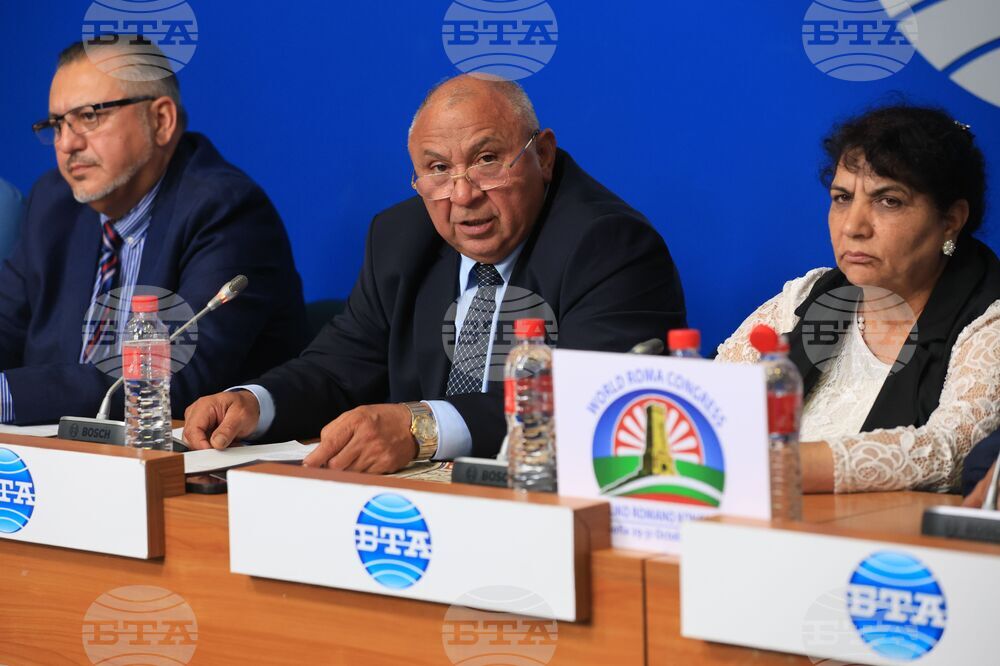
National scholarships for Roma students, a national qualification programme, support for young Roma entrepreneurs, state and municipal internship programmes, active policies against hate speech, and partnership between the State, local authorities and the non-governmental sector will be among the proposals presented by the OGI E Romengo organization at the 15th World Romani Congress Sofia ’26, the organization's Secretary General Iliya Kostov said on Tuesday at a BTA press conference.
The congress will take place from October 29 to 31 in Hall 3 of the National Palace of Culture, said Toma Mladenov, Chair of OGI E Romengo and chief organizer of the event. He described the congress as a process of unity, coordination and responsibility that begins in Bulgaria but extends far beyond its borders.
More than 300 delegates from over 40 countries are expected to attend. According to Mladenov, this places Bulgaria at the centre of an important international dialogue and creates an opportunity for the country to demonstrate commitment, leadership and vision at national, European and global level.
Roma issues expert Assoc. Prof. Asen Kolev outlined some of the key problems to be addressed during the congress. One of them is the lack of specific data from the National Statistical Institute on the number of Roma people in Bulgaria. "It is not possible that 370,000 people were recorded in 2011 and 266,000 after the 2021 census. This is a serious issue because international data show that the Roma population in the country is between 700,000 and 800,000," he said.
Poverty is another major issue facing the Roma community. According to surveys, 75% of Roma identify themselves as poor, while only 3% say they are not, the expert noted.
Employment is also a major challenge, Kolev said. Official statistics show unemployment in Bulgaria at 5.3%, but the actual figure among Roma exceeds 70%, he argued. Lack of education is not an excuse, he added.
Kolev also commented on the import of labour from third countries such as Nepal, Laos and Cambodia. "At the congress we will point out that our educated young people can do this work better than the people coming here from other countries," he said.
Human rights violations were also highlighted among the key issues. According to Kolev, discriminatory treatment in various settlements has increased over the past 15 years. He said the organization would request official meetings with the national ombudsman and the chairperson of the Commission for Protection against Discrimination.
/IV, VE/
news.modal.header
news.modal.text