site.btaBTA Opens National Series on Pencho Slaveykov and Bulgarian Modernism with Event in Tryavna
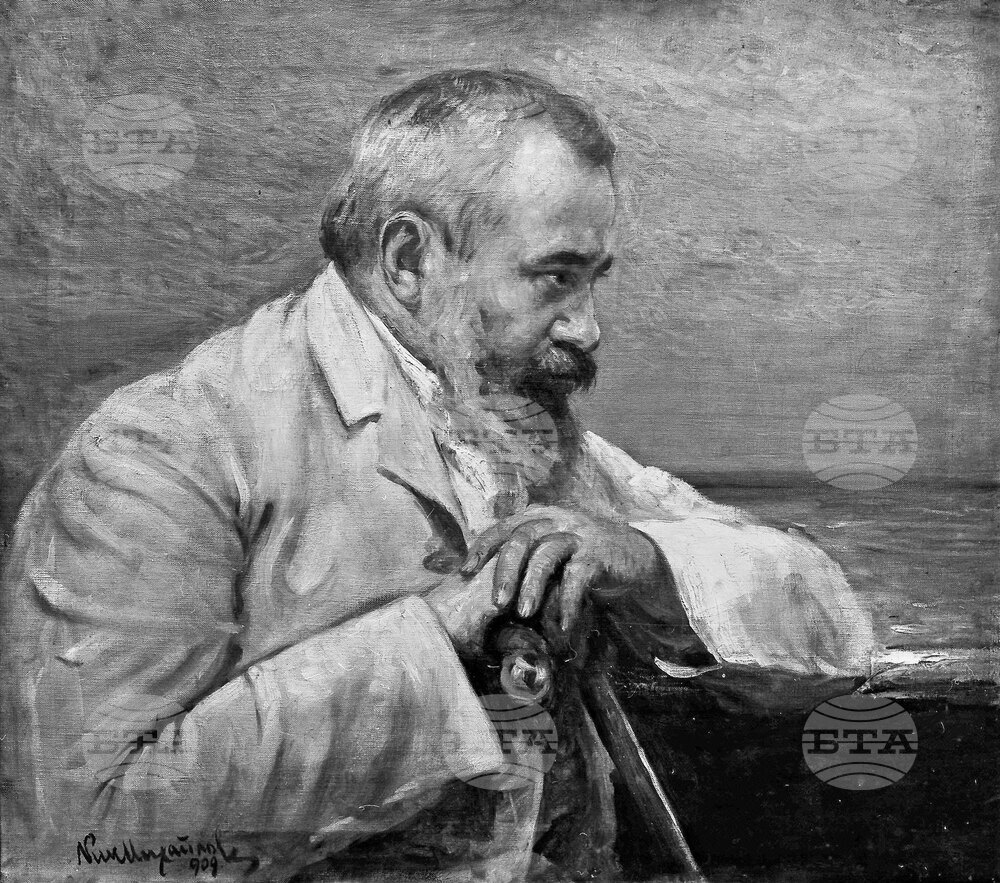
On Monday, BTA is launching a nationwide series of discussions across its national press clubs dedicated to the 160th birth anniversary of Bulgarian poet Pencho Slaveykov and to Bulgarian modernism. The first event, titled Pencho Slaveykov Today, is taking place in his hometown of Tryavna, at the Slaveykov House Museum.
The initiative is organized by BTA, with poet, literary scholar and critic Yordan Eftimov as moderator. The event in Tryavna will also be attended by the town’s mayor, Dencho Minev. The December issue of LIK magazine will reflect the campaign, featuring reports from the discussions as well as a special section with 160 contributions of 160 words each, marking the anniversary, similar to a previous campaign dedicated to Bulgarian writer and public figure Aleko Konstantinov.
Speaking to BTA, Eftimov said the current campaign will include discussions on the role of Pencho Slaveykov and his contemporaries, including members of the “Misal” literary circle and others who sought, and largely succeeded, in modernizing Bulgaria and shaping it into a European country with a strong modernist tradition.
“We will aim to hold discussions in all BTA press clubs across the country,” Eftimov said, noting that BTA currently has 45 national press clubs, 33 of which are in Bulgaria.
Participants in the discussions will include literary and cultural researchers, teachers, archivists, heritage professionals, and writers. The aim, Eftimov explained, is to encourage Bulgarian society to reflect on and describe itself through the legacy of Pencho Slaveykov, much like the approach taken with Aleko Konstantinov three years ago.
“The broader purpose of the campaign is to show that BTA can not only report on what is happening in Bulgarian society, but also generate reflection, dialogue, and self-awareness, encouraging society to articulate how major writers and intellectuals live on in the nation’s active cultural memory, and to deepen that process of reflection,” Eftimov added.
He also highlighted the key role of teachers in the discussions.
Writers participating in the discussions will be invited to reflect on whether Slaveykov influenced their own work and how studying his works in school shaped their literary development.
The Tryavna event will also be attended by Vijay Joshi, CEO and Editor-in-Chief of the Press Trust of India. The Indian national news agency and BTA have a partnership agreement that includes news exchange and cooperation within MINDS International, an association of 25 leading global news agencies, including the Associated Press, Reuters, Agence France-Presse, and Kyodo.
Joshi previously visited Bulgaria in 2024 at the invitation of BTA Director General Kiril Valchev.
Pencho Slaveykov (born April 27, 1866 in Tryavna) was the youngest son of distinguished poet Petko Slaveykov. In 1884, at the age of seventeen, he became seriously ill and was left with lifelong physical impairments affecting his speech, writing, and mobility, forcing him to use a cane. He later came to see his suffering as a “great teacher”, which strongly shaped his creative outlook.
His worldview and work were influenced by Henrik Ibsen, Heinrich Heine, and Friedrich Nietzsche. He developed both intimate lyrical poetry and socio-critical works, including poems written in opposition to the rule of Stefan Stambolov, which reinforced his democratic ideals. His first collection, Lilies of the Valley (“Momini Sulzi”), reflects early Heine influence.
In 1892 he studied philosophy in Leipzig, where he took part in cultural life, contributed to Bulgarian literary magazines, and worked on epic poetry such as Blood-Stained Song. After returning to Bulgaria in 1898, he worked as a teacher, librarian, and later director of the National Library and the National Theatre, and was closely connected with the Misul (Thought) literary circle.
In 1911 he left Bulgaria, lived in Switzerland and Italy, and died in Brunate on May 28, 1912. His remains were later returned to Bulgaria in 1921.
/NF/
news.modal.header
news.modal.text