Wrap-up
![Sofia Conference Focuses on Tourism's Future, Sustainable Solutions]()
![Sofia Conference Focuses on Tourism's Future, Sustainable Solutions]() Snapshot of the Four Keys to Sustainable Tourism: Culture, Nature, Food and Innovation conference at the University of Forestry in Sofia on April 21, 2026 (BTA Photo/Vladimir Shokov)
Snapshot of the Four Keys to Sustainable Tourism: Culture, Nature, Food and Innovation conference at the University of Forestry in Sofia on April 21, 2026 (BTA Photo/Vladimir Shokov)
site.btaSofia Conference Focuses on Tourism's Future, Sustainable Solutions
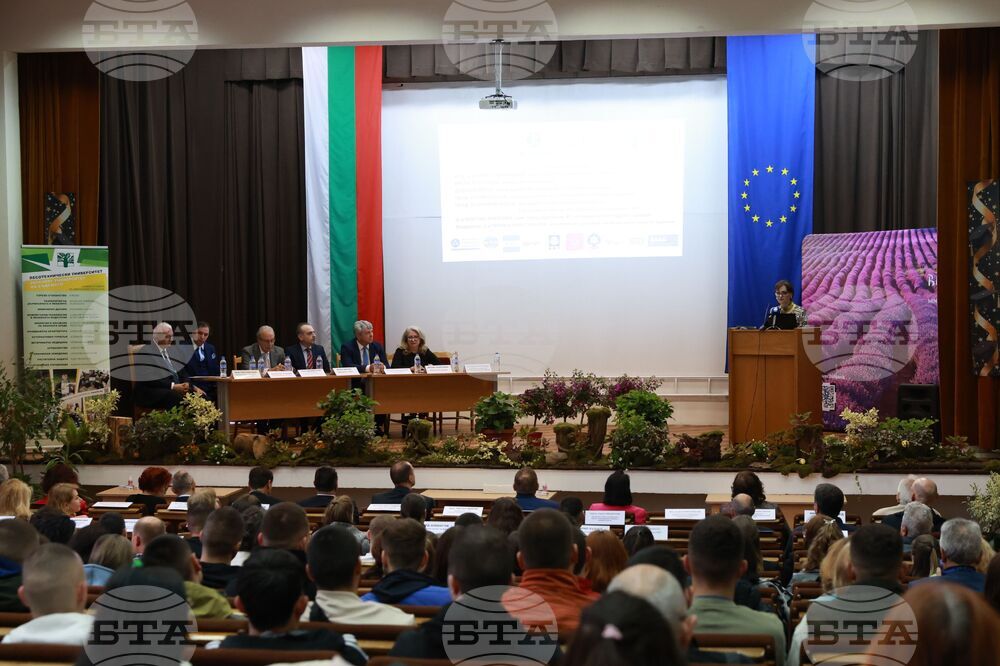
The National Board of Tourism (NBT) organized a conference on the future of tourism, sustainable solutions, and opportunities at the University of Forestry in Sofia on Tuesday. The event was part of the board’s 20th anniversary programme held under the patronage of President Iliana Iotova and with institutional support from the Ministry of Tourism. The initiative was titled Four Keys to Sustainable Tourism: Culture, Nature, Food and Innovation, and was held with Bulgarian News Agency (BTA) as a media partner.
The discussion was attended by experts and representatives of institutions.
Caretaker Tourism Minister Irena Georgieva said the future of tourism lies in achieving balance – between growth and preservation, accessibility and authenticity, and technology and nature. “In a world where every destination is just a click away, value is shifting toward authenticity, clean environments, tranquillity, and meaningful experiences,” she said, noting that this presents both an opportunity and a responsibility for Bulgaria.
Bulgarian Tourist Union Chair Ventsislav Venev broke the news that the Board is developing a new digital platform called Bulgaria 100, which will bring together tourism information on sites, routes, events and services across the country. He explained that the future digital platform will be accessible to tourists, institutions and businesses, and will function as an interactive map featuring a wide range of tourist information. It will also offer navigation, including offline access.
National Tourism Board (NTB) Deputy Chair Martin Zahariev warned that the situation regarding the upcoming summer tourism season is "not critical but concerning". He noted that kerosene prices have nearly doubled, warning that despite the ceasefire between Iran and the United States, shortages could still emerge. The European Commission, he said, claims that Europe has kerosene reserves for six months. "Bulgarian tourism is 100% dependent on air connectivity," Zahariev stressed.
Deputy Economy and Industry Minister Anton Kostadinov said tourism made a substantial contribution to economic growth, employment and regional development and, together with related activities, accounted for at least 8% of the country’s GDP. He noted that the real share was difficult to measure because the sector was closely linked to many other industries.
Bulgarian Industrial Association Managing Board Chair Dobri Mitrev said that Bulgaria’s wealth lies in its nature and its people. “We are not a poor country. We have unique nature, culture, and people, which we must turn into sustainable development,” he added. Mitrev noted that achieving a higher level of development depends on strong partnerships between institutions and the business sector, as well as a proactive role from entrepreneurs.
Union of Architects in Bulgaria President Petar Dikov said that Vitosha Mountains and Sofia have underused tourism potential that should be developed strategically. He said the mountain, located right next to the capital, is a unique natural resource that is currently deteriorating and is not being used fully as a tourism area. He also highlighted Sofia's "exceptionally rich cultural and historical heritage", including sites such as Boyana Church, as well as a group of monasteries around the capital known as the Sofia Holy Mountain - "resources that remain insufficiently promoted and are weakly integrated into the city’s tourism product."
European League for Economic Cooperation's Bulgarian Section President Branimir Botev called for greater efforts to promote Bulgaria as a tourist destination. He stressed that despite limited advertising resources, the country can attract interest through authenticity, sustainability, and an emotional connection with visitors. He underlined that Bulgaria is among the few European countries with the potential to develop five major types of tourism – sea, mountain, spa and wellness, cultural-historical, and rural and eco-tourism, alongside countries such as Italy, Spain, and France.
/MR/
news.modal.header
news.modal.text