site.btaElectrical Industry Remains Leading Exporter in 2025, Expert Says
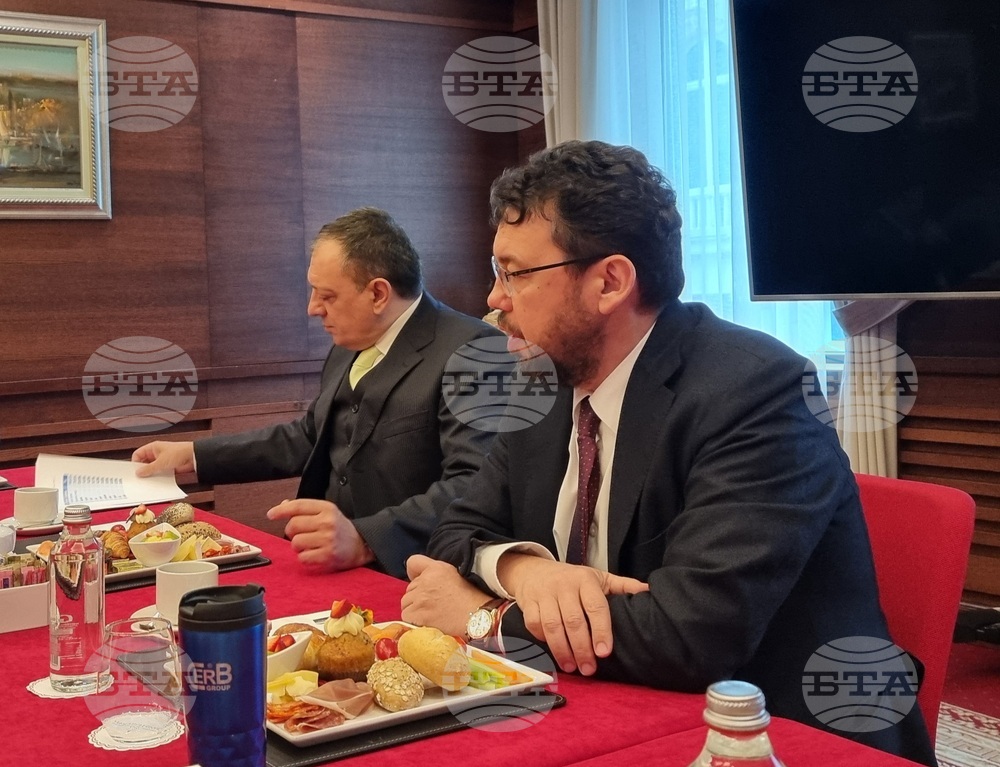
Bulgaria’s electrical industry has retained its position as a leading exporter, although exports have declined over the past two years, with no signs of a reversal in the trend, said Bulgarian Association of Electrical Engineering and Electronics (BASEL) Executive Director Orlin Dimitrov on Friday. He was speaking at a business breakfast with members of the association’s management board on the developments in the electrical industry.
According to him, the decrease in exports is not an isolated phenomenon but affects the entire manufacturing sector. BASEL data show that in 2025, 71% of the exports of the organization’s members were directed to European Union countries, with Germany being the leading partner with a 23% share.
Production in the sector has also declined, with companies linked to the automotive industry being the most affected. Dimitrov said the drop is the result of weakened demand for cars in the European Union, which directly impacts Bulgarian suppliers. He noted that production in the automotive segment in Bulgaria has decreased by about 20%.
By turnover structure, electrical automotive parts account for the largest share at 31%, followed by electricity distribution equipment at 16% and household electrical appliances at 9.3%.
BASEL Chair Dimitar Beleliev said that Europe is the largest market for Bulgaria’s electrical industry because it produces high-quality but expensive goods.
He also noted that, according to a BASEL analysis conducted in 2025, more than 60% of public procurement contracts in Bulgaria in the electrical industry are won by companies from third countries, such as China and India. "This leads to the strange situation in which our sector is the largest exporter, while at the same time our money goes to our competitors," Beleliev said. As a possible solution, BASEL proposes introducing a requirement that at least 55% of goods under EU programmes be produced by companies from Europe.
Another significant problem is product fees, which, according to the association, are excessively high and discourage companies from paying them. Beleliev said that in 2025 they increased by up to 60%, while for some household appliances they account for between 7.8% and 10% of product value, for photovoltaics up to 15%, and for batteries around 7-8%.
BASEL proposes reducing the fees ten-fold and easing the administrative burden in order to create conditions for business adaptation and the development of more recovery organizations. According to Beleliev, waste should be regarded as a strategic resource that should be processed within the country.
/RY/
news.modal.header
news.modal.text