site.btaLidl Cuts down Fruit and Vegetable Waste by 400+ T with New Product
More than 400 tonnes of fruit and vegetables have been "saved" in eight months through a new product introduced by Lidl, the retailer told BTA for its EU Lex BG project. The company commented on the issue of food waste in connection with a new European directive aimed at reducing food waste across the bloc.
Under the upcoming EU rules, member states will have to cut down food waste generated by households, retailers and restaurants by 30% by 2030 compared with levels recorded between 2021 and 2023. Waste generated during food processing and production must also be reduced by 10%.
Lidl's policy is that "the best waste is the waste that is never generated", its representatives said, adding that their approach focuses on prevention through smart planning. By using precise goods flow management, automation, digitalization and an automatic ordering system, the chain predicts demand for each store as accurately as possible and ensures appropriate stock levels.
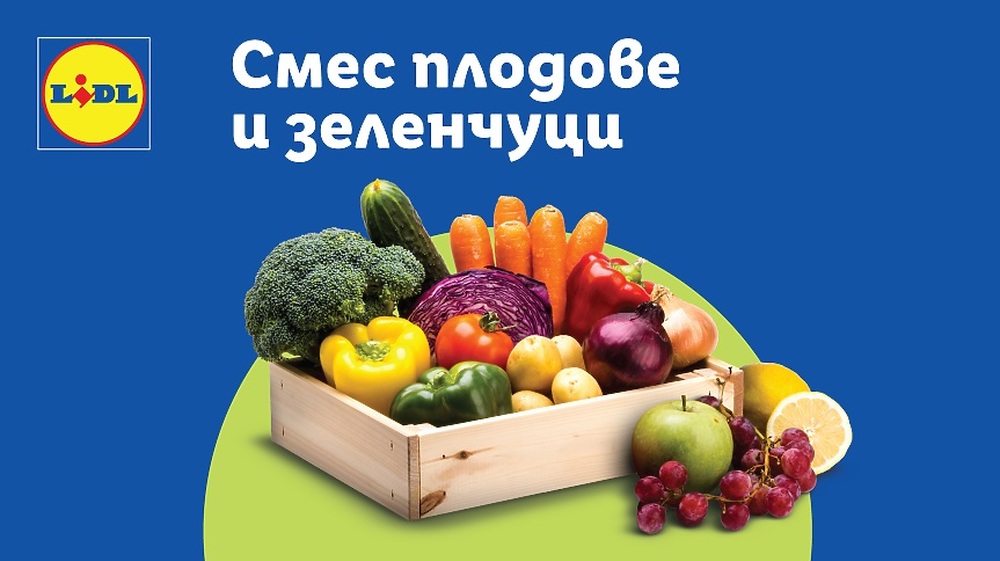
In May 2025, Lidl introduced a product called "Mix of Fruit and Vegetables" and by December 2025, it has helped reduce food waste by 466 t.
"Mix of Fruit and Vegetables" is a crate in a mesh bag with at least 5 kg of produce that has imperfect appearance but is still fine for consumption. These are sold at a fixed price of EUR 2.55 per crate, with the exact quantity depending on each store’s daily availability.
Items approaching their expiration date are also sold at a 20% discount as part of the initiative "No Waste – Big Discount". Products with an even shorter shelf life may be discounted by up to 50%. In the five years since the programme began, food worth BGN 12 million has been saved, Lidl said.
The company added that its in-store bakery concept (Lidl Bakery), operates on a precise baking schedule throughout the day to minimize wastage. If unsold items remain, they are offered at reduced prices.
Lidl regularly monitors and analyses the food waste it generates. Between March 2024 and March 2025, food waste accounted for about 5.5% to 6% of the company’s total waste volume. The retailer said it has managed to maintain stable levels despite expanding its operations.
The chain also partners with the Bulgarian Food Bank, supporting the organization with food donations as well as financial assistance for logistics.
Lidl Bulgaria said it would welcome stronger legislative action in the future so that businesses can contribute more significantly to achieving European food-waste reduction goals.
As of the end of January 2025, Lidl Bulgaria’s retail network included 143 stores in 61 towns and cities across the country.
BTA contacted supermarket chains Lidl, Kaufland, Fantastico and Billa for information on food waste as part of an initiative supported by the European Parliament and dedicated to the implementation of European legislation in Bulgaria.
/NF/
news.modal.header
news.modal.text