site.btaJanuary 8, 1996: Mass Privatization Officially Kicks Off in Bulgaria
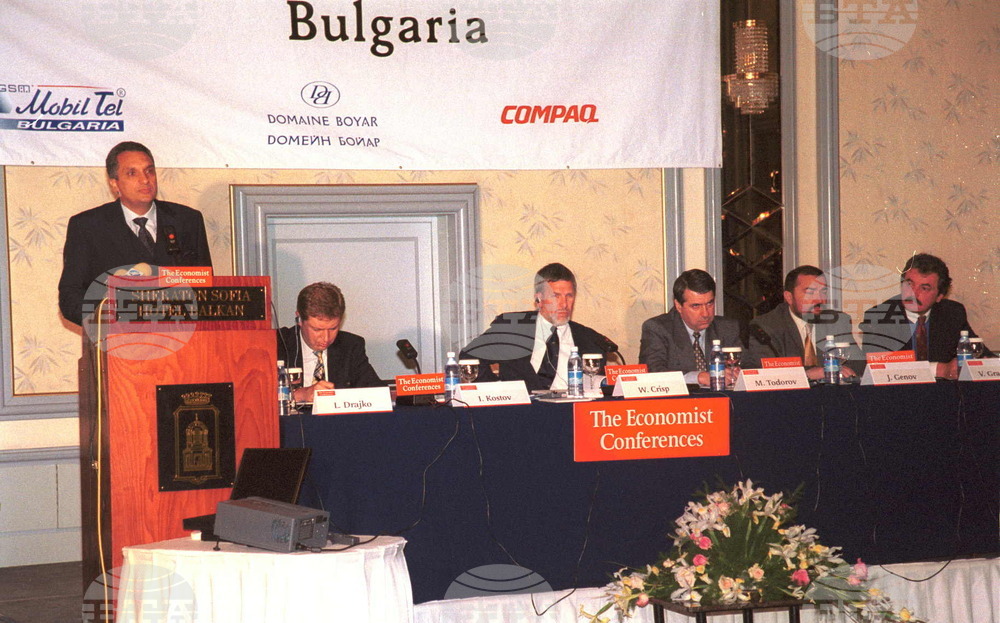
Mass privatization officially began in Bulgaria 30 years ago on Thursday, with the sale of voucher books to Bulgarian citizens starting on January 8, 1996.
This programme was adopted by the 37th National Assembly on December 19, 1995 and was made public on January 4, 1996. The idea was to transfer the ownership of shareholdings in 1,063 commercial corporations totaling a nominal value of BGN 80.439 billion from the State to private individuals. The programme was divided into three stages. The first stage involved registering citizens and selling voucher books, which began on January 8, 1996. One million voucher books, covering 6,700,000 people, were printed and distributed among registration offices. All registered citizens were eligible to participate in the second stage which took place from June 20 to July 31, 1996. During that period, they could transfer their shares to relatives and deposit them in funds. The third stage began on June 6, 2003, during which participants could bid for shares in companies at centralized auctions. The first centralized public auction was held on the same day. During the auction sessions, shares in companies offered for mass privatization were obtained in exchange for investment vouchers.
In a 2009 interview, deputy prime minister (1990-1991) Aleksandar Tomov described the mass privatization process in a 2009 interview as "one of the great mistakes of the Bulgarian transition". Bulgarians did not participate in the privatization on their own but through privatization funds, which attracted them with advertisements promising large dividends which never materialized. Individuals' vouchers were bought right outside post offices where voucher books were distributed. The law permitted the transfer of vouchers but not voucher books. Of the three million people who participated in the mass privatization, two and a half million – or 80% – transferred their shares to privatization funds. Consequently, these funds acquired some of the best industrial enterprises at a price between a tenth and a hundredth of their actual value. According to Tomov, about 300 families appropriated more than a third of the entire economy at a bargain price.
A second wave of mass privatization began in 1998, with over a million registered participants taking part. Of these, fewer than a fifth exercised their privatization rights. Hundreds of thousands were cheated in scam schemes used by privatization funds.
Following is a selection of news items by which the BTA English service covered the mass privatization process in 1996:
"PRIVATIZATION FUNDS LICENSED
Sofia, November 7, 1996 (BTA) – So far 79 privatization funds have received licenses for participation in the mass privatization, Hristiyan Tanoushev, Chairman of the Securities and Stock Exchanges Commission (SSEC), told a news conference today. The capital raised by the funds totals 60,209 million leva given that 11 of the funds have more than 2,000 million leva each. Expenses on the funds' establishment equalled about 1,659 million leva of which 837 million were spent on the awareness campaigns, according to SSEC figures. Unlike the Czech Republic and Russia where privatization funds numbered 450 and 600, respectively, in Bulgaria their number is considerably smaller. Eighty-one privatization funds have raised 70 million leva, the minimum capital needed to be given a license.
Two of the funds which did not present all necessary documents were not granted licenses, Tanoushev said. At a sitting yesterday the Commission decided to licence the Bulgarian-Dutch Privatization Fund. The Fund was set up by Bulgaria's Post Bank and the ING Bank of the Netherlands. It is the third largest fund with more than 160,000 shareholders and a capital exceeding 4,000 million leva. The Fund's founders failed to meet a requirement to publish a public notice of subscription. This is why there were doubts on whether the SSEC will give it a license. "The licensing of the Bulgarian-Dutch Privatization Fund is legal and is in the interests of the investors," Plamen Nikolov of the Commission said today.
The first centralized auction of the mass privatization was given the go-ahead in early October. It marked the beginning of the second stage of denationalization of the Bulgarian economy. The first one involved the cash privatization launched three years ago.
The mass privatization started in early January 1996. Some 1,000 enterprises with a total capital exceeding 200,000 million leva have been put up for sale. About 80,000 million leva of their capital will be privatized through voucher books, another part through the cash privatization and a third part will remain state-owned. More than three million people stated they will take part in the mass privatization through privatization funds or independently. The total of 6.5 million Bulgarians were eligible to register for participation."
"SODI SALE TO BE SIGNED IN EARLY DECEMBER
Sofia, November 29 (BTA) - The privatization deal for Sodi, Bulgaria's largest chemical works at Devnya, Northeastern Bulgaria, is expected to be signed in the first ten days of December, Deputy Prime Minister and Minister of Economic Development Roumen Gechev said in reply to an MP's question in Parliament today.
The investor, General Chemical Group of the United States, buys 60 percent of Sodi for 160 million US dollars. The company undertakes to invest 100 million dollars over the next five years and to keep all jobs, which are about 3,000.
The technical parametres of the deal were coordinated last week, Deputy Prime Minister Gechev said. Ten percent of the amount will be paid on signing the deal, the rest of it is payable within a month's time, Gechev said. Bulgaria invested about 260 million US in the construction of the Sodi chemical works. The Deputy Prime Minister pointed out that its privatization would not disrupt supplies to Sodi's consumers in the country.
Gechev described the contract for Sodi with the US company as the largest successful privatization deal. In his words, the negative reactions on the part of certain circles alleging in the Bulgarian press that Sodi has been sold for a song and that the US company will not be able to meet the payment are "undisguised anti-Government policy". Roumen Gechev stated expressly that the deal does not harm Bulgaria's national interests."
"VOUCHER PRIVATIZATION FUNDS' BIDS OPENED
Sofia, December 2 (BTA) - The opening of privatization fund bids under Bulgaria's voucher privatization scheme started on Monday morning.
The bids, made at the first auction, were kept in the vault at the central bank. Eighty-one sealed envelopes were taken in an armoured Mercedes to the building of the Auction Committee.
The Centre for Mass Privatization is expected to process the funds' bids by December 8. They are to be classified along with individual bids by December 13. Individual bids have been processed since November 26.
The results of the first auction will be published around December 16, said Yossif Iliev, the Auction Committee's Chairman. At the next stage of voucher privatization shareholders will be registered.
Some 1,150 enterprises are subject to privatization with total capital assets of 200,000 million leva, of which 95,000 million will go private."
/LG/
Additional

news.modal.image.header
news.modal.image.text
news.modal.download.header
news.modal.download.text
news.modal.header
news.modal.text