National meeting of local and central executive authorities
![Prime Minister Backs Financial Decentralization, Calls Municipalities "Backbone of Statehood"]()
![Prime Minister Backs Financial Decentralization, Calls Municipalities "Backbone of Statehood"]() Prime Minister Rumen Radev speaking at the opening of the National Meeting of Local and Central Executive Authorities, held at the NDK convention centre, Sofia, June 18, 2026 (BTA Photo/Blagoy Kirilov)
Prime Minister Rumen Radev speaking at the opening of the National Meeting of Local and Central Executive Authorities, held at the NDK convention centre, Sofia, June 18, 2026 (BTA Photo/Blagoy Kirilov)
site.btaUPDATED Prime Minister Backs Financial Decentralization, Calls Municipalities "Backbone of Statehood"
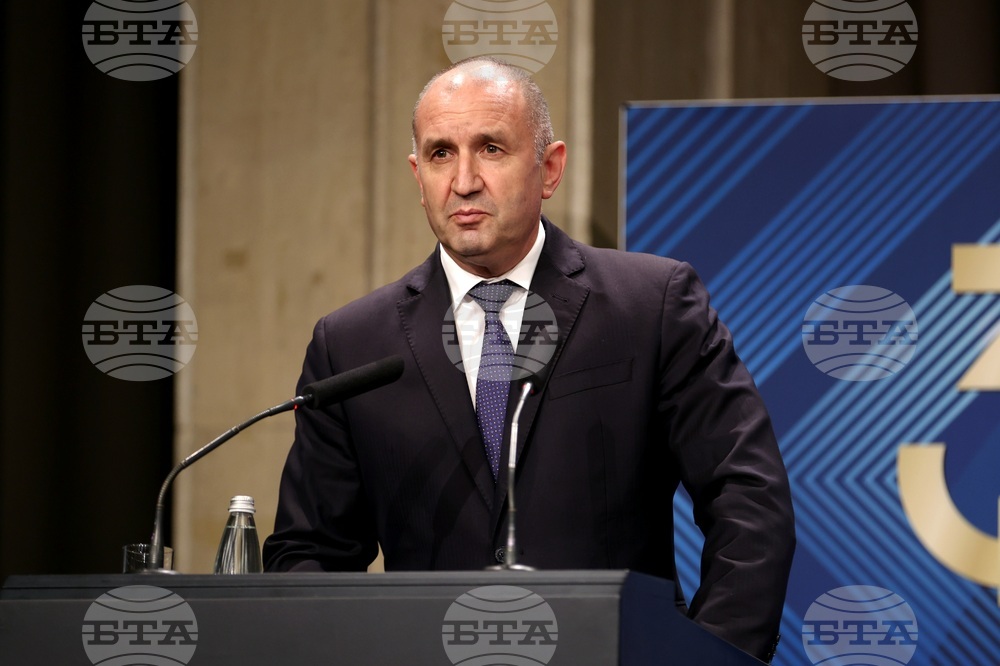
Prime Minister Rumen Radev voiced strong support for financial decentralization on Thursday, arguing that Bulgaria’s highly centralized model of public finance has reached its limits and is increasingly hindering regional development and local initiative. Speaking at the opening of a National Meeting of Local and Central Executive Authorities at Sofia’s NDK convention centre, Radev said municipalities are the backbone of statehood and a vital engine for the development of strong regions.
The forum gathered more than 200 mayors from across the country and is part of a series of events marking the 30th anniversary of the National Association of Municipalities in the Republic of Bulgaria (NAMRB).
"The model of strong concentration and centralization of public resources in the central government, and the way these resources have been distributed so far, has been exhausted," Radev said. According to him, the current system imposes serious limitations on local development, suppresses initiative and prevents citizens from playing a more active role in shaping their communities.
Radev stressed that Bulgaria cannot become a strong and modern state if its municipalities remain weak. He praised NAMRB for establishing itself as an indispensable partner of the central government over the past three decades and for maintaining unity among municipalities during a period of intense political polarization.
He also highlighted the importance of improving infrastructure connectivity as a prerequisite for addressing regional and demographic imbalances. Areas connected by major highways and railway corridors attract investment and economic activity, while regions with poor transport links continue to lose young people, he said.
The government is preparing a national strategy aimed at improving connectivity, with priority projects including the completion of the Hemus and Struma motorways, the Vidin–Botevgrad and Ruse–Veliko Tarnovo roads, and the development of additional north-south transport links.
Radev acknowledged, however, that financing these large-scale infrastructure projects will require discussions with municipalities about the role of public-private partnerships and concessions, arguing that the state alone lacks the financial resources to complete them within a reasonable timeframe.
On tax policy, the Prime Minister agreed that property tax valuations are outdated and should be reviewed. He suggested that taxation could be linked to the number of residential properties owned, with a lower rate for a primary residence and progressively higher rates for additional homes.
At the same time, he pointed to shortcomings in data sharing between municipalities, noting that local tax authorities in different cities often lack access to common information. Radev pledged government support for the digitalization and integration of municipal databases, which he said would make more sophisticated taxation policies possible.
Addressing European Union funding, the Prime Minister said Bulgaria has currently paid out only 23% of available EU funds. He attributed the slow absorption rate to stricter oversight requirements and the need for projects to meet detailed European standards.
"Projects must be properly prepared and implemented because the European Public Prosecutor’s Office is actively monitoring the use of funds," Radev said.
He urged municipalities to take a more proactive approach to securing and implementing EU-funded projects, describing European funding as one of the most significant financial resources currently available for local development.
Radev emphasized that stronger cooperation between central and local authorities will be essential for Bulgaria’s future development, highlighting the Bulgaria Development Programme 2026–2030 as a framework for strengthening that partnership.
/NF/
news.modal.header
news.modal.text