site.btaGovernment Denies Ukraine Policy Split as Parties Clash over Kyiv Declaration
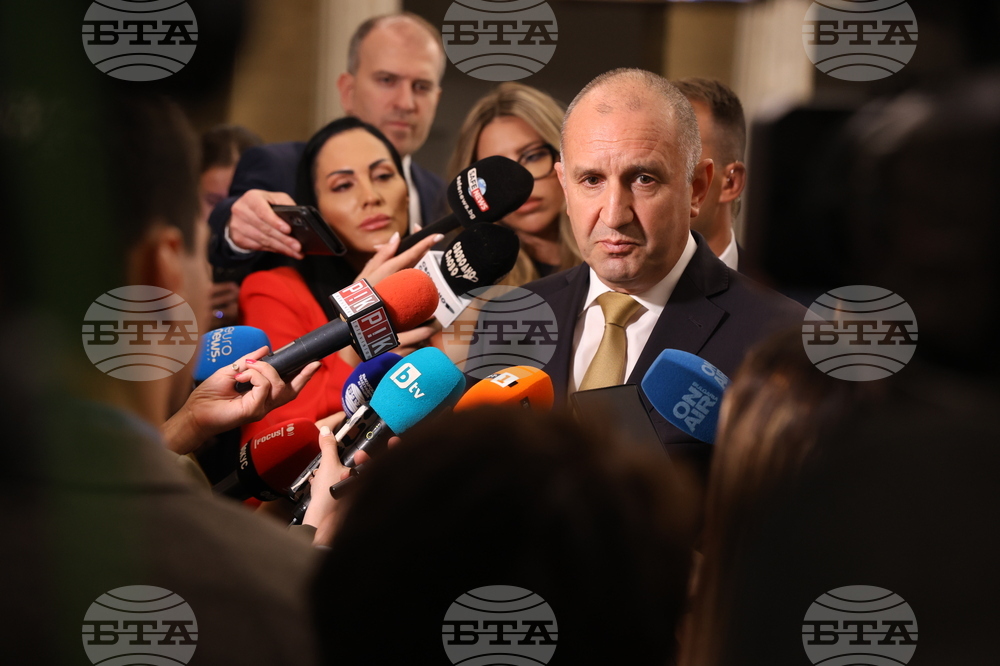
Bulgarian leaders denied any split in the country’s position on Ukraine on Friday as the government and opposition parties clashed over the Kyiv Declaration and Bulgaria’s relationship with the Coalition of the Willing. Prime Minister Rumen Radev and President Iliana Iotova said the document required no signatures, while Foreign Minister Velislava Petrova denied committing Bulgaria to the coalition.
The dispute concerned the declaration adopted at the Fifth Ukraine-Southeast Europe Summit in Kyiv on July 15, 2026. Speaking on the sidelines of the National Assembly, Radev denied claims of contradictions within the government. The declaration does not bear Petrova’s signature, Radev said.
Radev said Petrova visited Ukraine for its Statehood Day celebrations and to continue his bilateral talks with President Volodymyr Zelenskyy on energy and economic cooperation. Petrova also met Naftogaz representatives. During his meeting with Zelenskyy in Ankara on July 8, 2026, Radev said Ukraine expressed strong interest in importing large volumes of natural gas to fill its storage facilities and viewed Bulgaria as an important partner.
Radev said Bulgaria follows the EU’s common decisions and remains an active participant in the European Sky Shield Initiative. “Bulgaria will not provide, and is not providing, weapons or financial assistance,” Radev said. He repeated his July 14, 2026 position that Bulgaria does not belong in the Coalition of the Willing and added that he saw no winner emerging from the war.
Petrova, speaking separately in the National Assembly, said declarations of this kind are adopted by consensus and are not physically signed. “Absolutely no commitment has been assumed for Bulgaria’s participation in the Coalition of the Willing or any other format,” Petrova said.
Petrova said the summit focused on the different ways countries could support Ukraine, with Bulgaria able to contribute through energy cooperation. She said Bulgaria’s reservations about the latest sanctions package against Russia were accepted before Sofia supported it and argued that the dispute over the declaration was intended to distract from that outcome.
“The war must end with a lasting peace agreement that provides security guarantees for Ukraine, and Europe must play a key role,” Petrova said.
President Iliana Iotova also rejected claims of inconsistency, saying the Kyiv Declaration was neither debated nor put to a vote at the summit. “These are so-called consensus declarations, which are adopted at such forums,” Iotova said. She added that Radev presented Bulgaria’s position at international meetings in Ankara and Paris and during bilateral contacts with European partners. Iotova spoke in Burgas, where she attended the Breeze 2026 naval exercise.
Democratic Bulgaria (DB) took a different view. DB MP and Yes, Bulgaria co-Chair Ivaylo Mirchev said the declaration placed Bulgaria alongside Ukraine and its international partners, but argued that the government’s mixed messages created uncertainty. He called on Iotova to convene the Consultative Council for National Security (CCNS) to discuss geopolitical risks and strategic projects.
“This would allow all of us to receive information, discuss the geopolitical risks and ensure that Bulgaria has a unified position and moves in the same direction,” Mirchev said.
DB also linked its request to the appointment of State Agency for National Security (SANS) Chair Plamen Tonchev. Yes, Bulgaria co-Chair Bozhidar Bozhanov asked whether GERB or MRF Chair Delyan Peevski had leverage over Tonchev that could threaten the agency’s independence. “If that is the case, does it not pose a risk to the governance and independence of SANS going forward?” Bozhanov asked.
Continue the Change (CC) said Tonchev was unsuitable for the post, while MP Boyko Rashkov disputed claims that SANS assisted the 2021 investigation into the Hemus Motorway.
GERB-UDF also challenged the government’s interpretation of the declaration. GERB-UDF MP and former foreign minister Georg Georgiev said such documents do not carry handwritten signatures but are considered endorsed unless a country explicitly withdraws.
“A declaration is deemed to have been signed unless a country has explicitly said it does not wish to participate, as Serbia did,” Georgiev said. He added that Bulgaria was listed as a co-author and called the situation either a political blunder or a deliberate attempt to pursue different messages at home and abroad.
GERB-UDF MP Daniel Mitov, also a former foreign minister, agreed. “If Petrova’s name appears there, then she has signed the declaration,” Mitov said. He argued that the apparent difference between Radev’s rejection of the Coalition of the Willing and the declaration’s support for it sent a poor message to Bulgaria’s partners, allies and Ukraine.
Separately, GERB-UDF proposed reforms to the diplomatic service. Mitov said the Ministry of Foreign Affairs generates between 60% and 70% of its central government funding through its services. The coalition wants that revenue reinvested through a dedicated mechanism and proposes a three-year budget formula with a minimum indexed funding target relative to gross domestic product. GERB-UDF plans to submit the proposals between the two readings of the 2026 State Budget Bill.
/RY/
news.modal.header
news.modal.text