Minimum wage talks
![Podkrepa Labour Confederation Calls for Setting Minimum Wage for 2027 while Talks on New Mechanism Continue]()
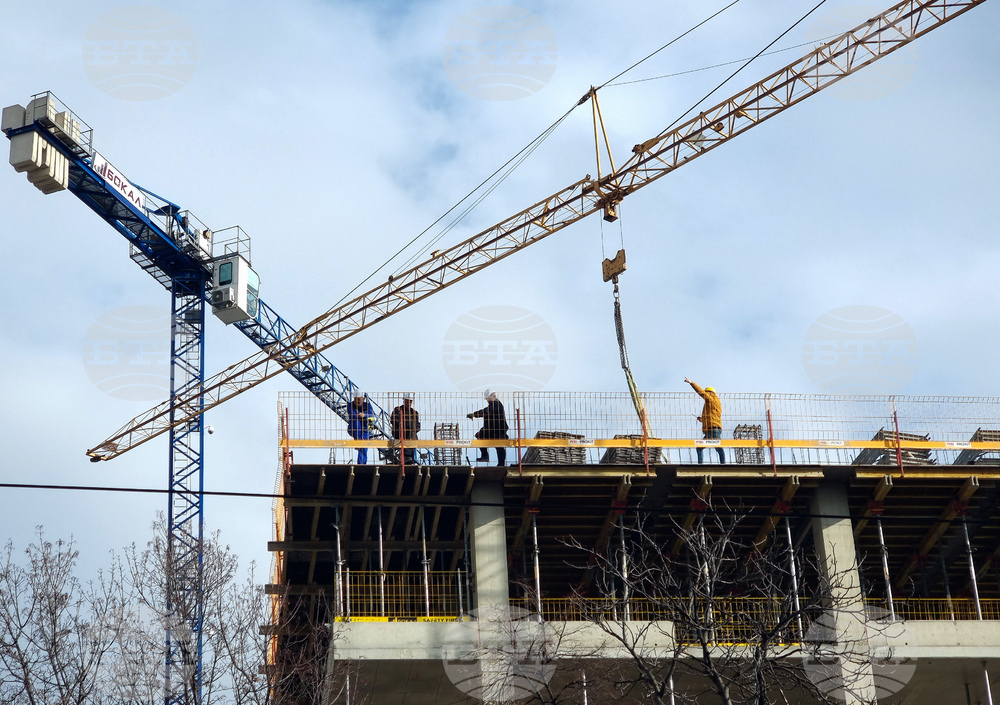
![Podkrepa Labour Confederation Calls for Setting Minimum Wage for 2027 while Talks on New Mechanism Continue]() A construction site in Sofia, March 7, 2023 (BTA Photo/Vladimir Shokov)
A construction site in Sofia, March 7, 2023 (BTA Photo/Vladimir Shokov)
site.btaPodkrepa Labour Confederation Calls for Setting Minimum Wage for 2027 while Talks on New Mechanism Continue
The Podkrepa Confederation of Labour proposes that a specific minimum wage amount for 2027 be set, one that is economically justified and socially acceptable, while negotiations on a sustainable mechanism should continue until an agreement is reached and the goal of an adequate minimum wage is achieved. This is stated in an opinion submitted to the interdepartmental working group on determining the minimum wage, published on the trade union’s website. Podkrepa added that its proposal takes into account the short deadline – until August 21 this year – for developing the mechanism for calculating the minimum wage. The trade union also said that, at present, there is no convergence of positions among the parties in the negotiation process.
The minimum wage should guarantee the livelihood of workers and their families, the trade union stressed. It proposed several options for the 2027 minimum wage, with specific amounts.
One of the proposals is that setting the minimum wage for 2027 on the basis of statistical data from two years ago fails to take into account current and future economic developments and directly disadvantages workers. Based on official data and the proposed formula, the 2027 minimum wage under this option should be EUR 750, the trade union said. Another proposal envisages a formula under which next year’s minimum wage would be EUR 692.50.
Podkrepa reaffirmed its support for the four criteria for determining the minimum wage discussed at a previous meeting between representatives of the government, employers’ and trade union organizations. These are:
- the purchasing power of statutory minimum wages, taking into account the cost of living;
- the overall level of wages and their distribution;
- the rate of wage growth;
- long-term levels and developments in national productivity.
Podkrepa disagrees that the cost of living should be replaced by expenditure per household member, as this is not an indicator that measures income from employment and is irrelevant to determining the minimum wage for a person employed full-time, the position says. The trade union stressed that it had not agreed to the proposed method of measuring the adequacy of the already determined minimum wage – namely, that it should be measured as 50% of the average basic wage in the country and that adequacy should be measured once every four years.
A few days ago, the government and social partners agreed that new mechanism for calculating the minimum wage is expected to be adopted by the end of August.
The other influential union, the Confederation of Independent Trade Unions in Bulgaria, said last week that they had never agreed and would not agree to the minimum wage being set at 50% of the average basic wage as measured through employment registers. They also said there was currently agreement on the criteria set out in the EU directive on adequate minimum wages and International Labour Organization Convention No. 131.
The Bulgarian Industrial Association has said earlier that judging from statistics, there are no grounds for a double-digit increase in the minimum wage and that a 5-6% increase would bring it to around EUR 650.
Talks at the Ministry of Finance are expected to continue later on Monday.
/RD/
news.modal.header
news.modal.text