site.btaRegional Infrastructure and Construction Discussed at AmChams Event in Sofia
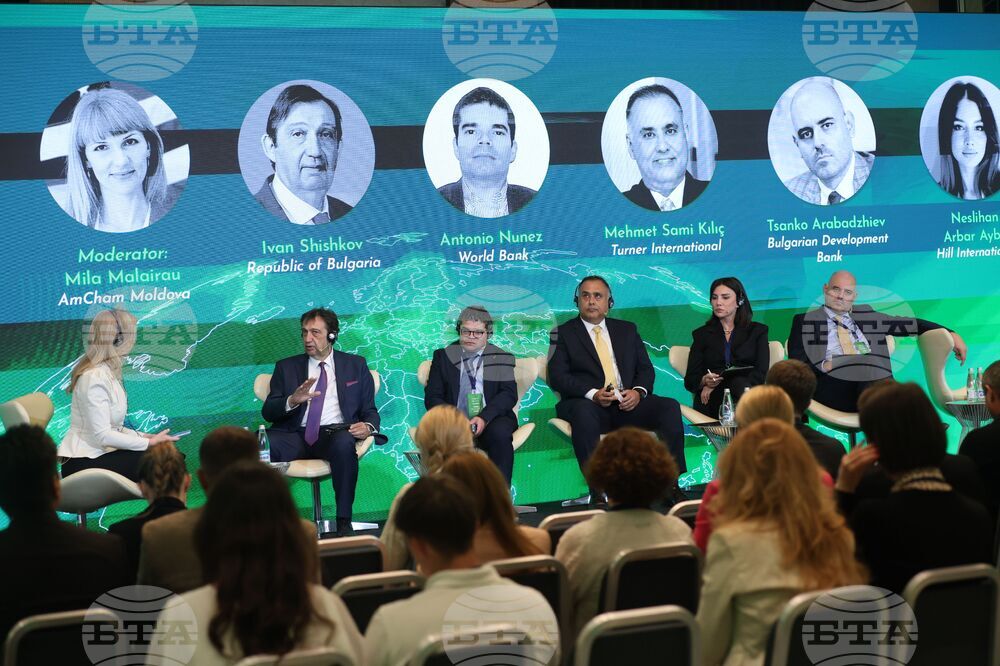
At Plenary 4 of the 3rd AmChams Regional Economic Summit (ARES 2026), held in Sofia on Thursday, the participants discussed regional infrastructure and construction.
Antonio Nuñez, Lead Transport Specialist in charge of Eastern Europe at the World Bank, said that infrastructure does not ensure economic success by itself unless it is turned into tangible trade corridors. Since public funding is insufficient, private capital combined with reforms is key. Rebuilding Ukraine's transport sector will cost USD 100 billion over ten years.
Mehmet Sami Kalic, Vice President, Europe Regional Manager, and Turkiye Country Manager at Turner International, said that the construction industry is turning into a motor force for a new generation of strategic investments, including in logistics centres, data centres, and AI infrastructure. He argued that deficient expertise, undeveloped regulatory regimes and inadequate pre-planning rather than the lack of financing pose the greatest challenge to the implementation of such projects.
Bulgarian Development Bank Management Board member and Executive Director Tsanko Arabadzhiev criticized the model in which infrastructure development depends heavily on the State budget. He argued that large-scale infrastructure projects can be successfully implemented with the participation of the private sector. As an example, he cited the Three Seas Fund, where EUR 10 million invested by Bulgaria generated a GDP growth of EUR 2.6 billion. The Bulgarian Development Bank can be turned into a tool to mobilize the sizable uninvested capital in the banking system, which is estimated at approximately EUR 100 billion, as well as some EUR 30 billion in the pension funds. "Bulgaria is a relatively small country. If we prepare our projects well, we can obtain financing for all good projects and we can obtain it now, as long we manage to change our way of thinking and realize that the budget or EU funds alone cannot pay for our operation," the banker said.
Neslihan Arbar Aybar, Country Director, Hill International, Inc., stressed that the success of major cross-border infrastructure projects depends on the coordination, integration and connectivity among the countries involved. In her words, the different legislations and infrastructure systems require a strong political will for cooperation, and the weakest link often determines the success of the entire project. The business executive stressed the need of good governance, institutional coordination, and timely solutions.
Elina Markaryan, Public Affairs and Communications Director of Coca-Cola Hellenic Bottling Company Armenia, who joined the discussion via video link, presented the Trump Route for International Peace and Prosperity Project as an example of strategic partnership between the US and Armenia. She specified that the initiative envisages the building of critical infrastructure, including roads and optic cable, and the setting up of a special investment fund to attract private capital. In her words, the fund will facilitate transport and energy connectivity among Armenia, Azerbaijan, Georgia, Kazakhstan, Kyrgyzstan, Tajikistan, Turkmenistan and Uzbekistan. The project targets turning Armenia into a hub of regional trade.
BTA is a media partner of the forum.
/LG/
news.modal.header
news.modal.text