site.btaUPDATED Caretaker Government Prepares Targeted Measures to Offset Fuel Price Rise
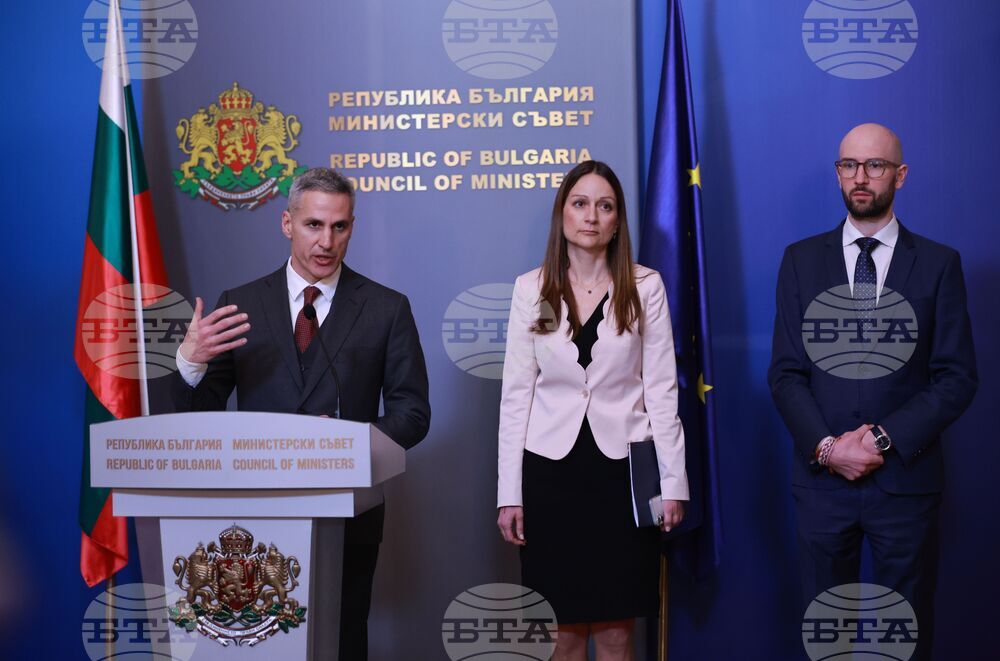
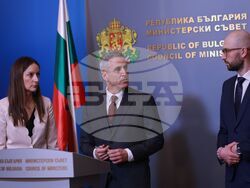
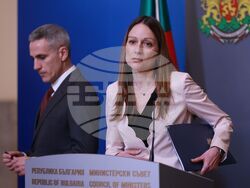
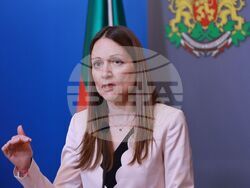
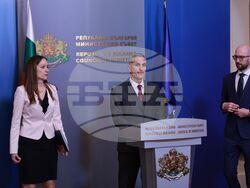
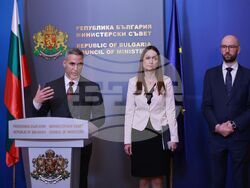
The caretaker government is preparing targeted measures to support vulnerable households and businesses in response to rising fuel prices, it was announced at a briefing at the Council of Ministers on Thursday.
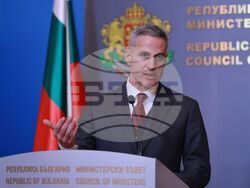
Caretaker Prime Minister Andrey Gurov said the government has been working intensively on the issue since the beginning of the week, recalling the establishment of an inter-institutional working group tasked with providing the data needed to design and calibrate the government’s response.
According to Gurov, the planned measures aim to address three key challenges, primarily by helping vulnerable groups and preventing wider inflationary pressure in the economy.
Support for households
The government plans to introduce direct financial assistance to households affected by higher fuel prices.
- The support will be paid directly into citizens’ bank accounts.
- Only households meeting specific income criteria will be eligible.
- The criteria are currently being finalized by the Ministry of Finance.
- The level of support will also depend on global oil price fluctuations.
If fuel prices remain under pressure, the measure could be activated within the current month.
- Initial estimates suggest the scheme would cost about EUR 30 million in its first phase.
- The support could become monthly if market conditions continue to deteriorate.
Additional measures are being prepared as a reserve option, allowing the government to respond quickly if fuel prices rise further.
Avoiding market distortions
Gurov stressed that the government wants to avoid interfering directly in the fuel market.
The aim is to prevent:
- market distortions,
- possible fuel shortages,
- and broader inflationary effects caused by higher transport costs.
"If fuel prices increase significantly, this could lead to higher prices for many other goods in the economy," Gurov said, adding that the measures seek to prevent fuel price shocks from translating into inflation expectations.
Support for businesses
Government support will also target businesses, particularly those involved in food supply and logistics.
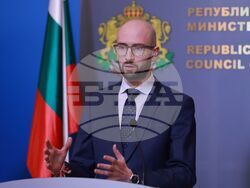
Caretaker Economy and Industry Minister Irina Shtonova said one of the planned steps is to delay the introduction of the carbon dioxide component in road toll charges, which had been scheduled to take effect on April 1.
- The government is currently discussing the delay with the European Commission.
- The measure would be postponed for several months.
Shtonova noted that fuel costs are a key factor in determining the price of goods transported by trucks to supermarkets.
"For businesses, predictability is the most important factor, especially in a situation where prices change daily," she said.
The government is also holding discussions with business representatives on possible compensation mechanisms.
Monitoring fuel price margins
Caretaker Finance Minister Georgi Klisurski said the National Revenue Agency (NRA) has already begun monitoring profit margins at petrol stations.
The monitoring is carried out under the Law on the Introduction of the Euro in Bulgaria and will include:
- stricter oversight of fuel retailers,
- analysis of margins for petrol, diesel and other petroleum products.
The goal is to ensure that price increases reflect supply costs rather than speculation, Klisurski said.
Additional measures possible if prices rise further
According to Klisurski, current increases in fuel prices do not yet justify a broader package of measures.
"The best outcome for everyone would be for fuel prices to stabilize, for the military conflict in the Middle East to end and for prices to return to levels seen two weeks ago," he said.
However, the government has additional policy tools ready should prices rise significantly.
Continuous monitoring of the situation
Prime Minister Gurov said the inter-institutional working group receives daily data and weekly reports, allowing the government to closely track fuel price movements.
He noted that fuel price increases in Bulgaria remain among the lowest in Europe, describing this as "a breath of fresh air" for the economy.
Through direct support for vulnerable citizens and stricter monitoring of fuel margins, the government aims to prevent speculative price increases and ensure that both households and businesses can continue operating normally.
Political context
Gurov also commented that some political parties are attempting to influence the work of the caretaker cabinet.
He called on them to focus instead on legislative measures that must be adopted in Parliament in the coming weeks, warning that delays could cost Bulgarian society around EUR 440 million.
/DS/
Additional

news.modal.image.header
news.modal.image.text
news.modal.download.header
news.modal.download.text
news.modal.header
news.modal.text