site.btaMedia Review: October 9
OVERVIEW
Discussions of the current risks and threats to Bulgaria in the context of the war in Ukraine, after two merchant ships were attacked by navy and aerial drones in the country’s exclusive economic zone in the Black Sea, continue to dominate Friday’s media.
SECURITY THREATS
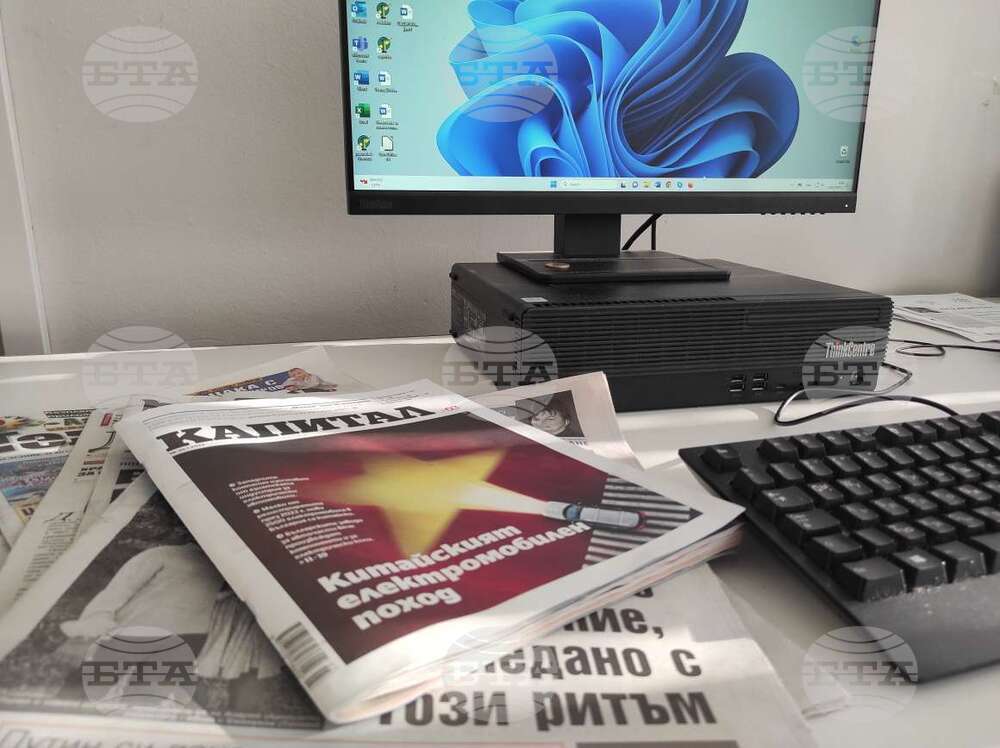
Capital Weekly’s leading article is on the series of drone attacks between October 4 and 6, which targeted commercial ships in the western Black Sea, including Bulgaria’s exclusive economic zone. Two ships sank, several sailors were killed or went missing, and another vessel was damaged. Ukraine’s President Zelenskyy blamed Russia, but Bulgarian authorities have not publicly confirmed the perpetrator, citing insufficient verified evidence. Capital criticizes Bulgaria’s cautious response, including its refusal to formally accuse Russia or request NATO consultations under Article 4. The article questions Bulgaria’s decision not to join NATO’s Drone Edge initiative, which could improve its ability to detect and counter drone threats. The author of the article argues that the attacks expose serious gaps in Bulgaria’s maritime surveillance and defence capabilities, as well as a lack of coordination with NATO allies. Although Russian involvement remains unproven publicly, the article suggests that the pattern of attacks and the ships’ suspected Ukrainian cargo support that hypothesis. If the attacks are repeated, the distinction between an "incident in the economic zone" and a "threat to a NATO country" will become increasingly difficult to maintain politically. For Moscow, such an operation could disrupt Ukrainian exports, intimidate shipowners, drive up insurance premiums and test NATO’s reaction, without actually striking an ally’s territory. A realistic response by the Alliance would include reconnaissance flights, maritime surveillance, the sharing of radar data, mine-countermeasures operations and coordination between coastguards.
***
It has happened on more than one occasion that the conclusions or assessments of the intelligence services have diverged from the actual situation. Hasty assessments create panic and pave the way for a complete shift towards erroneous working hypotheses, as in the case with the two ships struck by drones in the Black Sea, journalist Valeri Todorov told Bulgarian National Television’s morning programme. Speculation may go on and on, but the answer lies 2,000 metres below the surface of the Black Sea, as well as at Turkish customs, journalist Chavdar Stefanov said. "Do you think Turkiye didn’t know what this ship was carrying? I’m not convinced. Do you think that if Russian intelligence found out what this ship was carrying, the other partner agencies – Turkish, American, British – didn’t?" he asked. According to the journalist, "the disclosure of information is also unacceptable, as such a [Consultative] Council [for National Security] should be preceded by meetings and consultations with experts who can accurately assess what has happened and report on it". "The explosions occurred at a time when there is an election campaign in Bulgaria and a political crisis in Romania. So they were not accidental, they were deliberately carried out and very carefully timed," Stefanov added.
***
Economist Preslav Raikov and Nikola Hristov, a member of the board of managers of the Bulgarian Association of Shipbrokers and Agents, talked on Nova TVs morning programme about the threats to Bulgaria’s economy, the risks for businesses and the prices of staple foods, following the drone attacks on ships in the Black Sea. "So far, we have seen shipping costs rise because Bulgaria and the Black Sea are now in the so-called "military zone". There has been no significant decline in shipping activity, but the conditions are now different – higher freight rates and insurance costs," Raikov said. He added that, economically, Bulgaria is heavily dependent on imports and exports, as the country relies on exports thanks to a strong agricultural sector. "The situation in the Black Sea is bound to have an impact on the overall economic situation. Our producers will be the hardest hit, because this military risk will be borne entirely by them, as they will have to sell at lower prices," Hristov said. Raikov stated that there is also a potential risk for Lukoil. "We can expect further escalations. So far, around 200 ships have been hit or sunk in the Black Sea. This is comparable to a full-scale military operation," the economist said.
***
Bulgaria’s Environment and Water Ministry launched emergency inspections and seawater testing following drone attacks on ships in the Black Sea. Samples have been collected near Kaliakra, Byala, and Sozopol, but results have not yet been reported. Bulgarian National Radio interviewed marine scientist Violin Raykov, associate professor at the Institute of Oceanology at the Bulgarian Academy of Sciences, who said he believes the risk of significant coastal pollution is relatively low, because the ships sank far offshore, at depths of around two kilometres. However, the environmental impact remains uncertain because the cargo of one vessel is unknown. He stressed that authorities must quickly establish what caused the ships to sink and what they were carrying to determine the appropriate response. He also warned that toxic chemical spills in the Black Sea could pose serious risks to marine life.
ANTI-CORRUPTION
In an article Segabg.com writes that Bulgaria’s newly re-established Commission for Countering Corruption is still unable to operate effectively more than two months after its members took office. Its chair, Plamen Todorov, told parliament that the institution is struggling to rebuild its administration after being dismantled earlier in the year. The Commission lacks sufficient staff, office space, funding, and basic infrastructure. It must also recover assets and investigative archives held by other institutions, including the State Agency for National Security. "If we are unable to recover at least some of the assets of the previous commission, despite the absence of any specific provision on succession, we will objectively be unable to commence work in full," Todorov said. The Commission expects to have the minimum capacity to begin operating by early November and hopes to carry out most of its legally mandated activities by the end of the year. The restoration of the Commission was driven partly by the need to secure EU recovery funds. However, delays and uncertainty over the return of its archives raise concerns about how quickly it can resume its anti-corruption work.
(FOREIGN) POLITICS
Dnevnik.bg reports that a delegation from Romania’s nationalist Alliance for the Union of Romanians (AUR) party visited Sofia at the invitation of Bulgaria’s ruling party, Progressive Bulgaria, and held meetings in parliament with Bulgarian politicians, including Rumen Petkov, who is described by Dnevnik as close to the Russian Embassy. AUR first vice-president, Dan Dungaciu, characterized Progressive Bulgaria as a patriotic, sovereigntist, and conservative party, despite its left-wing roots. Discussions, reportedly, focused on bilateral relations, political developments in Europe, regional strategy, and "coordinating actions and votes at the European level". The visit highlights potential political cooperation between the two parties. AUR has been identified, the article says, as a far-right nationalist, Eurosceptic and populist formation. Its leader, George Simion, has expressed historical territorial claims involving Bulgarian Dobruja. At present, AUR is by far the most popular party in Romania. A poll by INSCOP Research conducted between September 1 to 7 puts its support at over 39% if elections were held today. AUR is part of the European Conservatives and Reformists Group in the European Parliament.
FINANCE
In an article Mediapool.bg says that on Friday, the National Assembly will decide whether quick loans will be available without any illegal surcharges, if it passes the amendments to the Consumer Credit Act. A report by the Active Consumers Association finds that many instant loan companies rely on potentially illegal fees, penalties, and guarantor charges to generate profits. These additional costs account for around 38% of revenue among 15 major lenders, while interest makes up only 32.7%. Courts frequently rule such charges unlawful, and consumers who challenge lenders in court win wholly or partly in 90.3% of cases reviewed in 2025. The government is proposing a new Consumer Credit Act to address the problem, but policymakers face a choice between raising the legal cost limit on small loans and restricting lending to high-risk borrowers. Consumer advocates argue that lenders should improve affordability checks and that vulnerable borrowers need better debt support. Industry representatives, meanwhile, want higher price caps and better access to employment and income data to assess borrowers’ ability to repay. The central concern is that hidden charges are trapping thousands of Bulgarians in severe debt, while the proposed reforms seek to balance consumer protection with the financial viability of quick personal lending companies.
EDUCATION
Georgi Stoychev, executive director of the Open Society Institute Sofia, speaking on bTVs morning programme, advised young people to choose university subjects based on their strengths and interests, rather than focusing solely on potential salaries. He identified four sectors offering high incomes in Bulgaria: defence and national security, information technology, heavy industry and energy, and medicine. He noted that graduates in military studies and mathematics enjoy particularly strong employment prospects, high salaries, and very low unemployment, despite many university places in these fields remaining vacant. Meanwhile, interest in economics has declined in response to labour-market trends. Stoychev warned that artificial intelligence and robotics will affect almost every profession, potentially threatening jobs such as taxi driving. He encouraged students to make informed educational choices using employment data while still pursuing their talents and ambitions. He added that Bulgarian higher education has undergone significant reforms over the past 15 years, and approximately one in ten students is now a foreign national.
***
Trud’s front page article says that a degree in Military Studies secures a higher salary than the one in Computer Science and Informatics, according to data from the latest edition of the ranking of higher education institutions in Bulgaria. The ranking system compares 51 accredited higher education institutions offering courses across 52 fields of study. The ranking is based on dozens of indicators measuring various aspects of the teaching process, research activity, the learning environment, social conditions, accessibility of education, the prestige and regional significance of the higher education institutions, as well as graduates’ success in the labour market. A master’s programme at the American University tops the salary rankings, graduates of the National Security bachelor’s programme at the Interior Ministry Academy earn an average of EUR 3,766, the Medicine programme leads in terms of international students. The lowest unemployment rates (below 1%) are found amongst graduates in the fields of Military Studies, Medicine, Pharmacy, Mathematics and Dental Medicine, the highest are amongst graduates in Tourism (3.58%), Social Work (3.34%), Psychology (3.2%), Pedagogy (3.11%) and Teaching Methodology (2.84%). The ranking system for higher education institutions in Bulgaria, which reflects the career prospects of graduates is the best guide to help prospective students and their families make an informed choice of higher education institution, Education and Science Minister Georgi Valchev told Trud. 24 Chasa’s front page article on the same topic is headlined salaries for police experts and military personnel are rising the fastest, up to EUR 4900, while those in the IT sector are stagnating.
***
Telegraph daily carries an interview with Professor Dimitar Dimitrov, the newly elected chair of the Council of Rectors and Rector of the University of National and World Economy. Dimitrov talks about the need for greater transparency and cooperation among Bulgarian universities. He says the new Council aims to give all higher education institutions equal representation when addressing issues such as funding, educational quality, research, and digital transformation. He identifies the main challenges facing higher education as improving academic standards, securing funding, adapting to demographic changes, and strengthening links with employers. He believes Bulgarian universities can compete internationally through better research, modern facilities, English-language programmes, and international partnerships. He also argues that artificial intelligence should be integrated into education rather than banned, with greater emphasis on critical thinking, practical assignments, discussions, and oral examinations to ensure students demonstrate genuine understanding. Other priorities include improving digital literacy, expanding internships and vocational guidance, and helping young people who are neither studying nor working. Dimitrov stresses that universities must prepare students with practical skills alongside academic qualifications, while preserving each institution’s individual strengths and mission. Responding to whether it would be possible to change the fact that 13.8% of young people aged between 15 and 29 in Bulgaria are neither in education nor in employment, Dimitrov says this is indeed a serious problem. "But I wouldn’t describe all these young people as people who simply "like to live off their parents". It’s a very diverse group – there are people who have dropped out of the education system, people in transition between education and work, young parents, people from regions with limited opportunities, and people who have been discouraged. We need to start much earlier – as early as school. Career guidance, dual training, work placements, apprenticeships and links between education and employers are all part of the solution. Universities can also play a role, but they cannot solve the problem on their own. Education, social policy and business need to work together," he said.
/RD/
news.modal.header
news.modal.text