site.btaBulgarian Development Bank's New Supervisory Board Presented on Tuesday
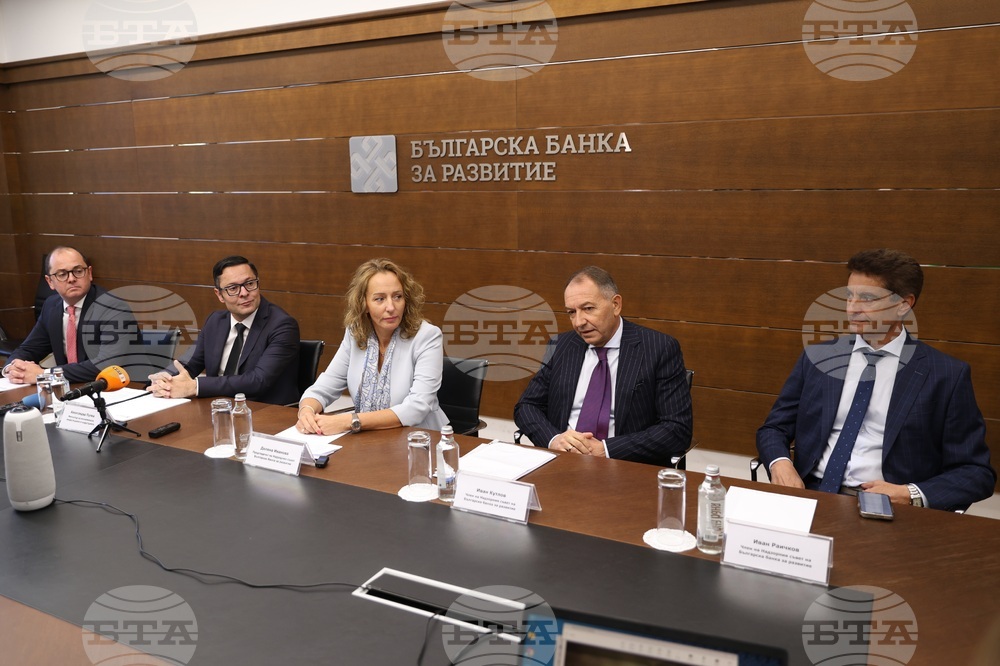
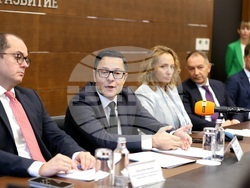
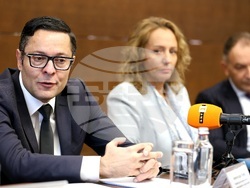
Economy, Investment and Industry Minister Alexandar Poulev presented the new composition of the Supervisory Board of the Bulgarian Development Bank (BDB), expressing confidence that with this composition, which has extensive management and banking experience, the BDB remains in good hands. “We are working on strategic sectors with high added value, as well as on small and medium-sized enterprises, municipalities and regions, and promoting investment to overcome regional disparities,” he said.
He added that they had carried out a number of structural reforms that were already in place - the consolidation of all units, banks, agencies, directorates and structures under the umbrella of the Ministry of Economy, Investment and Industry, so that there would be a clear centre of responsibility. “The BDB will be a critical instrument for attracting investment,” Poulev said.
He also said that they had carried out a substantial reform related to the establishment of a new coordination unit. “We now have very good coordination between all relevant ministries and structures,” Poulev said. According to him, this centre of responsibility would fight bureaucracy, while investors would be able to optimise their economic models.
“The Bulgarian Development Bank is a very important instrument that we will optimise, and we will work on creating quality new instruments, starting along the entire value chain,” the Economy Minister said. First, new instruments related to agriculture would be created - Bulgarian producers would receive strong support to ensure that their products were on an equal footing with imported products and enable them to position themselves properly in major retail chains.
Poulev also said that they were creating new processes related to processing and moving towards new strategic investments. “We are also creating new instruments that will signal a new approach to promoting foreign investment,” he said.
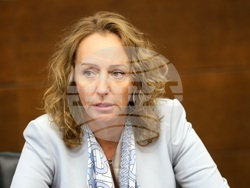
Supervisory Board Chair Delyana Ivanova, who is remaining in her position, said that they would build on what had been achieved and work to implement national priorities through specific financing programmes and products. Among the priorities outlined by Ivanova were attracting strategic investment to the country to ensure growth and people’s prosperity, as well as creating jobs. She added that their programmes to encourage cooperation among farmers would continue, as would support for small and medium-sized enterprises, which was increasingly shifting towards the focus of commercial banks’ guarantee schemes in order to achieve broader coverage.
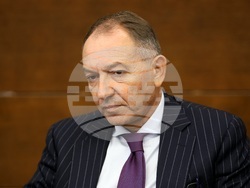
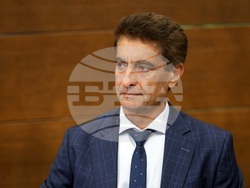
One of the new members of the BDB Supervisory Board, Ivan Koutlov, said that he had been in the banking sector since 1991 and was among the few people to have gone through the four major crises experienced by Bulgaria.
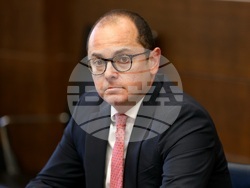
Another new member of the BDB Supervisory Board, Ivan Raichkov, said that he had managed banking operations at UniCredit Bulbank for more than 15 years and brought extensive experience in process management, internal controls and operational risk. “As a member of the Supervisory Board, I will work with independent judgement and full commitment to the BDB’s objectives,” he said. According to Raichkov, good supervision should combine the bank’s financial stability with its real contribution to the development of businesses and regions.
The third new member of the BDB Supervisory Board, Daniel Berg, who joined from the United States, is a former director of the European Bank for Reconstruction and Development (EBRD) in Bulgaria. According to Poulev, he would mobilize all his contacts and professional experience both in Bulgaria and in the region. He added that a few days earlier they had signed a memorandum of cooperation with the European Bank for Reconstruction and Development on public-private partnerships.
Berg said that the BDB had the opportunity to do much more work even more effectively and that the Supervisory Board could play a key role in this. He said he hoped he could contribute in three areas - increasing interaction between the public and private sectors, mobilizing new forms of financing, and ensuring that the bank operated well, was efficient and had sound operational processes.
Poulev said that the new financial framework would now be further refined in the context of the forthcoming increase in the BDB’s capital. The increase would be carried out entirely on a market basis and would be budget-neutral, he added. Asked by journalists how much they intended to increase the bank’s capital, Poulev said they had a plan for more than EUR 1 billion, which he described as entirely realistic.
/DS/
Additional







news.modal.image.header
news.modal.image.text
news.modal.download.header
news.modal.download.text
news.modal.header
news.modal.text