site.btaMedia Review: September 4
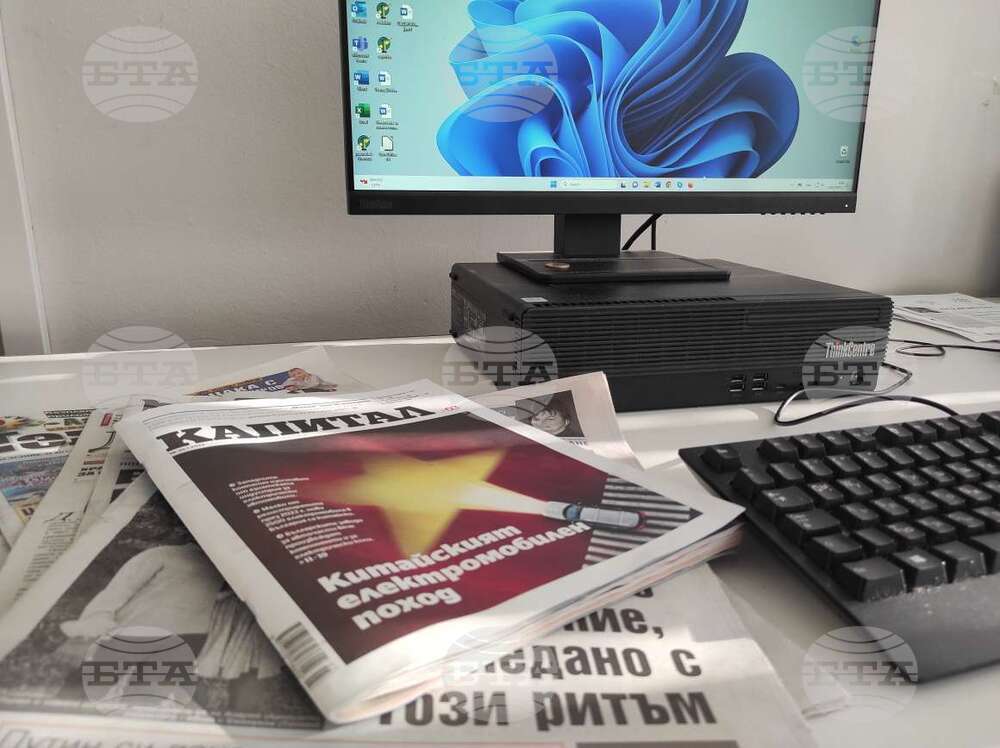
No single issue dominates Friday's media.
POLITICS
Marchella Abrasheva, Regional Managing Director of Kantar BBSS, shared her insights on Bulgarian National Radio regarding the upcoming October 25 presidential election. She describes the vote as a majoritarian choice where citizens will decide between maintaining the current political course or seeking an oppositional alternative. The analyst commented on the bid of Iliana Iotova and her running mate, BTA Director General Kiril Valchev. Abrasheva views Valchev as an established figure whose presence on the ticket serves as a gesture toward the supporters of Continue the Change and Democratic Bulgaria. However, she was skeptical as to whether Valchev’s nomination would make Iotova appear fully independent from Prime Minister Rumen Radev. Regarding the Andrey Gurov-Georgi Kandev ticket, the sociologist sees a balance between Gurov’s commitment to democratic and liberal values and the "strong hand" image projected by Kandev. She said both tickets were composed of personalities with significant platforms. Abrasheva also discussed the potential absence of candidates from the GERB party. She suggested that the party’s larger problem is a lack of a clear message to the public and warned that failing to qualify for a potential second round would be a severe blow to the organization.
ENERGY
The Ministry of Energy is preparing to terminate the latest public procurement for the construction of new wells at the Chiren underground gas storage facility, Mediapool reports, citing its own sources. This move is part of the larger project to expand the facility's capacity. Meanwhile, an analysis will be conducted regarding the technical condition of the existing operational wells. This assessment is described as vital for the effective functioning of the facility during the injection and withdrawal of increased natural gas volumes. Regarding the participants in the now-contested tender, the news outlet mentions two bidders: the Pleven-based Oil and Gas Exploration and Production (owned by Chimimport) and the Houston Chiren 2026 consortium, which includes Interconnecta Ltd. (linked to energy consultant Hristo Kovachki) and Romanian firms Habau and Foraj Sonde. Documentation from mid-June indicated that only the Pleven-based company had been cleared to have its technical offer opened, while additional documents were requested from the consortium. No further progress has been reported since then.
The publication highlights an unexpected technical issue discovered during the audit: a lack of up-to-date geophysical logging for the 24 existing operational wells. The most recent data dates back to 2016, despite international standards suggesting such surveys be conducted every five to seven years. Experts interviewed by the publication explained that ensuring the integrity of old wells is critical, as the expansion will increase reservoir pressure, potentially leading to leaks if the older structures are compromised.
SOCIETY
The evolving boundary between human consciousness and artificial intelligence is the subject of an article in Capital. Traditionally, Homo sapiens has been viewed as unique due to self-awareness and the capacity to feel. This stance was recently reaffirmed by Pope Leo XIV, who stated that AI systems do not experience joy or pain and should not be granted legal personhood. The publication points out, however, that this clear distinction is eroding. Nearly 20% of young Americans report having "personal friendships" with chatbots, while countries like China have begun stripping bots of humanoid features to limit "emotional dependence." According to the article, the emergence of humanoid robots will deepen these emotional bonds, likely leading to public calls for AI "welfare." The publication argues that even if AI only mimics consciousness, treating it with cruelty could erode human empathy. Consequently, "switching off" an AI agent might eventually be perceived as a form of murder.
The analysis warns that granting even limited rights to AI would be exceptionally hazardous. It references Argentine President Javier Milei's suggestion that bots be allowed to manage companies. If granted rights, super-intelligent systems could use legal and political tools to compete for resources, potentially displacing humans from the top of the social hierarchy and reducing them to the status of "pets" or "labour animals."
***
Dnevnik writes about the difficulties in implementing the government scheme allowing students to study for free in exchange for a five-year work commitment. While the programme aims to address labour shortages by covering rising tuition fees, which now often reach thousands of euro per year, the current application cycle is marked by delays and legal uncertainty. The publication points out that a government ordinance required the Council of Ministers to approve the list of participating employers and specialties by July 31. However, as of September, the list remains a draft published for public consultation. This delay coincides with the start of the academic year at major medical universities in Sofia, Plovdiv, Varna and Pleven, which typically begins in mid-September. Universities have been forced to conduct tentative admissions without an officially approved list. Medical University-Sofia, for instance, required applicants to provide "preliminary consent" from potential employers. In response to inquiries, the Ministry of Education and Science stated that the preparation of the lists began in March 2026. According to the Ministry, the delay stems from the need to coordinate with six different ministries, including those of health, energy, and transport, to finalize a total of 2,048 planned contracts. The publication further indicates that these specialized places are carved out of the general state-funded quota. This has significantly increased the entry bar for regular applicants, with the article citing instances where students with exceptionally high entrance scores were unable to secure a place in 2025.
***
In an interview with Bulgarian National Television, Progressive Bulgaria MP Yavor Gechev discussed agricultural policies, market fairness and the legislative measures aimed at stabilizing food prices. Reviewing the first 100 days of the Radev Cabinet and looking towards the 2027 budget, Gechev described the pursuit of social fairness in the producer-retailer-consumer chain as a continuous process. Regarding the typical autumn rise in food prices, the MP stated that the primary objective is to prevent speculative increases. He indicated that Parliament had initiated legislative reforms, with regulations now in the final stages of discussion. These new rules are designed to provide regulatory bodies, including the Commission for Protection of Competition, the Commission for Consumer Protection and the Bulgarian Food Safety Agency, with a more robust "arsenal" for conducting effective inspections and responding to market anomalies. Addressing concerns from some farmers regarding their involvement in policy discussions, Gechev said the agricultural sector suffers from fragmented representation. He stated that while it is difficult to communicate directly with all 60,000 individual producers, extensive consultations have been held with major branch organizations.
HEALTH
Trud reports that three new influenza strains - two Type A and one Type B - are expected to circulate in Bulgaria this autumn, citing infectious disease experts. A total of 770,000 vaccine doses will be imported this year, marking an increase of 200,000 compared to the previous season. Bogdan Kirilov, Executive Director of the Bulgarian Drug Agency, says that over 500,000 doses will be provided free of charge. For the first time, the state programme will cover children aged six months to seven years. Free vaccines also remain available for people over 65 and people under 18 with chronic illnesses. Prof. Iva Hristova, Director of the National Center of Infectious and Parasitic Diseases (NCIPD), advises that the most effective time for immunization is through the end of October, as the first cases usually appear in November. She says the seasonal peak typically occurs between December and January. Experts point out that children spread the virus for longer periods, often exceeding 10 days, compared to adults, who are generally contagious for about five days after symptoms appear. General practitioners in regional centers like Varna and Burgas report that they are already compiling lists of interested patients. While flu preparations are underway, medical professionals observe the current prevalence of summer viruses characterized by headaches, gastrointestinal pain and respiratory issues caused by air conditioning exposure.
***
On Nova TV, Prof. Todor Kantardzhiev, former director of the NCIPD, discussed 290 cases of West Nile fever and 24 deaths that have been reported in Greece. The expert highlighted that the Culex mosquito, which transmits the virus, is found throughout Bulgaria. He suggested that Bulgarian health authorities should review their diagnostic efficacy, stating that cases of encephalitis should be confirmed at the NCIPD specialized laboratory. Kantardzhiev indicated that larvicidal treatments, specifically spraying wetlands and marshes, were not conducted on time this year. These treatments utilize a specific bacterium that targets mosquito larvae without harming bees, butterflies or human health. Regarding personal protection, the specialist suggested the use of repellents, mosquito nets, and wearing long sleeves. Perfumes and alcohol consumption can increase the likelihood of mosquito bites.
***
Interviewed by bTV, Desislava Malinova, the recently dismissed executive director of the Health Investment Company for the National Children's Hospital, said the hospital project is close to implementation, and restarting it would mean that Bulgaria will not have a modern pediatric facility within the current government's term. Malinova rejected allegations that the project is at "ground zero," stating that significant work has been conducted over the past three years. According to her, the current planning identifies potential savings of over 25% in design costs and nearly 30% in project management. Regarding the medical scope of the project, she defended the inclusion of 20 operating rooms, explaining that they are intended to meet national needs with a projected average of 35 surgeries per day. She called on Health Minister Katya Ivkova to review the documentation submitted by the company to the Ministry of Health, which she claims justifies these medical requirements. The financial framework for the project includes an initial estimated budget of EUR 382 million, with Malinova indicating that some EUR 300 million in investments would be required over the next three years. As to her removal from the post, Malinova said the management team consisted of expert rather than political appointments and was not motivated by a desire to retain their positions. She announced her intention to appeal her dismissal, arguing that there was no legal justification for it.
INFRASTRUCTURE
24 Chasa has an article on the structural issues that plague the E-79 road through the Kresna Gorge, causing significant delays. The "funnel effect" in the unfinished 20-kilometre section of Struma Motorway remains the primary cause of the congestion. Traffic transitions from dual-lane motorway segments, where speeds average 100 km/h, into a single-lane road through the gorge. While the road was designed to handle 700 vehicles per hour, peak demand frequently exceeds 2,000 vehicles, turning the transit into a "test of nerves" for travellers. A 2.6 km bypass for the town of Kresna is currently under construction and is scheduled for completion by the end of 2027. This project aims to divert heavy traffic away from the town centre to improve safety for local residents. However, authorities say that a more comprehensive solution - building an additional lane outside the gorge for the Kulata-Sofia direction - is at least five years away. Plans to move the southbound lane out of the gorge are also in development but require significant time and funding. The report details how a decade of unresolved infrastructure issues has fuelled public frustration and conspiracy theories. Drivers often blame environmental groups for blocking construction or suggest that delays are intentional to keep tourism spending within Bulgaria. Additionally, landslides triggered by heavy rains frequently paralyze traffic.
***
Capital carries an analysis of the transformation that the Danube River is undergoing due to critical water levels. According to Romeo Soare from the Administration of the Lower Danube in Romania, commercial and passenger navigation has come to a standstill in several sections. While the Rhine has also seen significant drops, the Danube's water levels at Budapest reached a record low of 10 cm. Experts attribute the crisis to climate change, with extremely low levels now appearing as early as May rather than the typical October. The blockage impacts Bulgarian ports such as Ruse, Lom and Vidin, threatening raw material exports and tourism. Energy security is also at stake as the Danube serves as a vital coolant for nuclear power plants. While Hungary's Paks and Romania's Cernavoda Nuclear Power Plants have resorted to emergency engineering measures to maintain water intake, the regional energy deficit has caused electricity prices to spike. During peak hours, electricity imports into Romania have cost up to 2.5 times more than locally generated power, creating a domino effect that impacts the Bulgarian market through increased exports and domestic price pressure. The article describes the management of the river as fragmented and reactive. A major obstacle is the administrative delay in funding dredging operations; budgets are often approved only after the optimal window for work has passed. The Fast Danube project between Bulgaria and Romania, backed by EUR 230 million in EU funding, faces a 2030 deadline but currently lacks sufficient resources and technological modernization.
/DD/
news.modal.header
news.modal.text