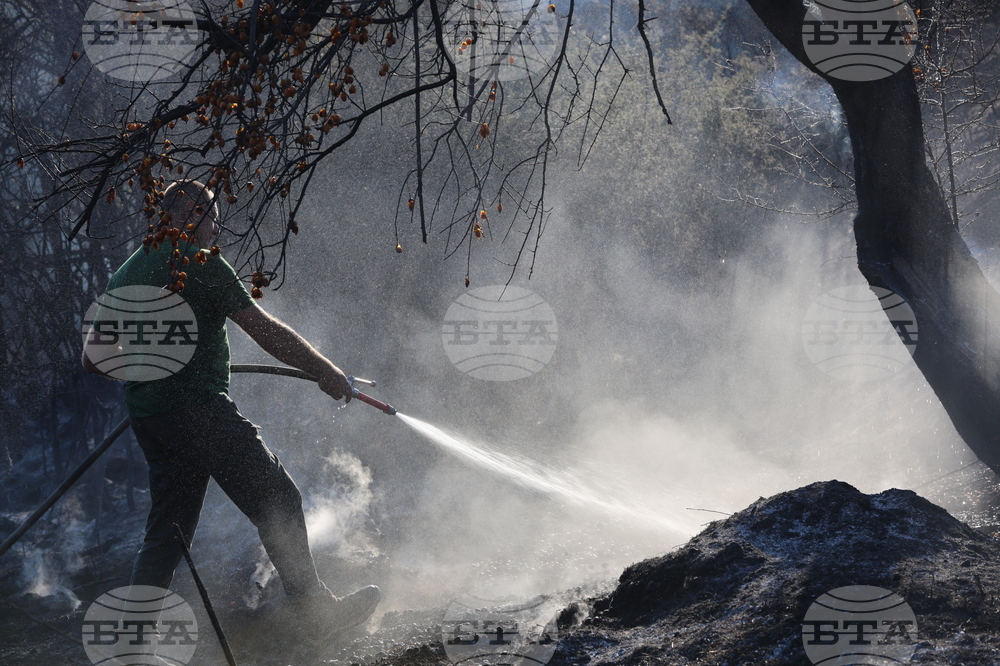
Forest recovery after a wildfire can take years or even decades, with the required time depending on the fire’s intensity and type, the vegetation affected, altitude, soil conditions, and the ecosystem’s ability to regenerate naturally, Bulgaria’s South-East State Forestry Enterprise (SESFE) based in Sliven told BTA on Wednesday.
Surface fires mainly burn grass, leaves and shrubs, while crown fires can destroy entire trees and spread rapidly, particularly in strong winds, the SESFE stressed. They added that in peat areas, fires can also burn underground and damage root systems.
The SESFE pointed out that wildfires affect more than vegetation, as severe fires can change soil structure, reduce nutrients and organic matter, and disrupt soil microorganisms. Once vegetation is destroyed, the soil is also more exposed to erosion. European Commission data show that soil losses after Europe’s 2017 fires were 11.8 times higher than normal during the first year, and erosion had not fully returned to pre-fire levels after five years.
Natural regeneration is generally preferred because native species are better adapted to local conditions and the process is more cost-effective, the enterprise said. Where natural recovery is difficult, foresters may prepare the land and plant new trees, particularly in lowland areas and severely burned coniferous forests. However, full recovery involves more than growing new trees, as soil and water systems must recover, vegetation must mature, and wildlife must gradually return. Some soil processes can recover within 5–7 years, while in certain conditions recovery may take decades, the SESFE emphasized.
They concluded that prevention remains the best protection, including public awareness, education and early warnings. "The forest can recover, but the best way to protect it is to prevent fire from destroying it," the enterprise stressed.