Council of Ministers decisions
![Cabinet Adopts Government Programme Until 2030]()
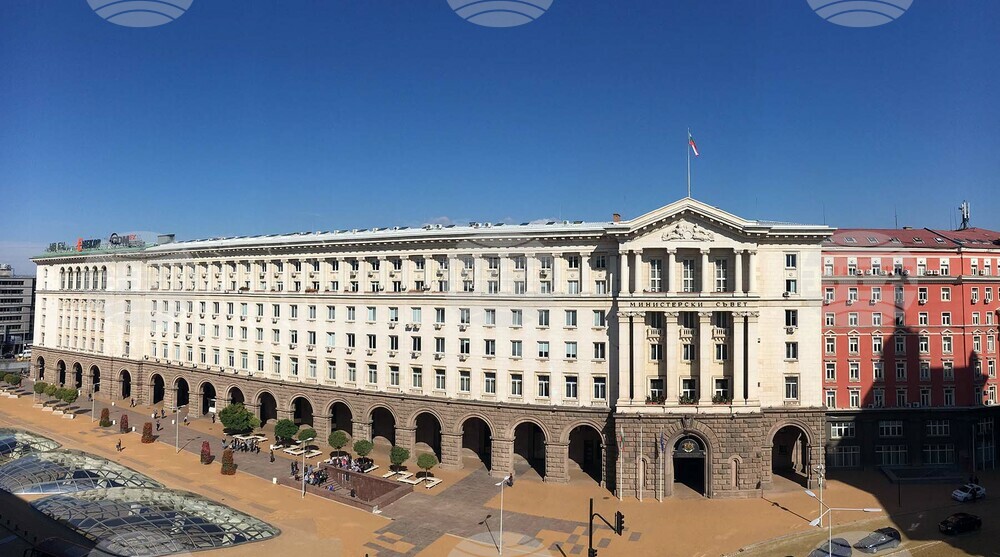
![Cabinet Adopts Government Programme Until 2030]() The seat of the Bulgarian government (BTA Photo)
The seat of the Bulgarian government (BTA Photo)
site.btaUPDATED Cabinet Adopts Government Programme Until 2030
The government has adopted a Programme for Government of Bulgaria until 2030. The document is based on the programme of Progressive Bulgaria and focuses on restoring state institutions, strengthening the rule of law, rebuilding trust in public institutions, restoring public confidence, and fostering a shared sense of national responsibility and solidarity. It also aims to accelerate the country's modernization to achieve the standard of living of the developed European countries.
The government's vision is for Bulgaria to develop as a modern European state with strong and effective institutions, a competitive economy, a high quality of life, and a sustainable social model based on the rule of law, social justice, knowledge, innovation, and the responsible management of national resources.
Achieving this vision will require the systematic dismantling of oligarchic and corrupt models of governance, the restoration of the rule of law, the strengthening of transparency and accountability across all public institutions, and the guarantee of fair, lawful, and transparent governance and allocation of public resources.
The primary objective of the Government Programme is to build a modern, socially responsible, secure, and high-tech European state with resilient institutions, a competitive economy, and a long-term development strategy that ensures the well-being of its citizens, protects the national interest, and preserves Bulgaria as a strong, vibrant, and prosperous nation for future generations.
The programme provides a framework for governance based on strategic planning, institutional resilience, professionalism, transparency, accountability, and measurable results.
The programme covers 20 key policy areas. Within each area, it sets out: priorities as the main areas of policy intervention; measures as the specific instruments and actions to achieve the stated objectives; and expected outcomes as the anticipated results of the government's policies and actions.
The first chapter, Dismantling the Oligarchic Model and Anti-Corruption Policies, focuses on removing oligarchic influence from the management of public resources, freeing businesses from oligarchic pressure and extortion, strengthening law enforcement institutions and enhancing their supervisory and investigative powers, as well as reinforcing anti-corruption policies and preventive measures.
The second chapter, Justice, identifies as priorities the restoration of institutional legitimacy within the judiciary, improving integrity and transparency in judicial appointments, decentralizing the prosecution service while increasing its accountability, and strengthening anti-corruption efforts.
The third chapter, Fiscal Policy and European Funds, emphasizes responsible and predictable fiscal policy and the effective management of the Customs Agency. Other priorities include the efficient use of public resources, maintaining a stable financial system, and ensuring the effective management of European Union funds.
The fourth priority area, Effective Public Administration, includes structural and functional optimization of the public administration (2026–2027); civil service reform aimed at increasing professionalism, improving employee motivation, and optimizing career development (2028–2029); and reform of political-administrative relations to establish a new model of public governance (2028–2029).
In the chapter on Economy and Investment, the government focuses on building a high value-added economy, ensuring the efficient management of public expenditure and EU funds, improving the legal and regulatory environment for investment and business, and proactively attracting European investment.
Innovation and Digital Transformation is the sixth chapter of the government's programme. In this section, the executive sets out two main priorities: innovation and high technologies for a competitive economy, and digital transformation and cybersecurity for a modern digital state.
In the area of Foreign Affairs, the government emphasizes strengthening the diplomatic service as part of the national security system, active participation in the European Union, NATO, the Council of Europe, the United Nations, and other international organizations, supporting Bulgarian communities abroad, and building and maintaining a positive image of Bulgaria internationally.
Public Order and Security is the eighth priority area of the government programme. Its objectives include establishing a professional, depoliticized, and accountable public security system, increasing the effectiveness of preventing and combating conventional and organized crime, strengthening border control, and improving fire safety and civil protection.
The Defence chapter sets out nine priorities, including personnel and social policy, active participation in and fulfillment of Bulgaria's allied commitments, modernization of the armed forces' equipment and weaponry, investment in defence infrastructure, and the transformation of the defence sector through the introduction of modern technologies with a high asymmetric impact.
The tenth chapter, Employment and Social Policy, identifies the following priorities: an active labor market policy and decent wages, adequate pensions and social transfers, ensuring a dignified standard of living and reducing inequalities, providing accessible and high-quality social services, creating opportunities for young people in Bulgaria, and implementing an effective demographic policy.
Education and Science is the next chapter of the Government Programme. In this section, the government focuses on developing a modern and effective education system in both pre-school and school education, promoting inclusive education, supporting teachers, strengthening vocational education and higher education in line with the economy of the future, and advancing science and research as key drivers of social development.
In the Healthcare chapter, the government identifies the following priorities: improving cost efficiency and reducing out-of-pocket healthcare payments, ensuring balanced geographic distribution and access to healthcare services in small and remote communities, guaranteeing high-quality pediatric healthcare, strengthening emergency medical services, expanding the HEMS (Helicopter Emergency Medical Services) system, and supporting healthcare professionals. The government also emphasizes shifting from a healthcare model focused on treating disease to one centered on maintaining health through prevention, early screening, and digital healthcare technologies.
The Regional Development and Public Works chapter includes nine priority areas, among them strong support for Bulgarian businesses and entrepreneurship, energy security, sustainable regional development and equal opportunities across all regions, a modern, digital, and efficient construction and investment process, and a modern transport system with enhanced digital connectivity.
In the area of Transport and Communications, the government's priorities include projects of strategic importance for accelerating economic development, improving road safety, ensuring safe, reliable, and modern rail transport, developing modern ports and maritime transport, fully deploying the HEMS (Helicopter Emergency Medical Services) air ambulance system, and stabilizing Bulgarian Posts.
In the Energy chapter, the main priorities are ensuring energy security and system adequacy, improving energy efficiency, diversifying and decentralizing energy sources, expanding nuclear energy, establishing Bulgaria as a regional energy hub, and restructuring and modernizing state-owned energy companies.
The Environment and Water chapter identifies four priority areas: ensuring legality, clear regulations, and strategic environmental governance; promoting open, transparent, and accountable environmental policymaking; advancing the circular economy, climate resilience, and the protection of natural capital; and strengthening the expertise, professionalism, and independence of the environmental administration, along with more effective environmental enforcement.
In the Agriculture chapter, the government identifies a single overarching priority: a viable agricultural sector, food security, and the development of rural areas.
In the Youth Policy and Sports chapter, the government's priorities include creating opportunities for Bulgaria's young people, promoting sport for all, encouraging sports participation among children and young people, supporting elite athletes and emerging sports talent, developing modern, accessible, and sustainable sports infrastructure, and ensuring legality, digitalization, transparency, and integrity in sport.
In the Culture chapter, the executive places culture and artists at the center of its policy agenda. Its priorities include preserving and promoting Bulgaria's cultural heritage, modernizing cultural institutions and infrastructure, and expanding digitalization and modern access to culture.
The twentieth and final chapter of the Government Programme is Tourism. It outlines policies aimed at improving connectivity and tourism promotion, strengthening tourism diplomacy and Bulgaria's international positioning, enhancing the quality of tourism services, increasing tourism accessibility, encouraging year-round tourism, reducing the informal economy within the sector, and introducing a new revenue model.
/VE/
news.modal.header
news.modal.text