site.btaUPDATED President Iotova To Promulgate 2026 State Budget Act
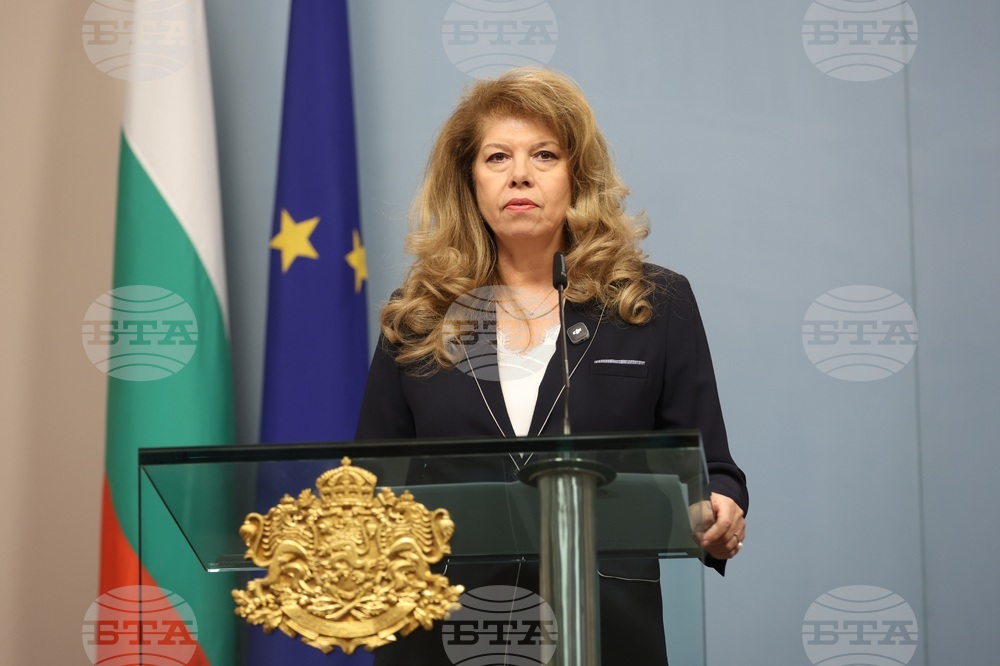
In a statement on Wednesday, President Iliana Iotova said that she will promulgate the State Budget Act for 2026, as adopted by the National Assembly.
The State Budget Act for 2026 was finally approved by Parliament on July 24.
On Tuesday, Continue the Change submitted to the president a petition supported by more than 32,000 Bulgarian citizens, calling for a veto on the 2026 State Budget Act. The party said that it would refer the matter to the Constitutional Court if the law was not returned for further discussion.
Also on Tuesday, MP Vladislav Goranov told journalists in parliament that GERB-UDF would also file a constitutional complaint against the state budget after it is promulgated in the State Gazette.
Since the adoption of the budget by Parliament, 69 opinions have been submitted by political parties, trade unions, and civil organizations, the head of State announced. She specified that four of the opinions contained reasoned requests for the act to be returned for further discussion, meaning for a presidential veto to be imposed. Iotova assured that every statement had been carefully reviewed.
“The concerns related to the size of the budget deficit, as well as to the amendment and supplementation of already existing laws through the transitional and final provisions of the budget act, are understandable,” the president said.
“These concerns are understandable because amendments and additions to laws should take place after discussion and review of the laws themselves, with public debate and a mandatory risk assessment,” Iotova stated.
She also emphasized that the demands expressed in numerous statements for greater financial discipline and more responsible management of public funds were understandable and that they were principles she supported.
Iotova said that she would recall facts that largely also served as arguments for her decision. She pointed out that for seven months Bulgaria had been operating under a 2025 budget that had been extended twice, a budget that was prepared and adopted in Bulgarian lev, while as of January 1, 2026, Bulgaria had already adopted the euro.
On July 10, 2026, the Council of the European Union opened an excessive deficit procedure due to a deficit exceeding 3% of GDP under Article 126 of the Treaty on the Functioning of the European Union, the president also noted. She commented that the recommendations call for measures to gradually limit the deficit and reduce it over the next three years. She added that, during the budget discussions, the EU’s findings were supplemented by publicly presented data on the actual state of public finances in the country.
“More than EUR 3 billion has not been paid out. Around EUR 1 billion will not enter the revenue side of the budget because it has already been collected in advance. These EUR 3 billion include obligations undertaken in previous years but still unpaid — from municipalities’ funds to even the signing of out-of-court agreements with companies and businesses, because they completed the work they were required to do but have not received their payments,” Iotova said. "I expect the ministries and agencies to add to this picture, because I have concerns that not everything is known yet. Now, however, the time has come to pay the old bills,” the head of State said.
According to the president, the State Budget Act for 2026 enters into force retroactively — from January 1 of this year — while it is being adopted at the end of the seventh month, when a significant portion of revenues and expenditures have already been implemented, making planning extremely difficult.
Iotova also pointed to another argument behind her decision to promulgate the State Budget Act. Despite the remarks regarding some of the budget parameters, the presidency cannot allow further institutional and financial uncertainty for the country, she stressed. As another reason, the head of state cited the fact that, in her words, Bulgaria is the only country in the EU operating under these financial conditions.
Returning the law to Parliament for further discussion would place the country’s finances at even greater risk after August 1, 2026, Iotova stated firmly.
“The calls addressed to the presidency for this partial five-month budget to enter into force as soon as possible are many times greater than the negative opinions, because no system, organization, institution, company, or business can currently adopt its own budget and carry out remaining financial planning,” the head of State also said.
According to Iotova, if the budget is returned for further discussion, this would lead to the blocking of the operations of municipalities, social payments, healthcare, and education.
Some of the most disputed proposals have been postponed for the 2027 budget, the president noted. Iotova expressed hope that at that time there would be an even more thorough and precise analysis, as well as public discussion, with a clear assessment of the risks associated with their adoption.
Regarding claims of unconstitutional provisions in the adopted budget, the president noted that the legal team of the presidential institution, as well as many of the submitted opinions from some of the country’s leading constitutional law experts, have found no grounds to consider the provisions unconstitutional.
According to Iotova, the public interest requires the restoration of the normal budget process, as well as the proper functioning of the state.
“I believe that the efforts of all institutions in the country should be focused on work on the 2027 budget. This is where long-awaited reforms must be carried out, or at least clear indications must be given that they are beginning,” Iotova said. In her words, work must also be done to harmonize Bulgaria’s own legislation and, above all, to guarantee the financial security of Bulgarian citizens and create conditions for the country’s economic development.
“I am deliberately not entering into political rhetoric,” Iotova said at the end of her statement. She pointed out that the preparations of the budget and its implementation fall entirely within the responsibilities of the National Assembly and the Council of Ministers. “I know that this is the most political law in the country, in which the policies of the government, the majority, and the opposition are clearly reflected,” the president added. However, she said that the debates should be constructive.
“For me, the budget is not a tool for political maneuvering, elections, personal conflicts, gaining political dividends, or imposing a veto for its own sake,” Iliana Iotova stated firmly.
She announced that the concept and position of the presidential institution regarding the budget would be published on the institution’s website within two days.
/RD/
news.modal.header
news.modal.text