site.btaMedia Review: April 9
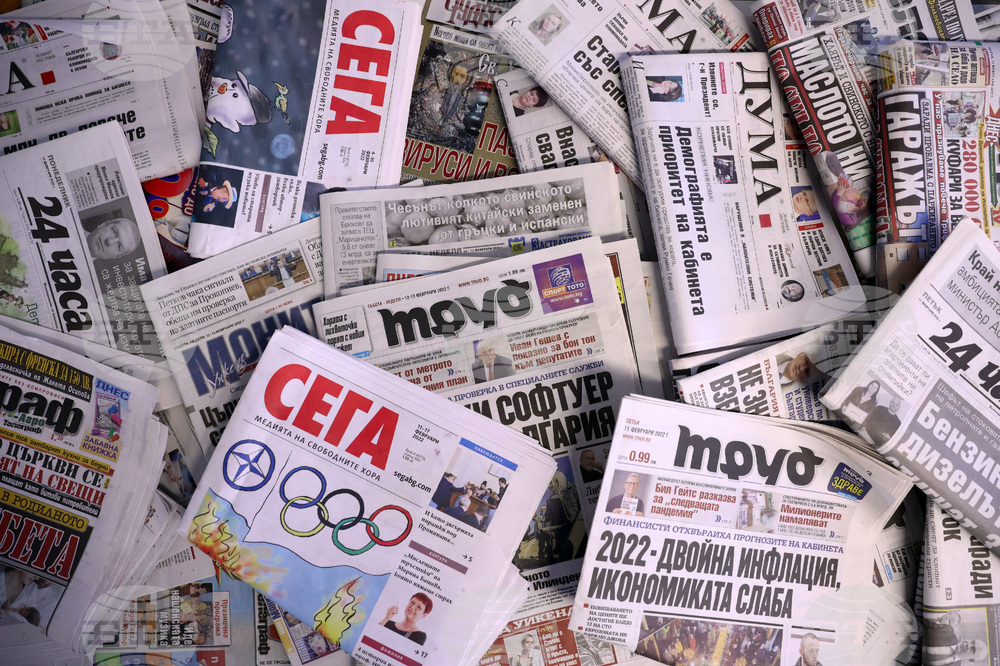
ENERGY - ECONOMY
24 Chasa reports in an extensive article that the Bulgarian caretaker Government is actively managing the impact of global energy tensions on domestic prices, monitoring goods and fuel, and providing targeted support to transport and vulnerable sectors. Ceasefire developments in the Iran–U.S. conflict are expected to help stabilize oil prices. Measures totaling EUR 125 million include transport subsidies, delayed toll increases, and oversight of fuel margins.
***
Capital leads with a story about how the National Electric Company (NEK) is advancing a broad portfolio of pumped-storage hydropower projects (“water batteries”) to support energy storage and grid stability as renewable energy expands.
Progress has been made on several fronts: the restoration of the Chaira plant is underway, while a new project, Chaira 2, aims to introduce more flexible, next-generation technology. The Yadenitsa project, designed to boost the efficiency of existing infrastructure, is close to launch and may receive EU funding.
Additional projects, including Batak and Dospat, are in early development with support from the European Investment Bank, while a large cross-border hydropower project on the Danube is being prepared jointly with Romania.
Although many projects are progressing and some are prioritized by the EU, the main challenges are not technological but financial and regulatory—particularly the need for better market mechanisms to ensure predictable returns and properly value the system benefits of energy storage.
***
bTV: The transition of Bulgaria from the lev to the euro has had a limited and largely one-off impact on consumer prices, according to experts from the European Central Bank.
The inflationary effect of adopting the euro on January 1, 2026 is estimated at between 0.3 and 0.4 percentage points, mainly concentrated in the services sector, with some increases occurring even before the transition. Overall, the findings align with previous euro adoption experiences, which typically show small, temporary price effects.
At the same time, neither perceived inflation nor household inflation expectations have been significantly affected. Annual inflation, measured by the Harmonised Index of Consumer Prices, continued to slow—from 3.5% in December 2025 to 2.3% in January and 2.1% in February—despite a slight monthly increase in January driven by food and services.
The analysis also notes that perceived inflation often differs from actual inflation, influenced by consumer sensitivity to frequently purchased goods, unfamiliarity with the new currency, and media coverage. In Bulgaria, perceived inflation even declined sharply in January 2026, while inflation expectations for the next 12 months also decreased.
Public support for the euro has risen, exceeding 50% in January and reaching 54% in February—marking the first stable majority in recent years.
The ECB cautions that external factors, including price shocks linked to tensions in the Middle East, may have a stronger impact on inflation in 2026 and could complicate the assessment of the euro’s effect.
The Bulgarian National Radio covers the topic as well.
***
NOVA TV: Ministry of Finance will publish a full database of all public procurement contracts in the country, allowing citizens and media full access, said Finance Minister Georgi Klisurski.
The database will include over 7,000 contracts worth more than EURc30 billion. The aim is to ensure full transparency and enable public oversight of spending.
The government has already identified irregularities in some tenders. Data show that over 6,000 contracts have been signed, while about 1,000 are still pending and subject to review. Advance payments total more than EUR 4.4 billion, including significant sums for the Defence Ministry and the Road Infrastructure Agency, with around EUR 1 billion linked to the Hemus motorway project.
High advance payments are common, with over 140 contracts involving 50% upfront payments and 330 involving 20%. The government has launched 62 inspections into problematic procurements and is assessing EUR 5.6 billion in pending payments for 2026 to determine budget feasibility.
Bulgarian National TV also covers the topic.
JUSTICE
Capital: Emilia Rusinova, a senior Bulgarian prosecutor, is under scrutiny over alleged involvement in a corruption scheme linked to Petyo “the Euro” Petrov, a former high-ranking official accused of extortion and influence in the judicial system.
Testimony from Petrov’s ex-wife in 2023 first implicated Rusinova, noting her regular presence at the restaurant “Eight Dwarfs,” a known hub of the scheme. Subsequent investigations, including the Anticorruption Fund’s Leaks, based on secret witness statements, detail her visits to the restaurant between 2018 and 2020 alongside Petrov and other senior prosecutors, often leaving with large envelopes that appeared to contain documents. A photograph of Rusinova with Petrov has further intensified scrutiny.
Rusinova continued to advance in her career, becoming acting appellate prosecutor of Sofia and later city prosecutor, despite the allegations. European prosecutor Teodora Georgieva filed a whistleblower report alleging that Rusinova had introduced her to Petrov prior to her appointment in Luxembourg. Reports also emerged of her traveling abroad in 2021 in Petrov’s company and with associates linked to the “Eight Dwarfs” network.
Justice Minister Andrey Yankulov has called for her disciplinary dismissal for these actions, but the likelihood of enforcement is low, as the Prosecutors’ College of the Supreme Judicial Council has historically shown little interest in addressing her connections. Rusinova and the prosecution have largely remained silent, underscoring ongoing concerns about accountability and systemic corruption in Bulgaria’s judicial system.
***
Dnevnik: The Ministry of Interior has sanctioned a woman who falsely presented herself as a prosecutor following a traffic incident in Sofia, said the Ministry’s acting Chief Secretary Georgi Kandev. The woman was filmed threatening a citizen that she would “ruin his life” if he did not move his car.
An inspection by the Interior Ministry found a serious traffic violation at central Sofia’s Tsar Samuil and Alabin streets. Following an operation by the Sofia Directorate of Interior, the woman, who created a high-risk situation on a one-way street, was identified and sanctioned. A witness to the incident has also given testimony.
“The law applies to everyone. It will be enforced without compromise, regardless of official position or social status,” Kandev added.
A citizen complained that a woman, who presented herself as a prosecutor, threatened him during a conflict on a Sofia street in the late afternoon of April 6. A user named Boyan Georgiev shared a video and wrote that he had been threatened with the words: “I’m in a hurry, move back because I’m a prosecutor, and if you continue to stand there, you’ll see what happens to you. One more word and I’ll ruin your life.”
In the video, uploaded on Facebook, these remarks cannot be heard; it only shows a woman attempting to film something with her phone. In his post, Georgiev asks for assistance in identifying the woman.
In a post accompanying the video, Boyan Georgiev wrote that on Monday, April 6, around 5 p.m., he was entering a parking area on Tsar Samuil Street from Alabin Street via a one-way street. His path was blocked by a red Mercedes driving against the direction of traffic. The driver of the red car refused to back up and was signaling for Georgiev to move his car.
“Of course, I refused and simply continued forward, which greatly angered the woman—but it did not stop her from advancing with the Mercedes until our bumpers were almost touching. She got out of the car and said to me: ‘I’m in a hurry, move back because I’m a prosecutor, and if you continue to stand there, you’ll see what happens to you.’ Those who know me can guess how I responded—which angered her even more. Her reply was: ‘One more word and I’ll ruin your life,’ as she attempted to photograph my license plates,” Georgiev explained.
At around noon on Wednesday, April 8, the Inspectorate at the Supreme Cassation Prosecutor's Office announced that it would initiate a self-referral and examine whether disciplinary violations had been committed by a prosecutor from the Sofia Military District Prosecutor’s Office. The statement did not specify the identity of the magistrate seen in the video.
According to the website lex.bg, the woman is Denitsa Ivanova, Deputy Military District Prosecutor of Sofia.
The alleged incident with the suspected prosecutor is also covered by other media outlets.
24 Chasa also leads with this story.
“Female Military Prosecutor Plays Main Role in Road Scandal,” reads Trud’s headline.
HEALTHCARE
Mediapool runs a story about the local hospital in the northwestern city of Vratsa facing a critical shortage of staff after over 20 nurses and orderlies resigned to join a soon-to-open private hospital. Key departments like Intensive Care and Surgery are most affected. The Municipality has appealed to medical professionals to help the public hospital part-time or according to a flexible schedule, without leaving their main jobs. The new private Heart and Brain hospital could significantly reduce the public hospital’s revenue, posing financial as well as staffing challenges.
US – IRAN – WAR
Sega: The Donald Trump administration is considering withdrawing U.S. troops from NATO member countries that have refused to support the campaign against Iran, according to The Wall Street Journal. Troops stationed there would be redeployed to countries that have more strongly supported the U.S. military campaign.
The report suggests this could involve closing bases, potentially in Spain or Germany.
This proposal is far from Trump’s recent threats to fully withdraw the U.S. from NATO, which legally cannot happen without Congressional approval.
Trump has not ruled out leaving NATO and plans to discuss the matter with NATO Secretary General Mark Rutte, according to White House press secretary Karoline Leavitt. When asked if the U.S. was still considering a NATO exit, she replied that the President has discussed it and will meet with Rutte soon, and more information may come directly from him.
Leavitt also criticized NATO, saying: “It is very sad that NATO has turned its back on the American people over the last six weeks, given that it is the American people who fund their defense.”
Trump’s meeting with Rutte at the White House will focus primarily on the war in Iran, amid tensions over the U.S. military strategy. Rutte is also scheduled to meet with Secretary of State Marco Rubio and Defense Secretary Pete Hegseth.
According to two U.S. administration officials, in addition to troop redeployment, the plan may include closing at least one U.S. base in Europe, likely in Spain or Germany. The White House declined to comment to WSJ.
Sources suggest countries like Poland, Romania, Lithuania, and Greece could benefit from the redeployment. The plan could result in more U.S. forces closer to Russia’s western borders, likely drawing criticism from Moscow.
WSJ reports that around 84,000 U.S. troops are currently stationed across Europe.
***
The major news outlets cover the developing story of the US-Iran war and short-lived announcement of a two-week ceasefire.
Darik: Iran has closed the Strait of Hormuz following Israeli attacks on Hezbollah in Lebanon, threatening a fragile ceasefire. Israel struck residential and commercial areas in Beirut, causing over 100 deaths. The IRGC warned that any further attacks on Lebanon will trigger a serious Iranian response, escalating tensions in the region.
ORBAN – JD VANCE – HUNGARY VISIT
The visit of US Vice President JD Vance on the eve of the elections in Hungary is covered by the media.
Dnevnik: Hungarian Prime Minister Viktor Orban signed multi-billion-dollar deals with the United States days before likely losing the general elections.
The agreements include a EUR 500 million purchase of oil from MOL, EUR 700 million for HIMARS air-defense systems, and plans to acquire 10 small modular nuclear reactors. While the nuclear deal does not specify a funding amount for engineering support, each BWRX‑300 reactor under discussion could cost USD 1–2 billion, suggesting the total value of the nuclear component alone could reach USD 10–20 billion.
/MY/
news.modal.header
news.modal.text