site.btaThree-Hour Debate on "Culture and Politics" Held in Sofia
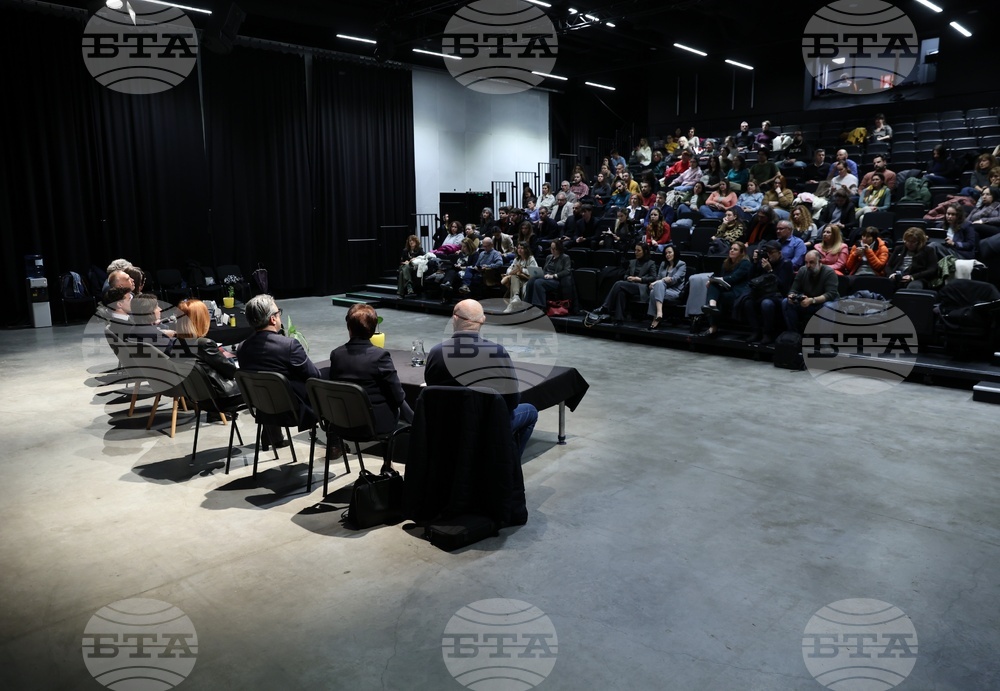
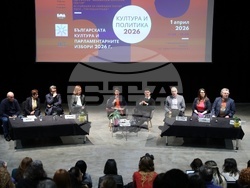
With early parliamentary elections in Bulgaria eighteen days away, politicians gathered at Sofia's Toplocentrala contemporary art centre on April 1 for a discussion titled "Culture and Politics". Speakers observed that allocating one per cent of GDP to culture has been a goal for many years but is yet to be achieved.
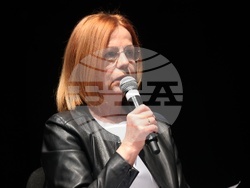
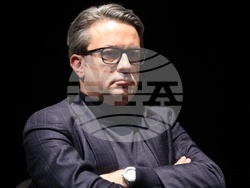
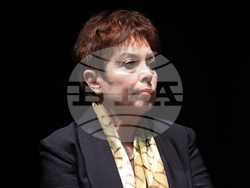
The six highest-rated political parties, according to 11 public opinion polls, were invited to participate. Two of them, the Movement for Rights and Freedoms – New Beginning and Vazrazhdane, stayed out. Those participating in the discussion were Progressive Bulgaria, GERB-UDF, Continue the Change – Democratic Bulgaria (CC-DB), and BSP – United Left. The event was organized by a foundation called Observatory of Cultural Economics (OCE) and moderated by its Director, Diana Andreeva.
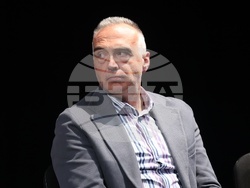
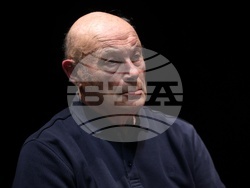
During the three-hour debate, Anton Kutev (Progressive Bulgaria) said: "Since I entered politics in 2009, there has been talk of allocating one per cent [of GDP] to culture. As far as I recall, there was a breakthrough during Stefan Danailov’s tenure, when the percentage was slightly higher, but since then we have been repeating the same things."
Kutev noted that "we live in a society and a time in which spending on armament is rising". He is convinced that achieving higher spending on culture is a common cause for all.
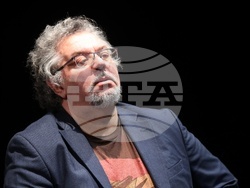
According to Toma Bikov (GERB-UDF), the discussion about the one per cent comes later: "In 2022 there was a significant increase in the budget for culture. Applied to the current model of Bulgarian culture, it produced no results. I am concerned that even if we agree to include this one per cent in the next budget, under the current cultural infrastructure the problem may become even greater."
Bikov went on to say: "It is a fact that Bulgarian culture needs structural reform and a rethinking of the role of the Ministry of Culture. We must distinguish between culture and the Ministry, because culture exists across many spheres; it is not merely a function of the Ministry."
Manol Peykov (CC-DB) commented: "We have gathered many times in similar formats, in studios, and we always unite around this one per cent. And when someone comes to power, it does not even reach half a per cent." Peykov argued that the real battle is between those engaged with culture and aware of its importance, and the Ministry of Finance. "It is about placing culture where it belongs," he said.
"The truth is that it will be a very difficult battle to preserve funding for culture, given what is happening in the world," Peykov warned. Far more important than the size of culture spending is how the money is distributed, he noted, adding that funding is often delayed.
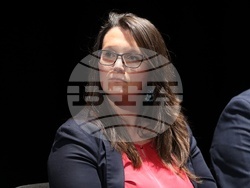
Sonya Kelevedzhieva (BSP – United Left) stated that, historically, the BSP (Bulgarian Socialist Party, formerly Communist Party) has backed culture. She recalled such grand communist-era projects as the Banner of Peace Assembly and the 1300 Years of Bulgaria initiative, "when we presented our culture worldwide".
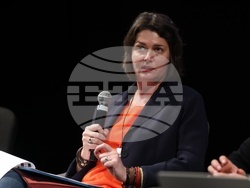
Among the priorities emerging from the debate, Kelevedzhieva listed the need for a national strategy, the accessibility of culture, and the sustainability of funding.
/VE/
Additional
news.modal.image.header
news.modal.image.text
news.modal.download.header
news.modal.download.text
news.modal.header
news.modal.text