Wrap up
![Bulgaria Prioritises Citizen Safety as Middle East Evacuations Take Shape]()
![Bulgaria Prioritises Citizen Safety as Middle East Evacuations Take Shape]() Government Airbus, Sofia Airport, Sofia, October 1, 2024 (BTA Photo/Ivan Lazarov)
Government Airbus, Sofia Airport, Sofia, October 1, 2024 (BTA Photo/Ivan Lazarov)
site.btaBulgaria Prioritises Citizen Safety as Middle East Evacuations Take Shape
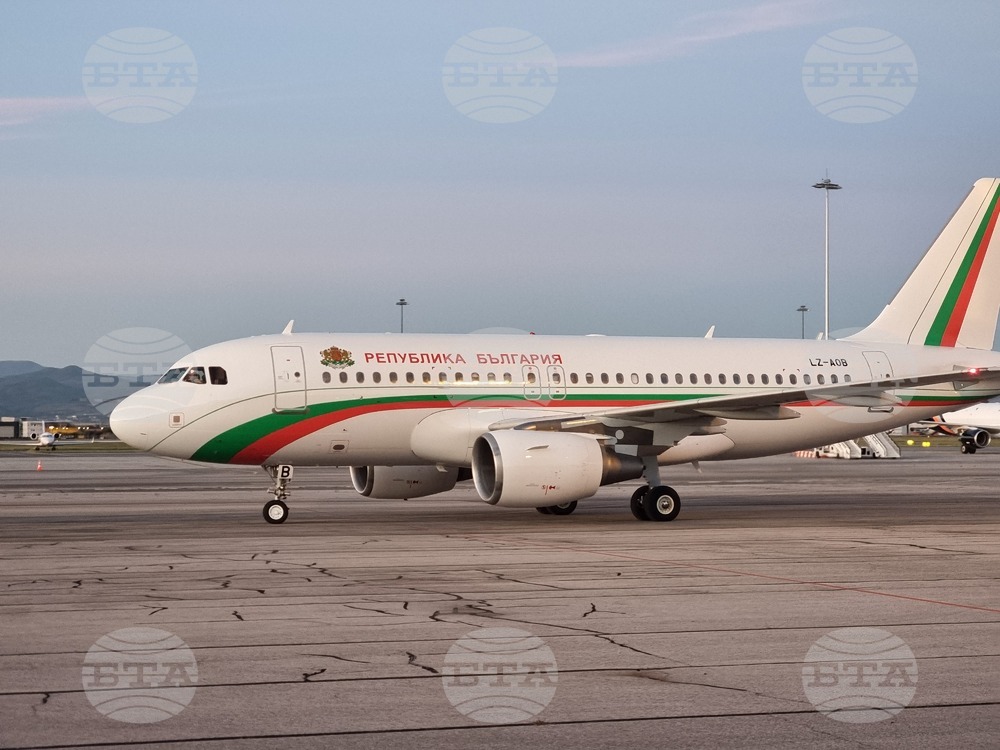
Bulgaria’s response on Tuesday to the escalating Middle East crisis focused on the single practical goal of protecting Bulgarian citizens while drawing up workable evacuation plans amid rapidly changing airspace restrictions, security risks, and limited flight slots.
The Foreign Ministry set the initial parameters, urging Bulgarians in affected countries to stay put and avoid risky movement: it “recommends that all Bulgarian citizens currently in the affected countries … remain in safe locations, avoid undertaking risky travel to leave the respective country through its land borders, and strictly follow the instructions of the local authorities”.
It coupled that guidance with sustained operational readiness, noting that “the Foreign Ministry’s crisis headquarters is operating around the clock and is receiving and processing all calls and reports from the region and other parts of the world,” as it coordinated with transport and tourism authorities and the caretaker Prime Minister’s office.
At the Council of Ministers, caretaker Prime Minister Andrey Gurov framed evacuation planning as conditional on the alignment of routes, landing slots and security clearances. “Various options and routes are currently being discussed. For us, security is the priority,” he said, adding more bluntly: “The safety of Bulgarian citizens comes first.”
External support was integrated into the same logistics-first approach. After a phone call between caretaker Foreign Minister Nadezhda Neynsky and Greek Foreign Minister Giorgos Gerapetritis, the Bulgarian Foreign Ministry said Gerapetritis “has offered Bulgarian citizens in Oman the opportunity to take advantage of an evacuation flight organized by the Greek state, scheduled for Wednesday,” and that Greece showed “readiness to cooperate in future efforts to evacuate Bulgarian citizens from the Middle East region.”
Neynsky stressed that the timing and scale of any operation remains slot-dependent: “Everything depends on where flight slots are granted to us,” she said, while also reporting that “we have already organized the evacuation of the Bulgarians in Oman,” with around 300 people expected.
In parallel, caretaker Defence Minister Atanas Zapryanov sought to contain speculation about Bulgaria’s involvement, stressing that “there is no change in the activities of the Bulgarian Air Force and in the presence of US forces in Bulgaria, as the country is not participating in operations related to the tension between Israel, the US, and Iran,” and citing NATO’s position: “the Secretary General of the Alliance and the Supreme Commander have stated that NATO is not participating in such an operation, and Bulgaria confirms the same position.”
Airlines highlighted the same operational constraints from the commercial side. Wizz Air said “airspace in parts of the region remains severely restricted,” and, after repatriating stranded crew via Muscat, reiterated that it “would not compromise the safety and security of its passengers, crew or fleet under any circumstances.”
The Ministry’s guidance also addressed spillover risks outside the immediate combat zone. In India, it “advised Bulgarian citizens … to avoid going to or near the embassies and consulates of the United States, Israel and Iran,” while in Sri Lanka it pointed to a stopgap for travellers stranded by cancellations: “Bulgarian citizens unable to leave Sri Lanka before their visas expire because flights to the Middle East have been cancelled can obtain a free 14-day visa extension.”
/КТ/
news.modal.header
news.modal.text