site.bta"Varvi, Narode Vazrodeni": 125 Years since First Performance
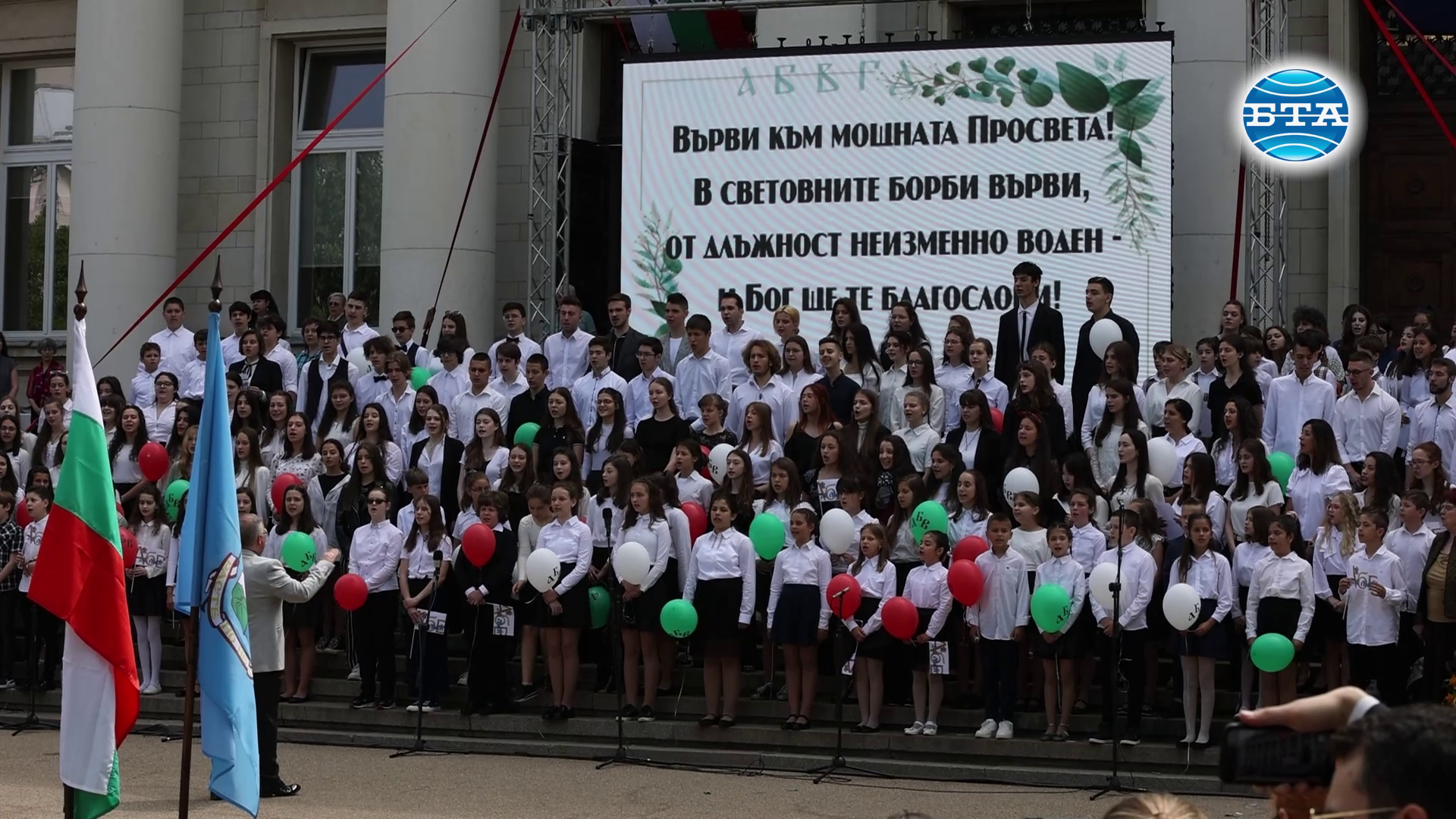
There is a song whose rousing lyrics and tune are inextricably linked to the observances, both at home and abroad, of May 24 as a Day of Letters. It leaves no Bulgarian heart untouched. It is one of the first songs that children in Bulgaria learn, and it is also one of the best liked. This piece of music, best known by its first line as "Varvi, narode vazrodeni" [Advance, Revived Bulgarian People], was performed for the first time in public 125 years ago on Sunday.
On May 15, 1892, during a stint as a teacher of French at the Boys' Secondary School in Ruse (on the Danube), poet Stoyan Mihaylovski wrote a rapturous poem titled "Cyril and Methodius". It was published in the Misal literary journal, No. 9-10, in June 1892, subtitled "Draft of a Bulgarian All-school Hymn".
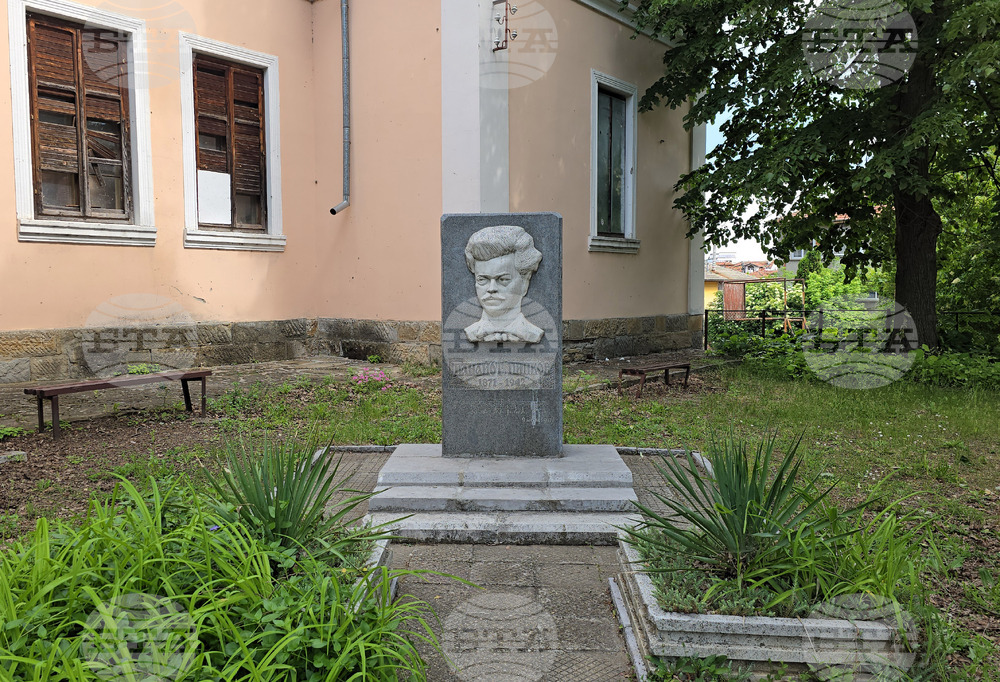
Nine years later, in 1901, composer Panayot Pipkov, who had recently become a music teacher at the Yossif I Five-Grade Boys' School in Lovech (North Central Bulgaria), was tasked with writing a new song for the pupils to sing on May 11 (Old Style) on the occasion of the holiday. He was frustrated by the lack of suitable lyrics until May 9 when, during a third-grade music class, he noticed a pupil eagerly reading a poem in a textbook. Barely halfway through Mihaylovski's text, Pipkov heard the tune it inspired in his head. He rushed to the blackboard and took not more than 15 minutes writing a music piece for four voices, while the boys handed him chunks of chalk. Within the next 30 minutes, they had learnt the song and kept singing it with great enthusiasm and fervour even after the period was over.
The school principal, Hristo Brambarov (later on a famous opera singer and vocal instructor), asked Pipkov to have the song performed at the school during a prayer service for the Holy Equal-to-the-Apostles on May 11. "This is a real hymn by which we will be the first to celebrate and extol our enlighteners' lifework this year, and I am confident that before long it will reverberate in all large and small schools of our homeland," Brambarov said. A year later, his words proved prophetic.
Thus, the first public performance of "Advance, Revived Bulgarian People" took place in Lovech on May 11 (New Style May 24), 1901.
After the communist takeover in September 1944, the religious and nationalist references were edited out of the text of the song and some stanzas were dropped altogether, as schoolchildren were indoctrinated in atheism and "proletarian internationalism". After the fall of the totalitarian regime in November 1989, all 14 stanzas were reinstated in their original form.
"Varvi, Narode Vazrodeni" was even a candidate for national anthem in 1990, but the motion was defeated by the Socialist (ex-Communist) majority in the Grand National Assembly.
Only the first six stanzas of the hymn are usually performed at May 24 observances. Here are they, translated into English by Lyubomir Gigov:
"Advance, revived Bulgarian people,
to brighter days ahead advance,
let written words - new tools of progress
reforge your destiny at once!
March on to science that empowers
and join the fight so well equipped,
perform your duty every hour,
and God is sure to bless your feat!
Ahead with education shining
like sun in every person's soul!
Ahead! Your nation cannot perish
as long as knowledge is your goal!
A folk obscure once and fameless,
in history you now belong,
your spirit rules the lands you conquered
in battles fierce always strong!"
Salonica's two saintly brothers
thus heartened our kin of yore.
O past of memory eternal,
O sacred time that we adore!
Bulgaria has ne'er forgotten
this worthiest of all behests -
with countless feats in triumph, anguish
she blazed her everlasting quest…
In 2005, Bulgarian European Affairs Minister Meglena Kuneva initiated the translation of the poem into 21 European languages (the then 20 languages of the EU Member States and Romania). Varvi, Narode Vazrodeni was translated by: Ludmila Krouzilova (Czech); Katja Houmann, Nils Hav and Sten Madsen (Danish); Tsonka Rangelova, Marijke Delemarre, Hans Hartholt and Tsveta Velinova (Dutch); Dr Evgenia Pancheva (English); Egle Raadik (Estonian); Sirkku Okoye (Finnish); Assoc. Prof. Marie Vrinat-Nikolov (French); Thomas Frahm (German); Evelina Mineva (Greek); Gyorgy Szondi (Hungarian); Gueorgui Vassilev Ganev (Italian); Alja Pudule (Latvian); Laima Masyte (Lithuanian); Anthony Penza (Maltese); Zaneta Pawlowicz, Viktoria Marinov and Sandra Topalska (Polish); Manuel Adelino Sousa do Nascimento (Portuguese); Prof. Dumitru Zavera (Romanian); Prof. Dr Jan Koska (Slovakian); Neza Perko (Slovene); Rada Panchovska (Spanish); and Carl Fredrik Gildea (Swedish). The original Bulgarian and the 21 foreign-language versions of Mihaylovski's work were put together in a book titled A Hymn to the Saints Cyril and Methodius.
Following is the original news item in English by which BTA's External Service covered the press launch of the book in 2005:
"104 HYMN-PUBLICATION
New Bulgarian University Publishes Sts. Cyril and Methodius Hymn in 22 Languages
Sofia, March 17 (BTA) - New Bulgarian University published the hymn of the Sts. Cyril and Methodius brothers (the creators of Slav letters) in 22 languages (all EU languages and Romanian), the University told BTA on Thursday.
The project has been implemented at the initiative of European Affairs Minister Meglena Kuneva. The 13 Centuries Bulgaria National Fund rendered assistance for the coming out of the book.
'This is the message with which, we, the Bulgarians join the European Union,' Kuneva says in the introduction. 'The belief that Europe would never be threatened as long as it unites nations and people speaking different languages is based on this hymn,' she adds.
Part of the translations have been done by well-known university lecturers and the others by young people, picked up through the ICQ network.
Apart from the translated texts of the hymn, the book contains profiles of Cyril and Methodius and of the author of the hymn, Stoyan Mihaylovski, a print of an icon of the holy brothers and the score of the hymn.
The book was presented prior to a lecture of the visiting here European Education and Culture Commissioner Jan Figel at the Sofia University Wednesday evening. The hymn was performed by the Bulgarian National Radio Children's Choir. /TK/"
/LG/

Additional
news.modal.image.header
news.modal.image.text
news.modal.download.header
news.modal.download.text
news.modal.header
news.modal.text